 Save
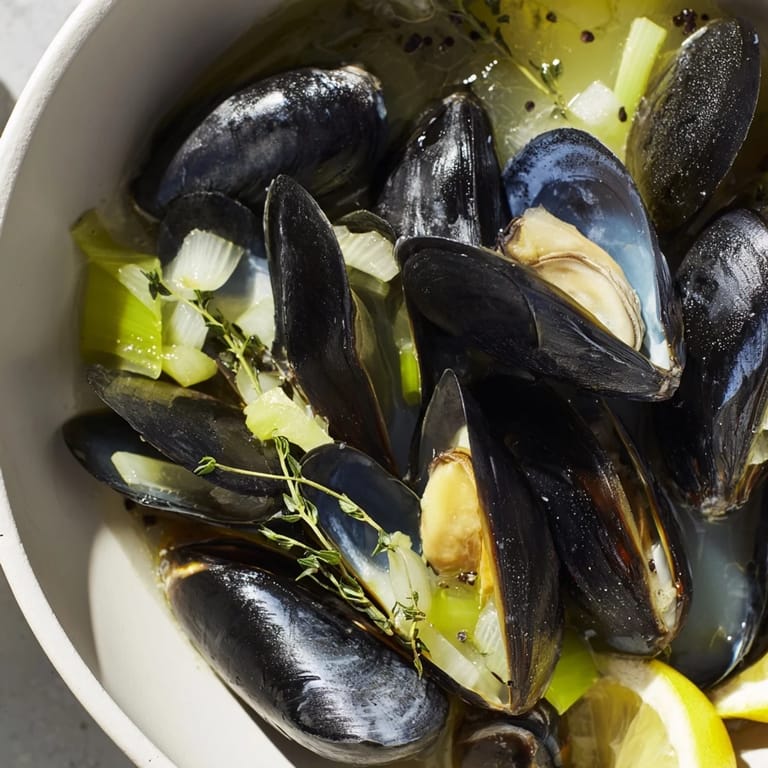
Save I was standing in a Brussels market on a gray October morning when a fishmonger caught my eye holding a bucket of the most glistening mussels I'd ever seen. She said, 'These came in this morning—cook them tonight with wine and they'll tell you what Belgium tastes like.' That simple instruction changed everything. I went home, found a pot, and within an hour my kitchen smelled like the sea, garlic, and something indefinably right. My partner walked in mid-steam and didn't say a word, just closed their eyes. We've made this dish countless times since.
My friend Sophie came over stressed about a work presentation, and I pulled out mussels without asking. By the time we were eating straight from the pot with bread, she'd forgotten why she was worried. That's when I realized this dish isn't about impressive technique—it's about creating a moment where everything slows down and tastes honest.
Ingredients
- Fresh live mussels (2 kg): The foundation of everything—buy them the day you cook, keep them cold, and trust that clicking sound when you tap them closed. That's how you know they're alive and ready.
- Dry white wine (300 ml): Use something you'd actually drink, not the cheapest bottle. The wine becomes the soul of your broth.
- Shallots (2 medium): Finely chopped, they dissolve into the sauce and add a gentle sweetness that garlic alone can't deliver.
- Garlic (2 cloves): Minced, not sliced—this lets it melt into the base rather than bite.
- Leek, white part only (1 small): Often overlooked, but it adds a subtle onion-like depth without overpowering the delicate mussel flavor.
- Celery (2 stalks): Finely chopped, it's the quiet backbone that ties everything together.
- Fresh thyme and bay leaf: These herbs anchor the broth in something classic and Mediterranean—don't skip them or use dried.
- Fresh flat-leaf parsley (1 small bunch): Chopped and stirred in at the end, it brings brightness and stops the dish from tasting heavy.
- Olive oil (2 tbsp): Good quality matters here since it's not hiding behind cream.
- Freshly ground black pepper and sea salt: The mussels themselves are salty, so taste before adding more—this is the hardest lesson to learn.
- Lemon wedges: A squeeze changes everything, cutting through richness and bringing the whole thing alive.
Tired of Takeout? 🥡
Get 10 meals you can make faster than delivery arrives. Seriously.
One email. No spam. Unsubscribe anytime.
Instructions
- Clean and prepare the mussels:
- Run each one under cold water, using your thumb to scrub away any grit or beards still clinging to the shells. Discard any that feel heavy with sand or refuse to close when tapped—those are already gone and will ruin your pot. This takes patience, but it's where quality starts.
- Build the aromatic base:
- Heat olive oil in your pot over medium heat until it shimmers slightly. Add shallots, garlic, leek, and celery all at once, then let them soften for 3-4 minutes, stirring occasionally until the kitchen fills with that garden-like smell that makes you know something good is happening.
- Introduce the herbs and wine:
- Toss in the thyme sprigs and bay leaf, then pour the wine in slowly so you can smell it transform. A gentle simmer should start right away—you're not boiling, you're building.
- Add the mussels and steam:
- Dump all your cleaned mussels into the pot, cover it tightly with a lid, then turn the heat up to high. You'll hear them start to work—little clicks and pops as they respond to the steam. Shake the pot gently every minute or two, and after 5-7 minutes, peek under the lid to see them opening like tiny doors.
- Finish and season:
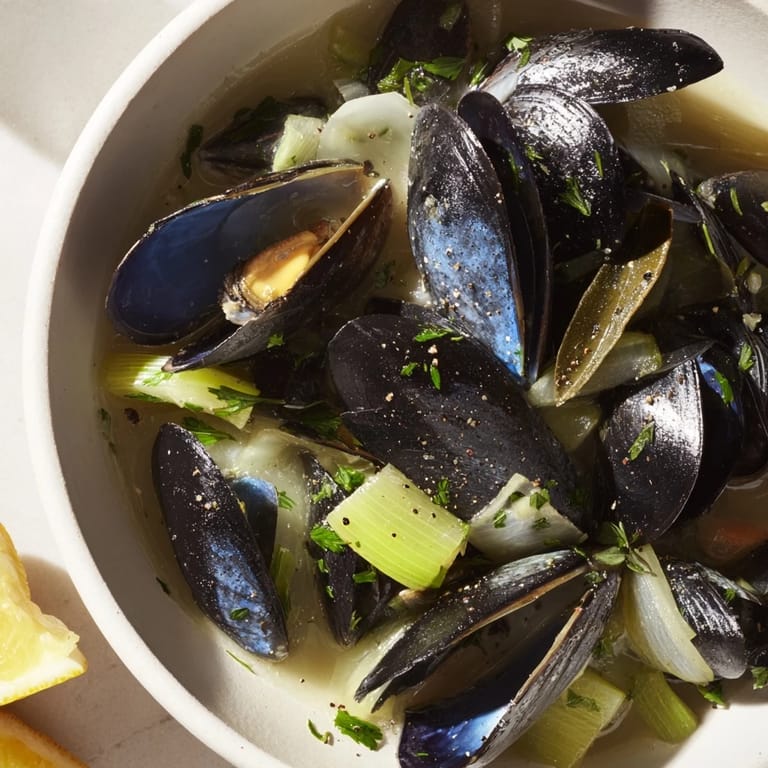
- Remove from heat once most are open (discard any stubborn ones that refuse). Stir in that chopped parsley—it should float on top like green confetti—then taste the broth before adding salt. This is where most people mess up; go easy, because the mussels have already given their salt to the pot.
- Serve immediately:
- Divide into deep bowls, ladle that golden broth generously over everything, and set lemon wedges and crusty bread nearby. This dish waits for no one, so eat while it's still steaming.
 Save
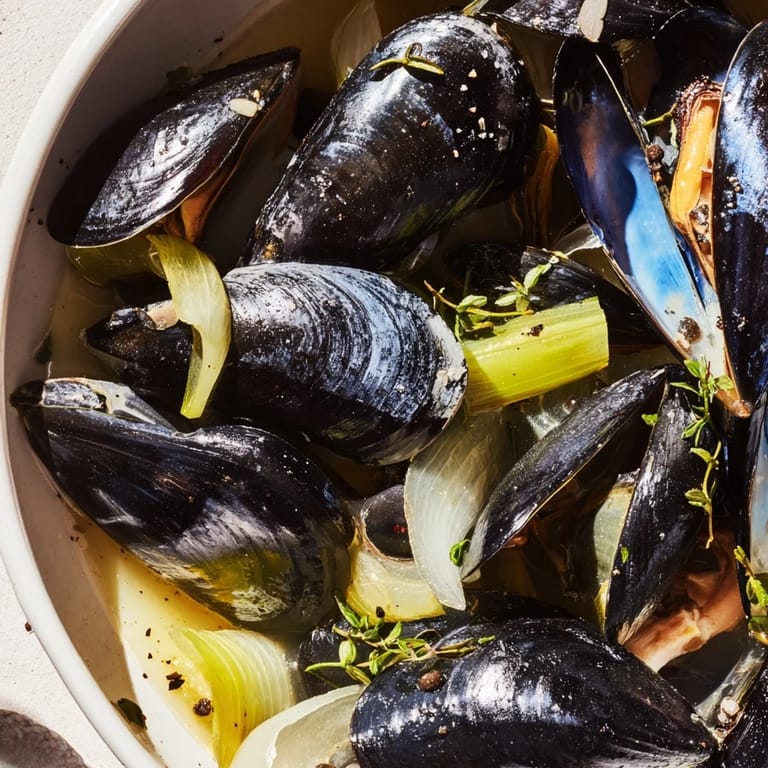
Save There's a moment right when you pour the wine into the pot and it catches the heat—the smell suddenly blooms and fills your whole apartment. That's when I know I've gotten this dish right. It's not complicated, but it teaches you something about respect: respect the ingredient, respect the process, and something beautiful happens without you trying to force it.
Why This Dish Tastes Like Home
Moules marinière exists in every Belgian home for a reason—it's simple enough for a weeknight but noble enough for when people you love are sitting at your table. There's no cream to hide behind, no complicated technique to master. It's just mussels, wine, and the honesty of what happens when you cook them together. The broth becomes this liquid gold that tastes like the sea decided to be gentle.
The Bread Question
I learned this from a Belgian woman in Bruges: the bread matters almost as much as the mussels. You need something with a sturdy crust and an open crumb that can soak up broth without falling apart. A fresh baguette is perfect, but even yesterday's bread works better than soft sandwich loaves. The broth is too good to waste, and your bread is your tool for making sure not a drop is left behind.
Variations and Small Tweaks
Once you've made this a few times and it feels natural, you can start playing. Some cooks finish the broth with a knob of butter right before serving—it makes everything taste silkier and slightly richer. If you have Belgian fries, serve them alongside in a paper cone, and let people dip them in the broth like they're edible spoons. A pinch of saffron added with the wine creates something almost mystical, though it changes the whole story.
- Add 2 tablespoons of butter at the very end for a richer, silkier broth that coats the back of your spoon.
- Try 1 or 2 threads of saffron steeped in the wine for an unexpected warmth and earthiness.
- Keep the broth when you're done—it freezes beautifully and becomes the secret base for any seafood soup you attempt next.
 Save
Save This dish taught me that some of the most memorable meals don't need to be complicated. They just need to be honest and made with attention. Make this for people you care about, or make it for yourself on a day when you need something that tastes like comfort tastes like the sea.
Recipe FAQs
- → How do I clean mussels properly?
Rinse mussels under cold water, scrub shells to remove debris, and debeard by pulling out the fibrous threads. Discard any that are broken or do not close when tapped.
- → Can I substitute white wine in this preparation?
Dry white wine adds acidity and depth, but you can use a light broth or sparkling water with a splash of lemon for a non-alcoholic option.
- → What herbs complement the mussels in this dish?
Fresh thyme, bay leaf, and flat-leaf parsley provide aromatic layers that enhance the natural briny flavors of the mussels.
- → How long should mussels be steamed?
Steam mussels for about 5 to 7 minutes over high heat, shaking the pot occasionally, until shells open fully. Discard unopened mussels.
- → What are good accompaniments for this dish?
Serve with crusty bread to soak up the broth or traditional Belgian fries with mayonnaise for a classic pairing.
- → Can I make the broth richer?
Yes, adding a couple tablespoons of unsalted butter at the end enriches the broth without overpowering the delicate flavors.