 Save
Save My neighbor Miguel taught me that carnitas aren't just about the pork—they're about time and patience colliding in a slow cooker, filling your kitchen with that unmistakable citrus and cumin aroma that makes everyone ask what's cooking. The first time I assembled these bowls, I realized how the act of layering becomes meditative: rice, then beans, then that impossibly tender meat, each component a small choice that transforms lunch into something intentional. Now whenever I make carnitas, I think of that afternoon in his kitchen, the way he'd close his eyes while tasting, adjusting seasoning like he was tuning an instrument.
I made this for a Tuesday night potluck that turned into four hours of talking and laughing, and someone asked for the recipe before dessert was even served. That moment—when you watch people slow down and actually enjoy a meal together—is when you know you've made something worth making again. The carnitas bowl became the excuse we needed to gather, the kind of dish that lingers in conversation long after the bowls are cleared.
Ingredients
- Boneless pork shoulder: This cut has enough fat to stay tender through the long cook, becoming almost shredable by the end—avoid lean cuts or you'll end up with something stringy and dry.
- Orange and lime juice: These aren't just acid; they're the soul of the dish, brightening everything while the citrus slowly tenderizes the meat from the inside.
- Ground cumin: Toast it gently in a dry pan first if you have time—it deepens the flavor and makes the whole bowl taste more intentional.
- Long-grain white rice: Rinsing removes the starch so each grain stays separate and fluffy rather than gluey, a small step that changes everything.
- Fresh cilantro: Don't skip this or substitute dried; the fresh herb brings a clean brightness that feels essential at the end.
- Ripe avocado: Wait until the last possible moment to slice it, or it'll oxidize and look sad by the time you eat.
Tired of Takeout? 🥡
Get 10 meals you can make faster than delivery arrives. Seriously.
One email. No spam. Unsubscribe anytime.
Instructions
- Layer your slow cooker like you're building flavor:
- Combine the pork shoulder with all the spices, garlic, onion, and both citrus juices plus chicken broth in your slow cooker—the pork needs room to braise gently, so don't pack it too tightly. The low, long heat is what transforms tough shoulder into meat that falls apart with just a fork.
- Let time do the work:
- Cover and cook on low for 8 hours or high for 4 hours, until the pork is so tender it practically dissolves when you press it. The longer, slower cooking gives you better texture and more deeply developed flavor, so resist the urge to rush it on high heat.
- Shred with two forks and crisp the edges:
- Once the pork is tender, use two forks to pull it apart right in the liquid, then transfer to a baking sheet if you want that restaurant-quality crispiness—the broiler for 5 to 7 minutes browns the edges while keeping the inside moist. This step is optional but honestly worth the five minutes for the textural contrast.
- Rinse the rice properly:
- Hold the rice under cold running water and stir it gently until the water runs almost clear—this removes excess starch that would otherwise make everything stick together into a clump.
- Build your rice bed with intention:
- Combine rinsed rice, water, and salt in a saucepan and bring to a boil, then immediately drop the heat to low, cover it, and let it sit undisturbed for 15 minutes. After you remove it from heat, leave the lid on for another 5 minutes—this resting time lets the steam finish cooking the bottom layer.
- Warm the beans with spice:
- In a small saucepan, add drained pinto beans with cumin, chili powder, and a splash of water, then simmer gently for 5 to 7 minutes, stirring occasionally so the spices coat everything evenly. Don't let them boil hard or they'll break apart; you want them warm and fragrant, not falling to pieces.
- Assemble with confidence:
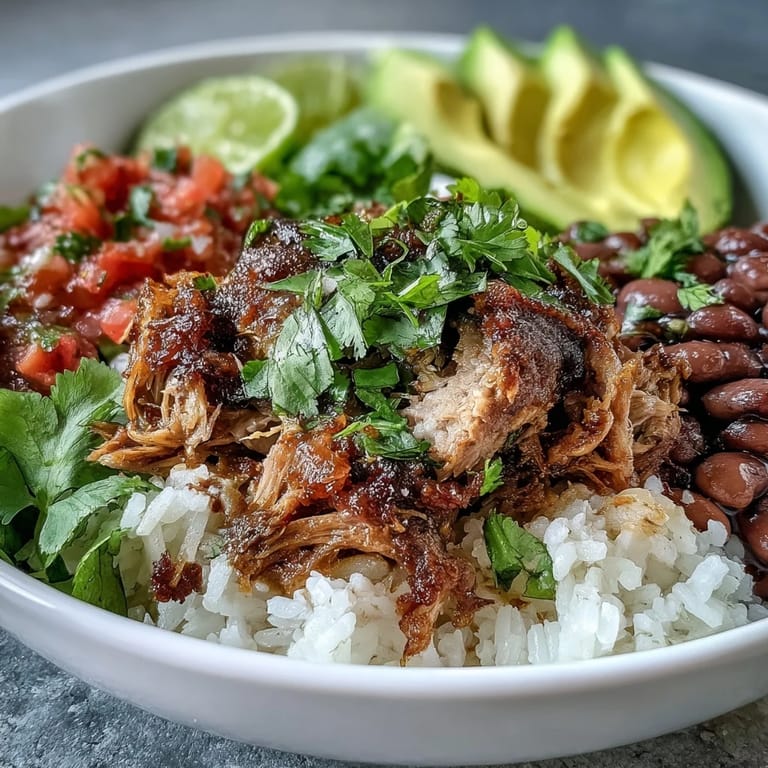
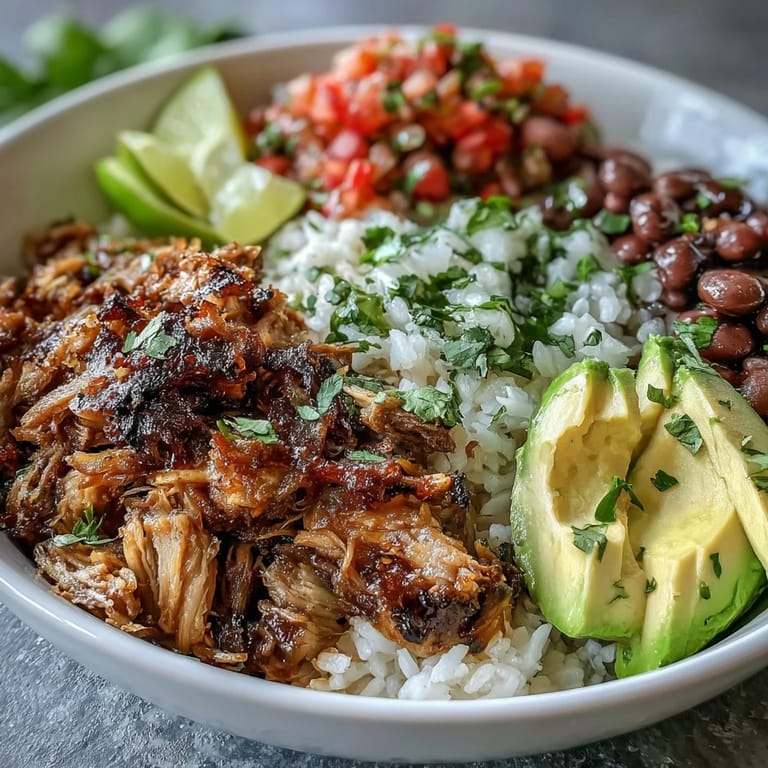
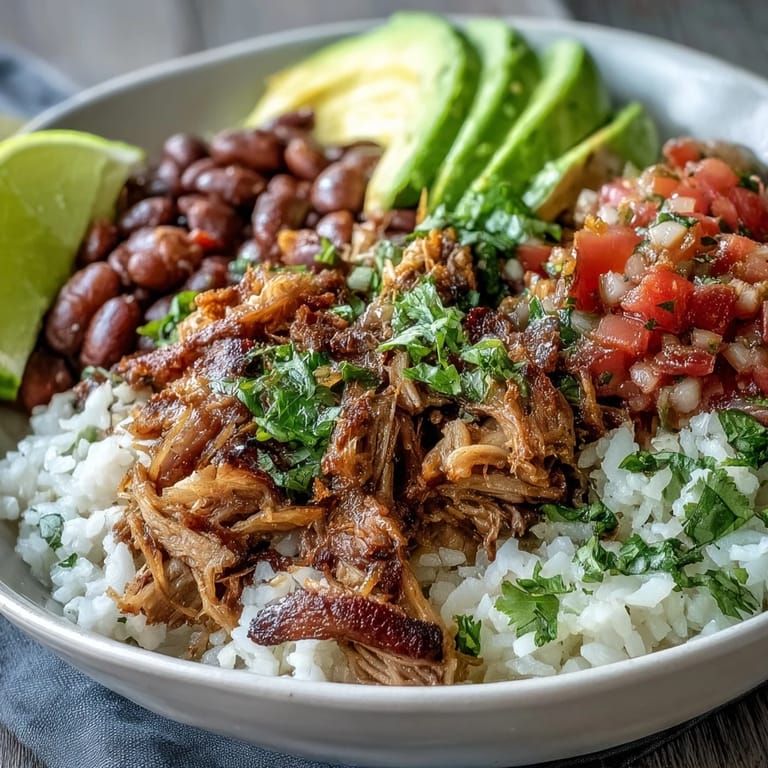
- Start each bowl with a generous portion of fluffy rice as your base, then add beans, carnitas, fresh salsa, avocado slices, and a sprinkle of cilantro—arrange them so each spoonful contains all the elements. Serve with lime wedges so everyone can brighten their bowl right before eating.
 Save
Save There's something quietly powerful about how a carnitas bowl brings people together, the way everyone customizes it slightly and ends up talking about how good it is. It's become my go-to when I want to cook something that feels special without being stressful.
Make-Ahead Magic
The best part about this recipe is that carnitas actually improve when made a day or two ahead—the flavors deepen as they sit in their own liquid, and reheating them takes maybe five minutes. You can cook the rice and beans the morning of, keep them separately in the fridge, and assemble everything fresh when you're ready to eat. This makes weeknight entertaining feel effortless rather than exhausting.
Customization That Actually Matters
The beauty of a bowl format is that everyone gets to decide what their perfect version looks like, and somehow that makes people more invested in eating it. I've learned that offering pickled red onions, sour cream, hot sauce, or queso fresco on the side invites people to build something that feels personal rather than prescribed. Once you've made the components, the bowl becomes less about following instructions and more about following your appetite.
Beyond the Basic Bowl
While this recipe is perfect as written, I've found small variations that keep things interesting on repeat nights. Brown rice or quinoa swap in beautifully for white rice if you're looking for something with more texture, and roasted vegetables or jackfruit transform the bowl for vegetarian friends without losing that satisfying, comforting feeling. The skeleton of the recipe is flexible enough to adapt to what you have on hand or what you're craving.
- Experiment with different salsas—mango salsa or corn salsa add surprising brightness.
- A squeeze of fresh lime juice right before eating lifts all the flavors at the last second.
- Leftover carnitas freeze beautifully and taste just as good three months later.
 Save
Save Every time I make these bowls, I'm reminded that the best meals are the ones built with both care and the understanding that people will make them their own. This is one worth keeping on repeat.
Recipe FAQs
- → Can I make carnitas in the oven instead of a slow cooker?
Yes, you can braise the pork in a Dutch oven at 325°F (165°C) for about 3-4 hours until tender, covered with a tight-fitting lid. Add the broth and citrus juices to keep the meat moist during cooking.
- → How do I store leftover carnitas?
Store shredded carnitas in an airtight container in the refrigerator for up to 4 days. Freeze for longer storage—portion the meat into freezer bags and freeze for up to 3 months. Reheat gently with a splash of broth or water.
- → What other toppings work well in this bowl?
Pickled red onions add tangy crunch, while sour cream or Greek yogurt provides creaminess. Shredded cheese, diced radishes, jalapeño slices, or a drizzle of chipotle sauce also complement the flavors beautifully.
- → Can I use brown rice instead of white rice?
Absolutely. Brown rice adds nutty flavor and extra fiber. Cook it according to package directions—typically it requires about 45 minutes and more water than white rice. Quinoa or cauliflower rice also work as alternatives.
- → Is there a way to make this vegetarian?
Replace the pork with young jackfruit or roasted sweet potatoes, butternut squash, and bell peppers. Season them with the same spice blend and roast until tender and slightly caramelized for similar texture and flavor.
- → What cut of pork works best for carnitas?
Pork shoulder (also called Boston butt) is ideal due to its marbling and connective tissue, which breaks down during slow cooking. Pork butt also works well. Look for pieces with good fat content for the most tender results.