 Save
Save There's something about the smell of lemon hitting hot broth that stops me mid-whatever-I'm-doing. My neighbor Maria brought over a pot of this soup one February afternoon when the kitchen felt too quiet, and I watched her toss in the couscous like she'd done it a thousand times. She said it was just Greek comfort food, nothing fancy, but that first spoonful with the warm feta dissolving on my tongue made me realize comfort doesn't need to be complicated. Now I make it whenever someone needs feeding or I need reminding that simple ingredients can taste like home.
I made this for my sister when she was going through something rough, and she sat at my kitchen counter while the soup simmered, just talking and letting the steam warm her face. She asked if I was trying to fix everything with food, and I said maybe, but also that good soup was its own kind of therapy. By the end of the bowl, she was smiling again, and I realized that's exactly what this dish does.
Ingredients
- Boneless, skinless chicken breasts (about 400 g or 2 breasts): They cook quickly and shred beautifully, plus they keep the broth clean and light instead of murky.
- Low-sodium chicken broth (1.2 liters or 5 cups): I learned the hard way that regular broth can taste like pure salt by the time the soup finishes cooking.
- Bay leaf (1): Don't skip this tiny thing, it whispers subtle flavor into everything.
- Medium yellow onion, finely chopped (1): This is your flavor foundation, so take time to chop it evenly so it softens at the same rate.
- Medium carrots, peeled and diced (2): They add natural sweetness and turn soft enough to melt if you're not paying attention, which I wasn't the first time.
- Celery stalks, diced (2): The trinity of onion, carrot, and celery builds flavor that tastes like you've been cooking all day.
- Garlic cloves, minced (3): Fresh garlic makes this soup taste alive, so don't use the jarred stuff if you can help it.
- Extra virgin olive oil (2 tablespoons): Good oil matters here because it's one of the few fats, so let it be the real thing.
- Pearl couscous (150 g or 3/4 cup): It's bigger than regular couscous and holds its texture beautifully instead of turning to mush.
- Lemon (zest and juice from 1 large): The zest goes in early to infuse, the juice goes at the end so it stays bright and doesn't cook off.
- Dried oregano (1/2 teaspoon): A small amount so it doesn't overpower, but enough so you know you're eating something Greek.
- Ground black pepper (1/4 teaspoon): Freshly cracked if you have the patience.
- Salt, to taste: Add it at the very end so you can control how salty the final bowl becomes.
- Feta cheese, crumbled (80 g or about 3 oz): Get good feta if you can, the kind that crumbles instead of turning into paste.
- Fresh dill, chopped (2 tablespoons): This is the little green burst that makes people ask what that flavor is.
- Lemon wedges, for serving: Let people squeeze their own, everyone's lemon tolerance is different.
Tired of Takeout? 🥡
Get 10 meals you can make faster than delivery arrives. Seriously.
One email. No spam. Unsubscribe anytime.
Instructions
- Warm the oil and start the base:
- Heat olive oil in a large pot over medium heat until it shimmers slightly, then add the onion, carrots, and celery all at once. You'll hear them sizzle, which is your signal things are starting, and you should stir occasionally for about 5 minutes until the vegetables soften and the onion turns translucent.
- Wake up the garlic:
- Once the vegetables have relaxed, add the minced garlic and stir constantly for just 1 minute so it perfumes the whole pot without burning and turning bitter.
- Build the broth:
- Pour in the chicken broth and tuck in the bay leaf, then bring everything to a gentle simmer where bubbles are barely breaking the surface. This is not a rolling boil moment, you want tenderness not turbulence.
- Cook the chicken through:
- Add the chicken breasts and let them poach in the broth for 12 to 15 minutes until they're fully cooked through with no pink inside. A thermometer should read 165°F if you're checking, but honestly you can just cut into the thickest part to see.
- Shred and return:
- Lift the chicken onto a cutting board, remove that bay leaf from the pot, and use two forks to pull the chicken into bite-sized pieces. Stir them back into the simmering broth.
- Add the couscous and aromatics:
- Stir in the pearl couscous, dried oregano, and lemon zest, then let everything simmer for 10 to 12 minutes until the couscous is tender and has absorbed some of the golden broth. The zest will have colored everything slightly yellow by now.
- Brighten with lemon juice:
- Squeeze in the lemon juice and taste, then add salt gradually until it tastes right to you, because salt tolerance is personal and you're the only one who knows your preference.
- Serve with the toppings:
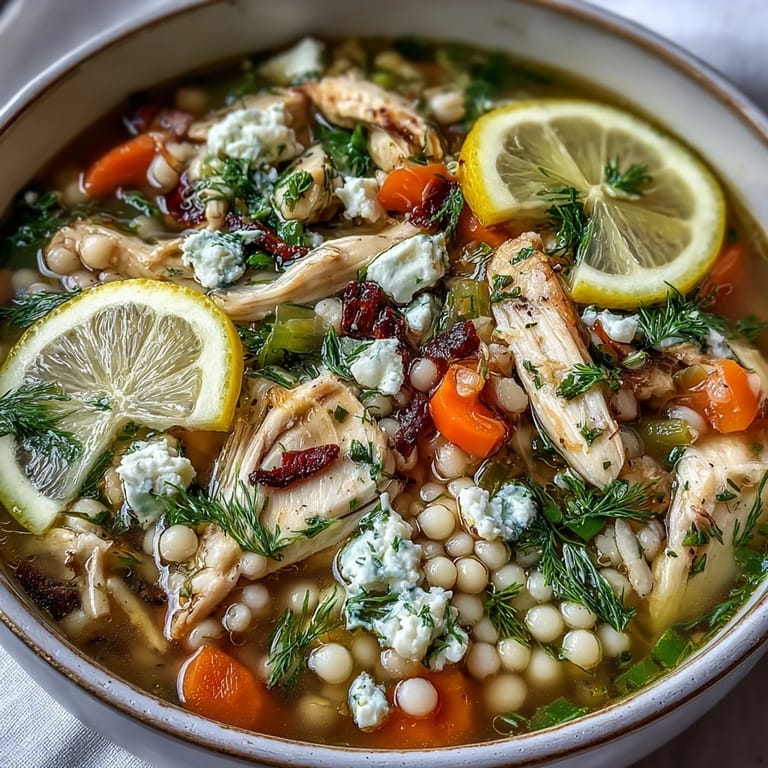
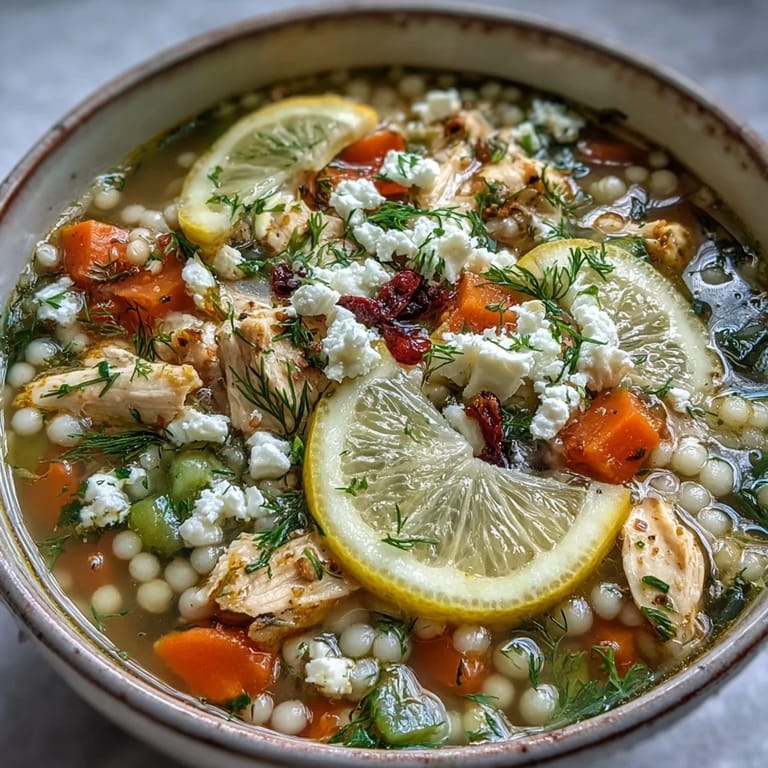
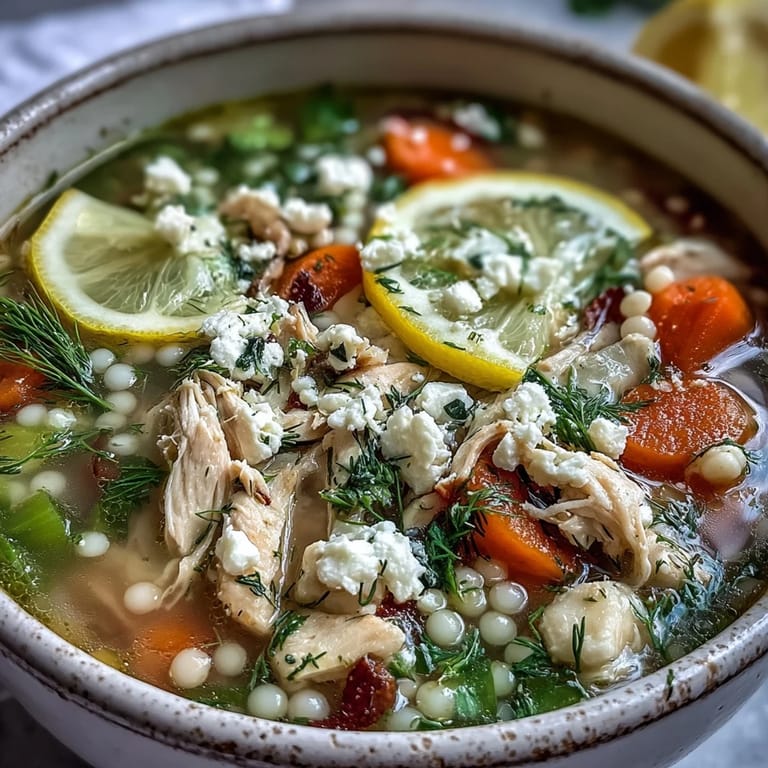
- Ladle the soup into bowls and let people watch the crumbled feta soften from the heat, scatter the bright green dill over top, and hand around the lemon wedges so they can squeeze more if they want.
 Save
Save This soup became my go-to when I needed to feed people without making them feel like I was trying too hard. There's something about Greek food that says both casual and thoughtful at the same time, which is exactly the mood I want to set.
The Lemon Balance
The first time I made this, I added all the lemon juice at once and it turned sour in a way that made my mouth pucker. Now I understand that the zest gives you the lemon essence early, building flavor gently as the soup simmers, while the juice added at the end is your sharp punctuation. It's the difference between background notes and something that hits your palate fresh, and once you feel that difference, you start thinking about it in other dishes too.
Why Pearl Couscous Matters
Regular couscous would disappear into the broth and make everything thick and gluey, but pearl couscous is sturdy enough to stay distinct, giving you little pockets of grain that catch the broth and taste chewy in the best way. I learned this by accident when I grabbed the wrong box at the market and ended up with something better than what I was planning for originally.
Making It Your Own
This soup is forgiving enough that you can add spinach or kale in the last 5 minutes if you want more greens, or simmer a Parmesan rind with the broth from the start if you want something deeper and richer. Some people swear by bone-in thighs instead of breasts, saying the extra fat and flavor makes it taste restaurant-quality, and they're not wrong.
- Crusty bread or pita is not optional, it's essential for soaking up every last drop.
- Leftovers thicken up as the couscous continues absorbing broth, so add a splash of water when you reheat if you want it soupy again.
- This freezes beautifully if you leave out the feta and dill, adding those fresh when you reheat so they taste bright instead of tired.
 Save
Save This is the kind of soup that makes you feel capable in the kitchen and generous when you're serving it to someone. It tastes like you know something about food that most people don't, when really you just followed a few simple steps and listened to what the soup needed.
Recipe FAQs
- → What makes this soup Greek-inspired?
The combination of lemon zest and juice, dried oregano, feta cheese, and fresh dill creates authentic Greek flavors. These ingredients are staples in Mediterranean cuisine and provide the distinctive bright, herbaceous profile characteristic of Greek cooking.
- → Can I make this soup ahead of time?
Yes, this soup stores well for 3-4 days in the refrigerator. The pearl couscous will absorb some liquid, so you may need to add more broth when reheating. The feta and dill are best added fresh just before serving.
- → What can I substitute for pearl couscous?
You can use orzo pasta, rice, or regular couscous. Adjust cooking times accordingly—rice will take longer to cook, while regular couscous cooks faster. Pearl couscous provides the best texture for this hearty soup.
- → Is this soup freezer-friendly?
The soup freezes well for up to 3 months, but it's best to freeze it without the feta and dill. Add fresh garnishes after reheating. The couscous may soften slightly after freezing, but the flavor remains excellent.
- → How can I add more vegetables to this soup?
Spinach or kale can be added during the last 5 minutes of simmering. You could also include zucchini, bell peppers, or diced tomatoes with the other vegetables. These additions increase nutrition while complementing the Mediterranean flavors.
- → Can I use rotisserie chicken instead?
Absolutely! Using a rotisserie chicken reduces cooking time significantly. Skip the initial chicken simmering step, add shredded rotisserie meat when you would return the cooked chicken to the pot, and simmer just long enough to heat through.