 Save
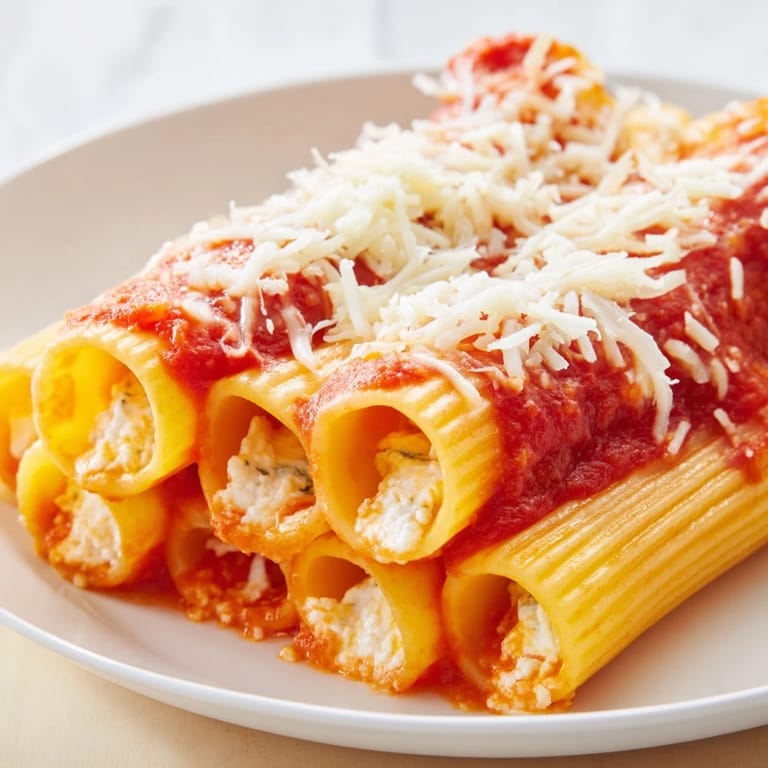
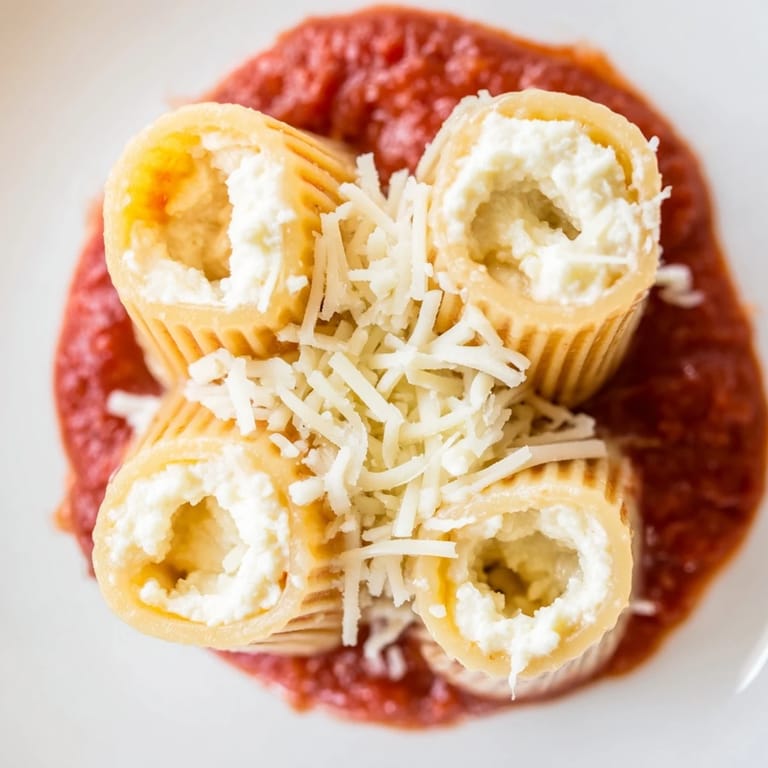
Save The first time I arranged rigatoni tubes upright in a baking pan, standing shoulder-to-shoulder like little pasta soldiers waiting to be filled, I knew I'd stumbled onto something special. My kitchen filled with that smell of ricotta and fresh basil, and suddenly I understood why this dish feels both elegant and deeply comforting at the same time. There's something about the honeycomb pattern that emerges when you cut into it—golden cheese peeking through creamy tubes, marinara pooling at the edges—that makes even a casual weeknight dinner feel like an occasion. I've made it dozens of times since, and it never fails to impress people who watch it come together.
I remember my friend Marco watching me pipe cheese into each tube and saying, "You're making it look too easy." By the time those rigatoni came out of the oven, bubbling and golden, he understood why I keep coming back to this recipe—it's the kind of dish that tastes like you put in real effort, but the process is surprisingly forgiving and actually kind of meditative once you get into a rhythm.
Ingredients
- Rigatoni: Use 500 g of sturdy pasta tubes that won't collapse when you stuff them; the wider opening is essential for piping the filling.
- Ricotta cheese: This is your creamy base at 350 g—it should be smooth and spreadable, not grainy or separated.
- Mozzarella: Split between 100 g grated for the filling (this adds stretchiness) and 150 g shredded for topping (this gets those golden bubbles).
- Parmesan cheese: Use 50 g in the filling and 2 tbsp on top for that sharp, salty bite that makes everything taste more intentional.
- Fresh egg: One large egg binds the filling and helps it hold together beautifully when baked.
- Basil and parsley: Fresh herbs are non-negotiable here—dried won't give you that brightness that cuts through the richness.
- Marinara sauce: 700 ml of good quality sauce; this is not the place to skimp because it's the flavor backbone.
- Olive oil: 1 tbsp for the pan and tossing the pasta keeps everything from sticking and adds subtle flavor.
Tired of Takeout? 🥡
Get 10 meals you can make faster than delivery arrives. Seriously.
One email. No spam. Unsubscribe anytime.
Instructions
- Get Your Pan Ready:
- Preheat your oven to 200°C (400°F) and grease a 23 cm springform or deep round baking pan with olive oil. Line the bottom with parchment paper so your finished bake slides out cleanly without drama.
- Cook the Pasta Just Right:
- Boil the rigatoni in salted water but pull it out 2 minutes early—it should still have a real bite to it because it'll keep cooking in the oven. Toss it lightly with olive oil so the tubes don't clump together.
- Mix Your Cheese Magic:
- Combine ricotta, mozzarella, Parmesan, egg, basil, parsley, salt, and pepper in a bowl and stir until completely smooth. Taste a tiny spoonful and adjust seasoning if needed—this filling should taste slightly salty and herbaceous.
- Stand Them Up:
- Arrange the cooked rigatoni upright in your prepared pan, packing them as tightly as possible so they support each other. This vertical arrangement is what creates that honeycomb magic when you slice it.
- Fill Each Tube:
- Transfer your cheese mixture to a piping bag (or a zip-top bag with a corner snipped off) and pipe the mixture into each pasta tube until full. Work methodically, and don't worry if a few tubes get a little overfilled—it all melts together beautifully.
- Pour the Sauce:
- Evenly distribute the marinara sauce over the filled pasta, and gently tap the pan on the counter so the sauce settles between the tubes instead of just sitting on top. This ensures every bite has that tomato flavor layered throughout.
- Top It Off:
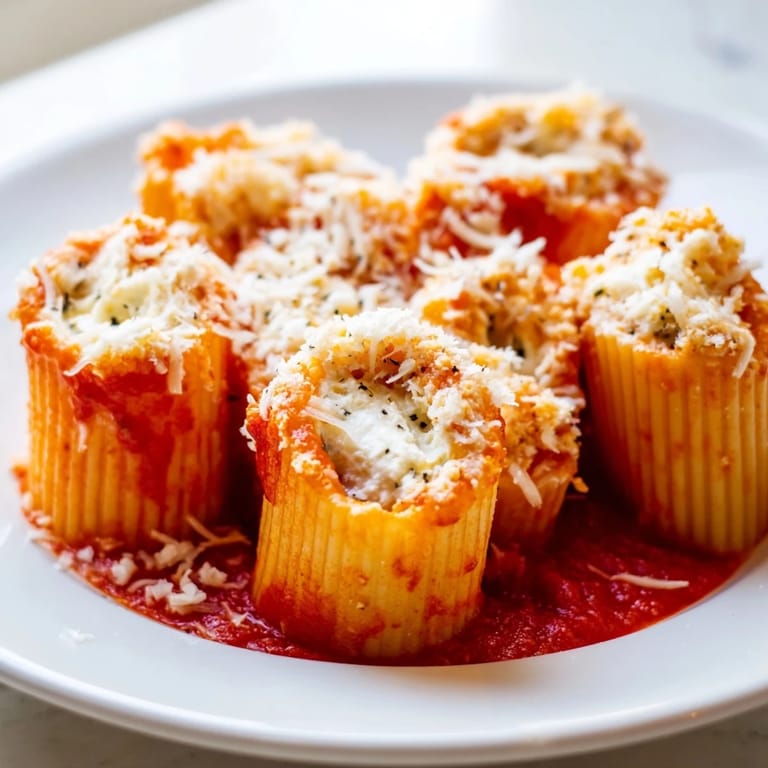
- Scatter shredded mozzarella and grated Parmesan over the entire surface, being generous because this is what turns golden and gorgeous.
- Bake with Foil First:
- Cover loosely with foil and bake for 25 minutes so everything heats through gently without the cheese browning too fast. Remove the foil and bake another 10 minutes until the cheese is bubbly and golden brown.
- Let It Rest:
- Pull it from the oven and let it sit for 10 minutes—this allows the structure to set so each slice stays neat. Release the springform, slice, and serve warm with the sauce spooned around it.
 Save
Save There was a moment when my cousin cut into a slice and the steam rose up, and she just closed her eyes and said, "This is it. This is the dish I'm going to remember from tonight." That's when I realized this recipe isn't just about feeding people—it's about creating a small memory that sticks with them, one creamy, sauce-covered tube at a time.
Why This Arrangement Works
Standing the tubes upright instead of laying them down does something almost architectural to the dish. The pasta acts like a container, holding the cheese filling secure and allowing it to get creamy and slightly browned at the top while the marinara seeps in from below. When you slice it, you get these perfect cross-sections that look like a beautiful honeycomb—and honestly, that visual payoff is half the reason this dish impresses so consistently. It's also practical because the tubes don't roll around or shift during baking, so your presentation stays intact from oven to table.
Customizing Your Filling
While the classic cheese filling is absolutely delicious, this is also a forgiving recipe that welcomes your own ideas. I've stirred sautéed spinach into the ricotta mixture and watched people become instant fans; other times I've crumbled cooked Italian sausage into it for friends who want something richer. The beauty is that the structure stays exactly the same—you're just swapping what goes inside the tubes. Even if you don't have fresh basil and parsley, this won't fall apart, though the flavor will definitely shift without those herbs.
Making It Ahead and Storage
This is genuinely one of those dishes that gets better when you build it in advance. You can assemble the entire pan—tubes standing, filling piped in, sauce poured, cheese scattered—hours before you need to bake it, then just pop it in the oven when you're ready. Cover it with plastic wrap instead of foil while it waits in the fridge. Leftovers keep beautifully for three days covered, and you can either reheat gently in the oven with a little extra marinara, or eat it cold straight from the fridge if you're the kind of person who enjoys room-temperature baked pasta.
- Assemble up to 8 hours ahead and refrigerate until baking time.
- Leftover slices reheat best at 160°C (325°F) covered with foil for about 15 minutes.
- You can freeze unbaked assembled pans for up to a month, adding 10 extra minutes to the baking time.
 Save
Save This dish has become my go-to when I want to cook something that feels special without spending the whole evening stressed in the kitchen. There's real comfort in how straightforward it is once you understand the method, and real magic in how it lands on the table.
Recipe FAQs
- → How is the rigatoni prepared for the bake?
Cook the rigatoni until very al dente, about 2 minutes less than package instructions, then drain and toss with olive oil to prevent sticking.
- → What cheeses are used in the filling?
The filling combines ricotta, grated mozzarella, grated Parmesan, and a binding egg with fresh basil and parsley.
- → How is the pasta arranged in the pan?
The rigatoni tubes are stood upright, tightly packed to fill the pan for the honeycomb effect before filling with cheese mixture.
- → What is the baking process for this dish?
Cover loosely with foil and bake for 25 minutes, then uncover and bake for an additional 10 minutes until cheese is bubbly and golden.
- → Can additional ingredients be added to enhance flavor?
Yes, sautéed spinach or cooked Italian sausage can be added to the cheese filling for extra flavor.