 Save
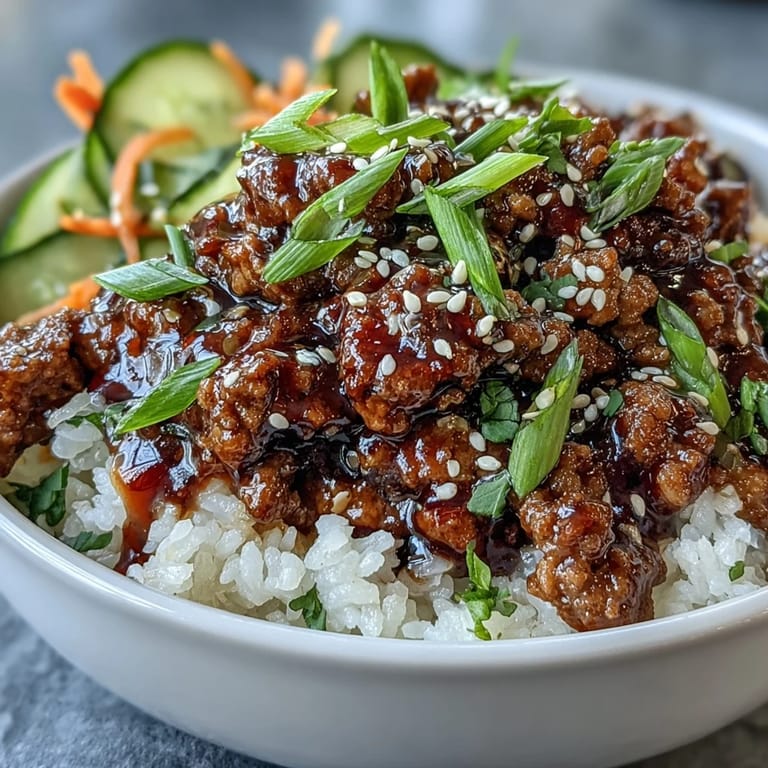
Save I discovered this bowl on a Tuesday when my fridge was looking sparse and I had ground beef that needed using. There's something about Korean flavors that makes even the simplest ingredients feel exciting—the way sesame oil fills your kitchen with that toasty warmth, how ginger and garlic wake up your senses. Twenty minutes later, I was eating straight from the skillet, realizing I'd stumbled onto something I'd be making constantly. The pickled vegetables add this bright, tangy snap that keeps you coming back for another bite.
My partner walked into the kitchen halfway through cooking and just watched silently until the aroma hit him. He didn't say anything, just grabbed a bowl and sat at the counter waiting. That's when I knew this wasn't just dinner—it was one of those recipes that makes people pause and pay attention to what they're eating.
Ingredients
- Lean ground beef (500 g): The foundation here, and you want it lean so the sauce clings instead of swimming in grease—this is where patience with browning really pays off.
- Soy sauce (2 tablespoons): Use tamari if you're gluten-free, but honestly the regular stuff brings an umami depth that makes the whole dish taste like you spent hours on it.
- Toasted sesame oil (1 tablespoon): Don't skip this or substitute—it's what makes your kitchen smell like a Korean restaurant, and a little goes a long way.
- Brown sugar (1 tablespoon): Just enough sweetness to balance the salty and spicy without making it dessert.
- Fresh ginger (2 teaspoons grated): Freshly grated tastes completely different from the jarred stuff—you'll notice the brightness immediately.
- Garlic (3 cloves minced): Three feels right here; any more and it overpowers, any less and you lose that savory foundation.
- Gochujang or sriracha (1 teaspoon optional): This is your heat level dial—add it if you like spice, leave it out if you prefer purely savory.
- Green onions (2 sliced): They should go in after heat so they stay fresh and bright, not wilted and muted.
- Sesame seeds (1 tablespoon): Toast them yourself if you have time—the difference in flavor is remarkable.
- Rice base (4 cups cooked jasmine or cauliflower rice): Jasmine rice soaks up the sauce beautifully, but cauliflower rice works if you want to keep it lighter.
- Carrot (1 cup julienned): These pickle beautifully and stay crisp, adding sweetness and crunch.
- Cucumber (1 cup sliced): Thin slices are key—they soften just enough to take on flavor while keeping their texture.
- Radish (1/2 cup sliced): The underrated pickled vegetable that brings peppery bite and color.
- Rice vinegar (1/2 cup): This is milder than white vinegar, so it doesn't overpower the vegetables.
- Sugar and salt for pickling: These dissolve into the vinegar to create the perfect tangy-sweet brine.
Tired of Takeout? 🥡
Get 10 meals you can make faster than delivery arrives. Seriously.
One email. No spam. Unsubscribe anytime.
Instructions
- Start your pickle:
- Whisk rice vinegar, sugar, and salt together until the sugar dissolves completely—you want no graininess. Toss in your carrots, cucumber, and radish, stirring occasionally as they sit, because they'll gradually release their own liquid and get even more flavorful as time goes on.
- Get your rice ready:
- Follow package instructions and keep it warm on the back burner. If you're using cauliflower rice, this is the moment—it'll be done in about five minutes.
- Brown the beef properly:
- Heat your skillet until it's hot enough that the beef hits it with a satisfying sizzle. Break it up with your spoon as it cooks, and don't stir it constantly—let pieces develop some color and crust before moving them around, which takes about five to seven minutes total.
- Build the sauce:
- Once the beef is cooked through, pour in your soy sauce, sesame oil, brown sugar, ginger, garlic, and gochujang if you're using it. The kitchen will smell incredible in about thirty seconds. Cook for two to three minutes, stirring often, until everything melds and coats the meat in a glossy, fragrant layer.
- Finish with brightness:
- Remove from heat and stir in your sliced green onions and sesame seeds. The residual heat is perfect—it keeps them from getting cooked into submission.
- Assemble with intention:
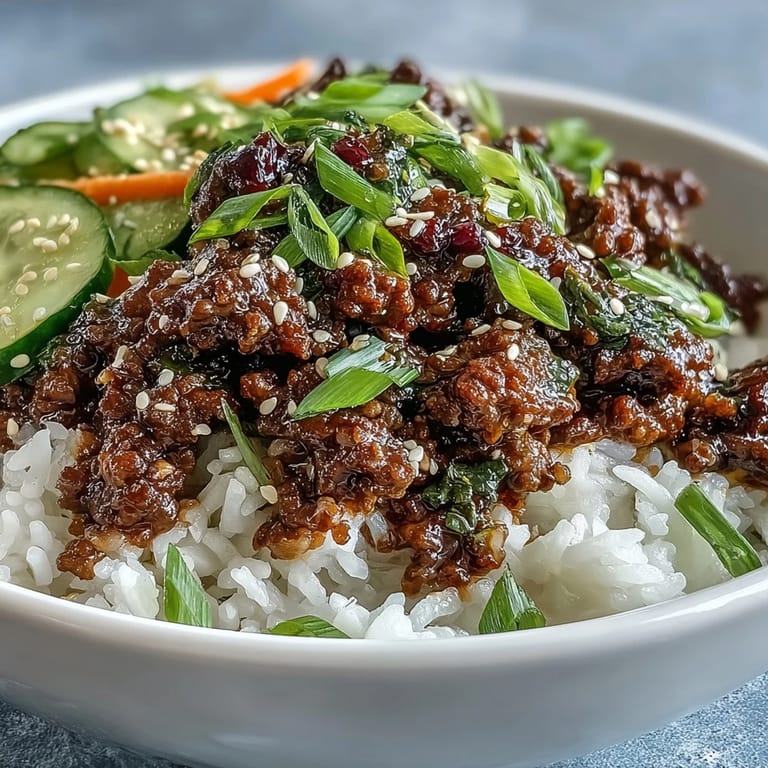
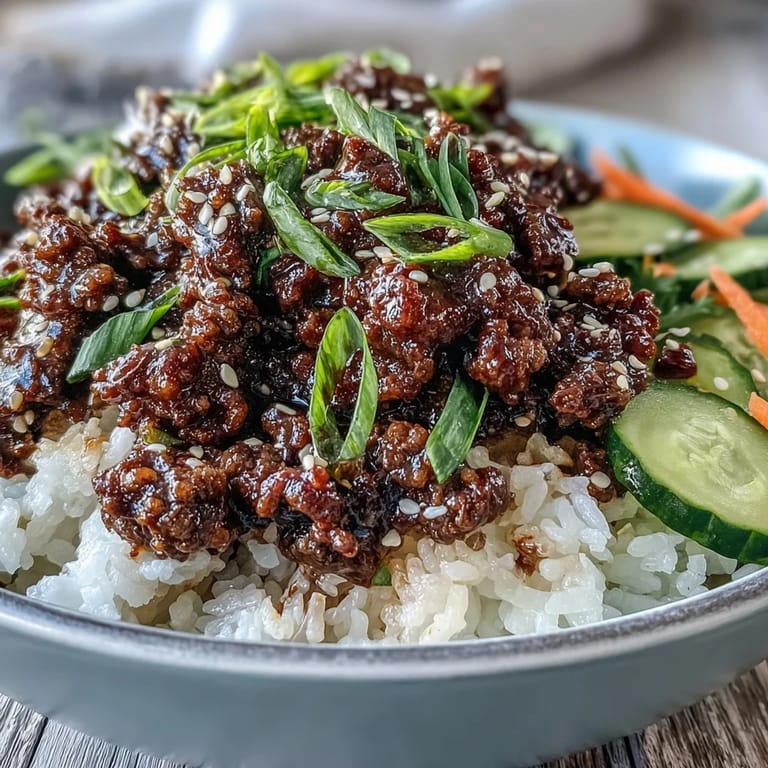
- Divide warm rice among bowls, pile the seasoned beef on top, and add a generous handful of those pickled vegetables. Don't be shy here—they're the reason this doesn't feel heavy.
- Top and serve:
- Scatter extra green onions and sesame seeds over everything and eat while it's still warm enough that the rice soaks up all those flavors.
 Save
Save Last week I made this for friends on a rainy evening, and someone asked if they could have the recipe before they'd even finished eating. There's something about a bowl this vibrant and flavorful that makes people feel taken care of, like you didn't just feed them but actually thought about making them happy.
Why This Bowl Became My Go-To
It sits in that perfect zone where it feels special enough for company but simple enough for a solo Tuesday night dinner. The Korean flavors feel sophisticated without requiring any exotic techniques, and the whole thing comes together while you're still in the mood to cook. Most importantly, it tastes even better the next day if you have leftovers, because the beef absorbs more of that savory-sweet sauce overnight.
Playing With Heat and Spice
I learned quickly that gochujang and sriracha aren't interchangeable here, though both work. Gochujang has this fermented depth that feels more authentic, while sriracha is brighter and spicier. If you're sensitive to heat, start without either and taste before deciding—you can always add more, but you can't take it back.
Make It Your Own
The beauty of a bowl is that it bends to what you have and what you're craving. Ground turkey works beautifully if you want something leaner, and honestly, scrambled or fried tofu picked up some of those flavors just as well on the night I had friends over who didn't eat beef. A fried egg on top is a game-changer if you want more richness and protein, and cauliflower rice makes it feel lighter without sacrificing satisfaction.
- Try adding a soft-boiled egg or crispy fried egg on top for richness and extra protein.
- Cucumber can be swapped for Asian pear or daikon radish if you want different textures in your pickled mix.
- Leftover beef freezes beautifully, so make a double batch and you've got dinner sorted for next week.
 Save
Save This bowl has become my answer to the question of what to make when I want something that feels restaurant-quality but doesn't require complicated skills or a long ingredient list. It's one of those recipes that reminds you that the best meals are often the simplest ones, built on flavors you actually understand.
Recipe FAQs
- → What makes this bowl Korean-inspired?
The combination of soy sauce, toasted sesame oil, fresh ginger, garlic, and gochujang Korean chili paste creates authentic Korean flavors. These ingredients are commonly used in Korean cooking to season meats and create that distinctive savory-sweet profile.
- → Can I make this bowl ahead of time?
Yes! The seasoned beef reheats beautifully and actually develops more flavor after sitting. The pickled vegetables keep for up to a week in the refrigerator. Store components separately and assemble when ready to serve.
- → Is cauliflower rice as good as regular rice?
Cauliflower rice creates a lighter, low-carb version that still absorbs all the delicious sauces. While the texture differs slightly, it's an excellent option for reducing calories and carbohydrates while maintaining the bowl's satisfying nature.
- → What can I use instead of gochujang?
Sriracha works well as a substitute, though it has a different flavor profile—more vinegar-forward and less fermented. Alternatively, use red pepper flakes with a touch of miso paste for a similar depth of flavor.
- → How long do the pickled vegetables need to sit?
Fifteen minutes is minimum for lightly pickled vegetables, but they become more flavorful and tender after sitting for 1-2 hours. You can even prepare them a day ahead—the longer they marinate, the more tangy and delicious they become.
- → Can I use other proteins in this bowl?
Absolutely! Ground turkey or chicken work beautifully with the same seasoning. For vegetarian versions, crumbled firm tofu or tempeh absorb the sauces well and provide satisfying texture. Adjust cooking time accordingly.