 Save
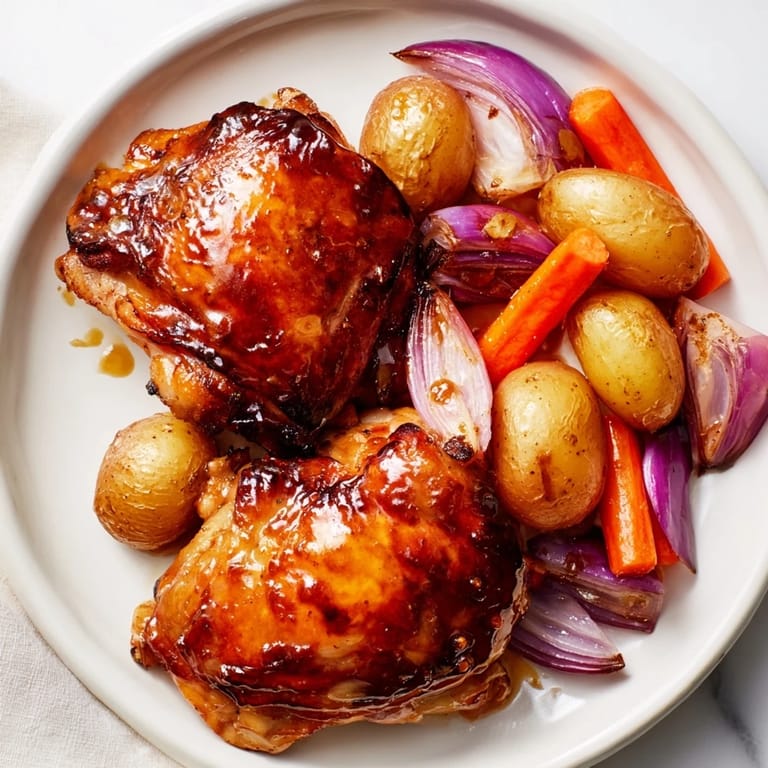
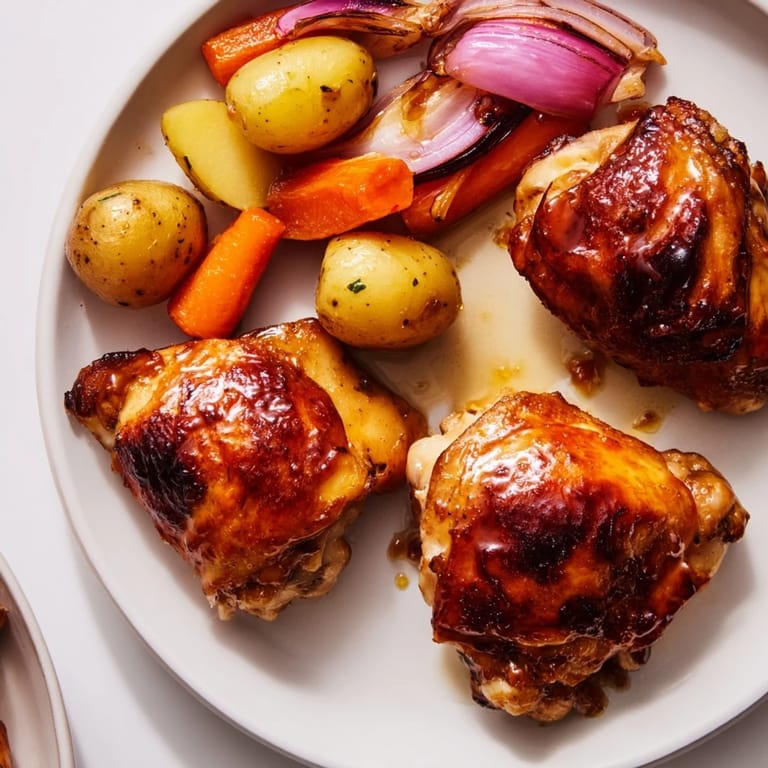
Save There's something about a sheet pan dinner that feels like a small victory in the kitchen—everything roasted together, minimal cleanup, and somehow the vegetables taste better when they've been mingling with caramelized chicken skin. I discovered this maple-Dijon combination by accident one autumn evening when I had leftover maple syrup and an unopened jar of Dijon mustard staring at me from the pantry. The glaze came together almost without thinking, and the moment those thighs hit the oven, the whole kitchen smelled like something between a farm stand and a fancy restaurant.
I made this for my partner one busy Wednesday when we'd both had the kind of day that made cooking feel impossible, but I promised something better than pizza. Watching him eat three of these thighs and make those quiet satisfied sounds made me feel like I'd actually done something right. Now whenever the forecast shows a crisp evening, he asks if we're having "that chicken" again.
Ingredients
- Bone-in, skin-on chicken thighs: Eight pieces (about 1.2 kg or 2.5 lbs)—the bones and skin are where all the flavor hides, and they keep the meat impossibly tender.
- Kosher salt and freshly ground black pepper: 1/2 teaspoon each—don't skip the fresh grinding; it makes the seasoning taste alive instead of flat.
- Pure maple syrup: 1/4 cup—real maple syrup, not the pancake version; the difference matters here.
- Dijon mustard: 3 tablespoons—this is the secret to the tangy complexity that balances the sweetness.
- Olive oil: 2 tablespoons—helps the glaze cling and adds richness.
- Apple cider vinegar: 2 tablespoons—brings brightness and keeps the sauce from feeling cloying.
- Garlic: 2 cloves, minced—fresh garlic melts into the glaze and becomes almost sweet as it roasts.
- Fresh thyme leaves: 1 tablespoon (or 1 teaspoon dried)—if you have fresh, use it; the flavor is sharper and more aromatic.
- Smoked paprika: 1/2 teaspoon—adds a subtle depth and a hint of smoke that rounds everything out.
- Baby potatoes: 400 g (14 oz), halved—they caramelize beautifully alongside the chicken.
- Carrots: 250 g (9 oz), peeled and cut into 2-inch pieces—they become tender-sweet and soak up the pan drippings.
- Red onion: 1, cut into wedges—the red onion turns jammy and mild as it roasts.
Tired of Takeout? 🥡
Get 10 meals you can make faster than delivery arrives. Seriously.
One email. No spam. Unsubscribe anytime.
Instructions
- Get Your Oven Ready and Prep the Sheet:
- Preheat to 220°C (425°F) while you line your sheet pan with parchment paper or foil. This small step saves you from scrubbing caramelized glaze later, which is always worth it.
- Dry and Season the Chicken:
- Pat each thigh dry with paper towels—this is not a step to rush, because any moisture on the skin will turn to steam instead of crispy browning. Season both sides generously with salt and pepper.
- Make the Glaze:
- In a small bowl, whisk together the maple syrup, Dijon mustard, olive oil, apple cider vinegar, minced garlic, thyme, and smoked paprika. The mixture should smell complex and slightly tangy, like autumn captured in a sauce.
- Arrange and Season Your Vegetables:
- Spread the potatoes, carrots, and red onion wedges across the prepared sheet pan, drizzle lightly with olive oil, and season with a pinch of salt and pepper. Toss everything together so the oil coats the vegetables evenly, then spread them out so they'll have room to caramelize and not steam.
- Position the Chicken and Glaze:
- Nestle each thigh skin-side up among the vegetables, spacing them so air can circulate underneath. Brush each thigh generously with the maple-Dijon glaze, but hold back about 2 tablespoons—you'll use this for a second coat later to build up that sticky, caramelized crust.
- First Roast:
- Slide the pan into the oven and roast for 30 minutes without opening the door. Resist the temptation to check; you want the heat to stay constant and the chicken skin to develop that deep golden color.
- Glaze Again and Finish:
- Pull the pan out, brush each thigh with the reserved glaze, and return to the oven for another 5 to 10 minutes. You're looking for the skin to be deep mahogany and the internal temperature to reach 74°C (165°F) when you check the thickest part of the thigh without touching bone.
- Rest and Serve:
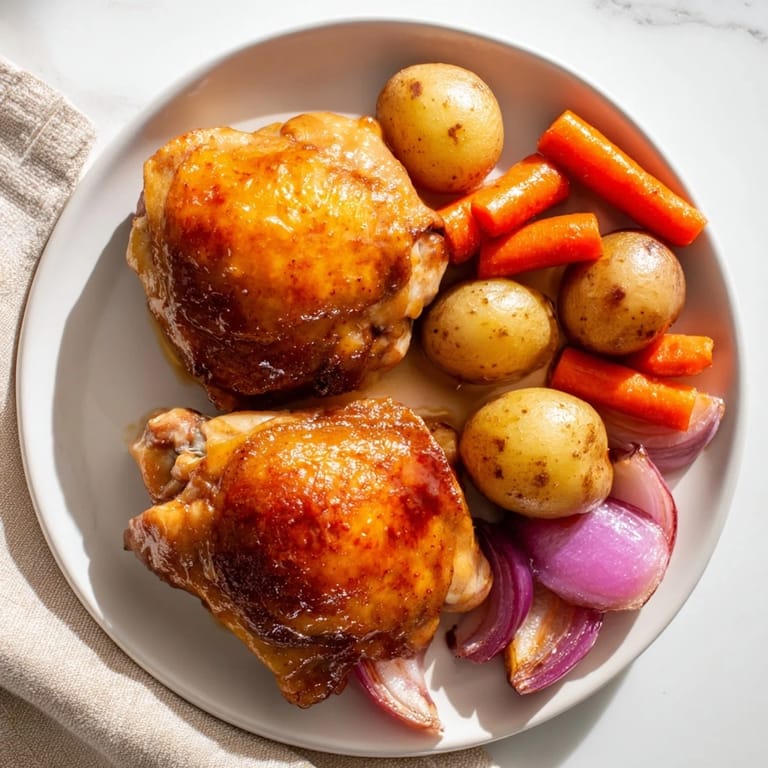
- Let everything sit on the pan for 5 minutes before serving—this resting time lets the juices redistribute through the meat. Scatter extra thyme on top if you have it, and bring the whole pan to the table so people can serve themselves.
 Save
Save The first time I served this to my family, my mother asked if I'd learned to cook like this at some culinary school, and I didn't have the heart to tell her it started as a pantry accident. Now it's what people request when they know I'm cooking, which feels like a small kind of privilege.
Why Maple and Dijon Work Together
The magic of this glaze lives in the tension between sweet and sharp. Maple syrup brings warmth and body, but Dijon mustard prevents it from feeling one-note or cloying—the mustard has a gentle bite that wakes up your palate with every bite. Apple cider vinegar amplifies that brightness, so the whole glaze tastes complex and balanced instead of just sweet. When you brush it on chicken thighs that have been roasting, it caramelizes into something that tastes almost restaurant-quality, but in a way that feels honest and home-cooked.
Vegetables That Belong on This Pan
The beauty of a sheet pan dinner is that you can swap vegetables based on what you have or what looks good at the market. Baby potatoes and carrots are my anchors because they cook in almost the same time as the chicken, but sweet potatoes add an earthy sweetness, parsnips bring a subtle nuttiness, and Brussels sprouts—halved and tossed in the same way—become crispy and caramelized at the edges. Red onion is non-negotiable in my kitchen because it mellows as it roasts and absorbs the pan drippings, but white onion or shallots work too. The key is cutting everything to roughly the same size so it all finishes together.
- If you use thicker vegetables like whole Brussels sprouts, add them to the pan 10 minutes before the chicken so they get a head start.
- Any leftover glaze can be spooned over roasted vegetables as a finishing touch.
- Don't crowd the pan—vegetables steam instead of caramelize if they're packed together.
Pairing Wine and Sides
A crisp Chardonnay or dry Riesling cuts through the richness of the chicken skin and complements the sweet-savory glaze without competing with it. If you want something unexpected, a light red like Pinot Noir works beautifully too. The vegetables already on the pan are substantial enough that you don't need a second side, but if you're feeding people who expect more, crusty bread to soak up the pan drippings is always welcome, or a simple green salad dressed with lemon to balance all that richness.
How to Avoid Common Mistakes
Sheet pan dinners seem foolproof until you make one mistake and learn an expensive lesson. I've overcooked chicken by not checking temperature, undercooked vegetables by crowding the pan too much, and watched glaze burn because I forgot it was concentrated enough to scorch. The biggest shift in my cooking came when I started treating sheet pan dinners like they deserve as much attention as anything else on the stove—they do, because the outcome depends on those small decisions.
- Use an instant-read thermometer to check the thickest part of the largest thigh; it should read 74°C (165°F) at the bone.
- If your vegetables are browning too fast and the chicken isn't done, loosely tent the pan with foil for the last few minutes.
- Reserve any pan drippings after serving—they're liquid gold for soups or gravy, and they freeze beautifully for up to three months.
 Save
Save This is the kind of dinner that reminds you why you cook at home—nothing fancy, just ingredients coming together in a way that tastes like care and attention. I hope it becomes one of those recipes you make on repeat, the kind that doesn't need the recipe card after a while because you know it by heart.
Recipe FAQs
- → What cut of chicken works best for this dish?
Bone-in, skin-on chicken thighs provide juiciness and crisp skin, but boneless thighs can be used with a shorter cooking time.
- → Can I substitute the vegetables?
Yes, sweet potatoes, parsnips, or Brussels sprouts are excellent alternatives and complement the maple-Dijon flavors well.
- → How do I know when the chicken is fully cooked?
Ensure the internal temperature reaches 74°C (165°F) and the skin looks caramelized and crisp.
- → Is this dish gluten-free?
Yes, but always check packaged ingredients like Dijon mustard for potential gluten content or cross-contact if sensitive.
- → What wine pairs well with these flavors?
A crisp Chardonnay or dry Riesling complements the sweet and tangy glaze beautifully.