 Save
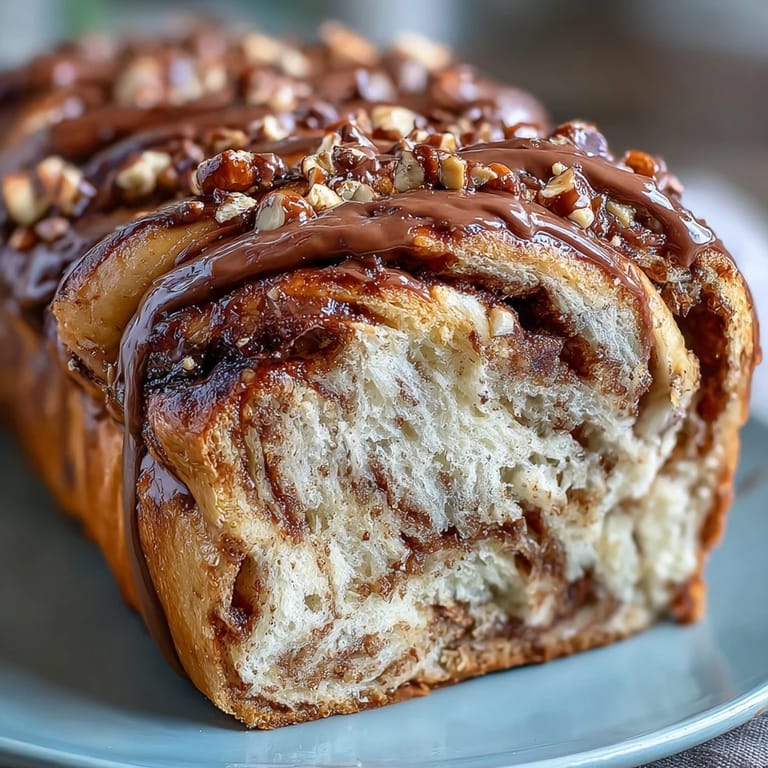
Save The first time Nutella babka perfumed my kitchen, it wasn’t because I’d planned an elaborate brunch. It happened on a gray Saturday when the weather forecast was indecisive, and all I wanted was something fragrant baking away while coffee brewed. The way the dough grew pillowy under my palms felt oddly comforting, while streaks of Nutella painted my fingertips. Who knew a few twists and a bit of patience could transform a simple afternoon into an edible work of art? That first loaf disappeared faster than I’d expected—chocolate smudges on plates proof that no one could resist going back for seconds.
I’ll never forget the time my brother came to visit just as I pulled this babka loaf from the oven. He followed the smell straight to the kitchen, peering over my shoulder as the syrup sizzled into the cracks of the golden crust. We ended up slicing it while still warm, barely giving it time to settle, and the mood in the house just lifted—sweet bread tends to have that effect. Years later, whenever I want to turn a regular morning into something memorable, I know this is the recipe to reach for.
Ingredients
- All-purpose flour: I’ve found this yields the ideal structure—enough strength for a lofty rise, but never tough.
- Granulated sugar: Beyond sweetness, just a bit keeps the dough tender and ensures it browns with a gentle luster.
- Instant yeast: This needs no proofing—just toss it in with the dry ingredients, and it rewards you with a dependable rise every time.
- Salt: A little salt in sweet dough is essential; the flavor comes alive, and the Nutella doesn’t overwhelm.
- Whole milk (lukewarm): I always check with my finger so it’s warm but not hot—too cold and the dough takes ages to rise.
- Large eggs (room temp): Give them at least 30 minutes out of the fridge; it helps the dough come together smoothly and adds a lovely richness.
- Vanilla extract: That hint of vanilla rounds out the sweetness and adds a cozy aroma that wafts up while the loaf bakes.
- Unsalted butter (softened): Soft butter is key—it melts right in, giving the bread its plush crumb.
- Nutella or chocolate-hazelnut spread: Warming it slightly makes spreading so much easier, and don’t be shy—a generous layer means bold chocolatey swirls.
- Chopped toasted hazelnuts (optional): A few sprinkles tuck in extra texture and flavor, and they toast more as the bread bakes.
- Unsalted butter, melted (optional): Mixing this with the Nutella amps up meltiness—I reserve it for days when true indulgence feels called for.
- Granulated sugar & water (for syrup): This simple syrup keeps everything moist and glossy; don’t skip it!
Tired of Takeout? 🥡
Get 10 meals you can make faster than delivery arrives. Seriously.
One email. No spam. Unsubscribe anytime.
Instructions
- Start the Dough:
- Mix your flour, sugar, yeast, and salt in a mixer bowl—whisking makes sure nothing clumps in the corners.
- Add Liquids & Mix:
- Pour in the lukewarm milk, crack in the eggs, and drizzle in vanilla; let the dough hook stir until everything forms a rough ball (don’t worry if it looks messy—that’s normal).
- Knead with Butter:
- Add bits of softened butter little by little with the mixer running; watch how the dough softens up and gets shiny as it absorbs everything (about 8–10 minutes—patience pays off).
- First Proof:
- Shape into a ball, then pop it in an oiled bowl; cover and wait until the dough doubles—on chilly days, I sometimes set it by a sunny window.
- Prep the Filling:
- If the Nutella feels too stiff, microwave it for 10 seconds; a soft spread goes further without tearing the dough.
- Roll Out & Fill:
- Knock the air out, sprinkle flour over your counter, and roll the dough into a rectangle; spread Nutella to the edges, leaving a small border so fillings don’t spill out, and sprinkle hazelnuts if you like a little crunch.
- Shape & Twist:
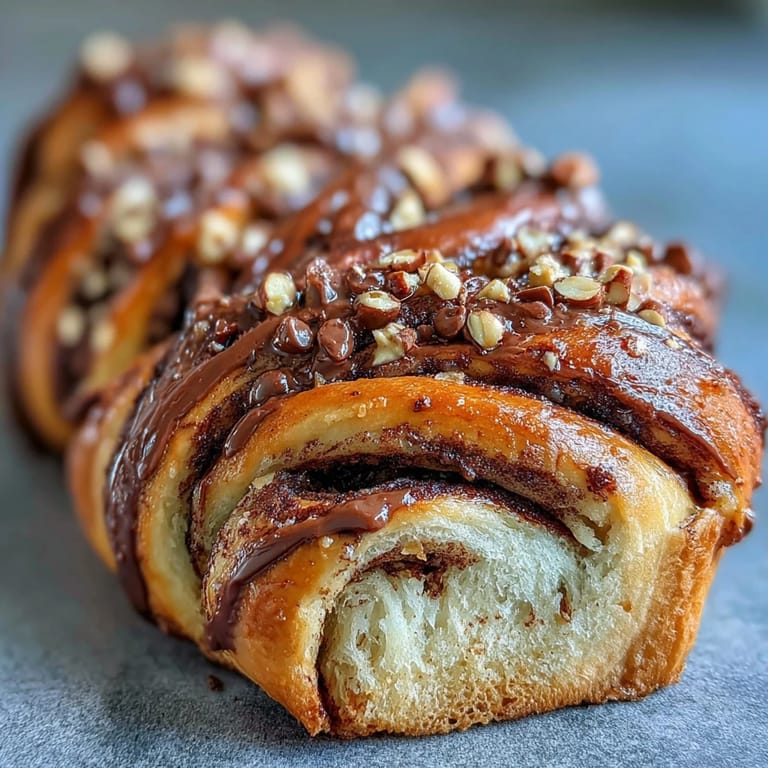
- Roll up the dough tightly, slice the log in half lengthwise, and twist the two cut sides together—chocolate stripes should peek out with every turn.
- Second Proof:
- Transfer the twisted loaf to a greased pan, cover, and let it get puffy and dramatic for 45–60 minutes.
- Bake:
- Slide into a preheated oven at 350°F, and bake until the loaf is golden, the kitchen smells divine, and a skewer poked in the center comes out mostly clean (about 30–35 minutes).
- Make Syrup:
- While the babka bakes, simmer sugar and water till clear; set aside—the syrup should be ready just as the loaf comes out.
- Brush & Cool:
- Immediately brush hot syrup over the crust so it soaks in; give the babka 15 minutes to set up in the pan, then carefully lift out to finish cooling on a rack (if you can wait that long).
 Save
Save One autumn afternoon, I brought freshly baked babka to my neighbor after she’d had a rough week. Sitting at her table with mugs of tea, we pulled slices apart with our hands—the chocolate streaks seemed to pause conversation, at least for a few moments. It’s simple gestures and shared bites like that which turn bread into connection.
Making Babka Part of Your Weekend Rituals
Baking this babka isn’t just about the loaf—it’s the slow rhythm of rising dough, the playful mess of Nutella smears, and the anticipation that builds as the house fills with a sweet, nutty aroma. On weekends, I find the process grounding; between steps, there’s time to read a few pages or call a friend. And somehow, every batch tastes different—sometimes fluffier, sometimes with extra swirls—all perfect in their own way.
Swapping Ingredients and Creative Twists
If you’re out of Nutella, try peanut butter with mini chocolate chips or a cinnamon sugar filling for a babka spin. I’ve even folded in a swipe of fruit preserves for a breakfasty version; just keep the filling layer thin so it doesn’t make the dough soggy. Creativity keeps this recipe fresh and lets it become truly your own.
Keeping Leftovers Just as Tempting
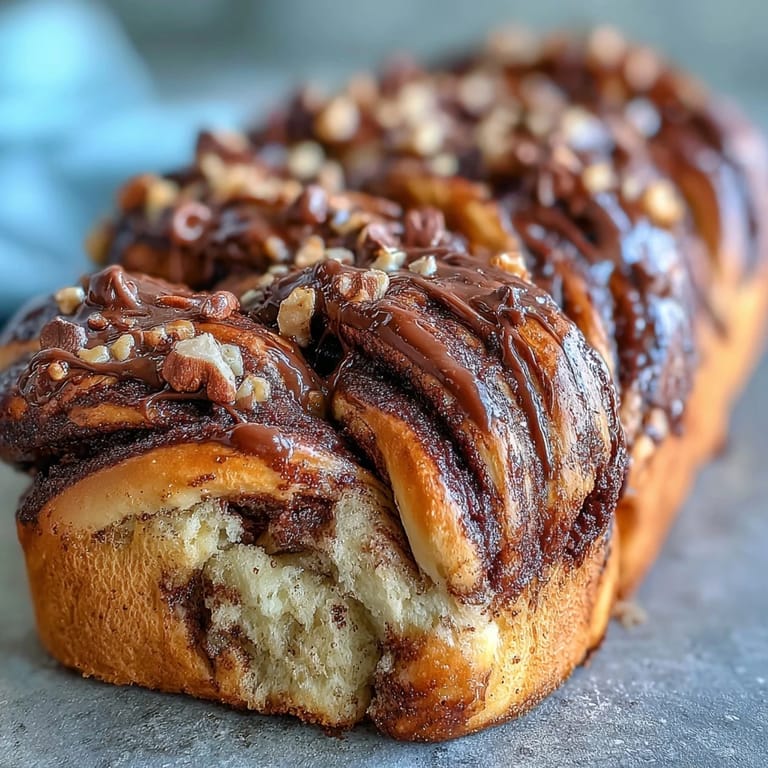
Babka seems tailor-made for sneaky late-night kitchen visits, but it keeps well, too. Wrap extra slices snugly and warm in the oven or toaster for a few minutes—they’ll taste newly baked. To prevent dryness, store the loaf in an airtight container, and don’t refrigerate—room temperature is best.
- If the babka feels a bit stale, a quick zap in the microwave brings it right back.
- Stale ends make incredible French toast or bread pudding.
- Remember: generous syrup brushing keeps leftovers soft and decadent.
 Save
Save I hope your kitchen fills with sweet anticipation, friends, and the promise of one more irresistible slice. Happy baking—save me an end piece if you can.
Recipe FAQs
- → How do I keep the filling from leaking during baking?
Leave a ½-inch border when spreading the filling and chill the rolled loaf briefly before twisting. A tight roll and firm seams help contain the spread while baking.
- → Can I substitute the spread or nuts?
Yes. Use a chocolate spread, praline paste, or nut butter; swap hazelnuts for chopped pecans or almonds. Adjust sweetness if using very sweet or salty spreads.
- → How long should the rises take?
First rise typically takes 1–1.5 hours at warm room temperature until doubled. After shaping, a second 45–60 minute proof gives a puffy loaf. Times vary with ambient temperature.
- → What's the best way to check doneness?
Bake until the loaf is deep golden and registers about 190–200°F (88–93°C) in the center. If the top browns too quickly, tent loosely with foil.
- → How should I store and reheat leftovers?
Cool completely, then store in an airtight container at room temperature up to 3 days. Reheat slices gently in a low oven or microwave for a few seconds to revive gooeyness.
- → Can I make this by hand without a mixer?
Yes. Mix and knead by hand in a large bowl or on a floured surface until smooth and elastic, about 10–15 minutes. The dough will be slightly sticky; use a bench scraper as needed.