 Save
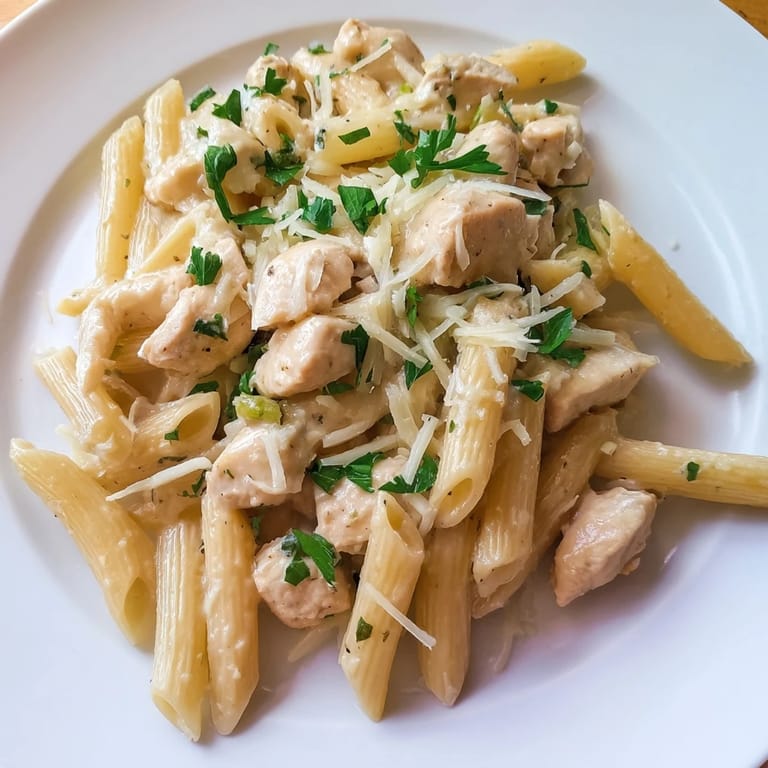
Save There's something about a weeknight when you're standing in the kitchen with thirty minutes and a hungry family depending on you. That's when this one-pan garlic Parmesan chicken pasta saved me—the kind of dish that feels like a hug in a bowl, creamy and garlicky and exactly what everyone needed without fuss. I discovered it wasn't actually a fancy restaurant trick but something simple enough to master in my own kitchen, and now it's the first thing I reach for when chaos threatens dinner time.
I remember making this for my neighbors on a Tuesday night when they'd just moved in, and I wanted something impressive but not intimidating. They came over expecting to stay twenty minutes and ended up lingering for an hour, asking for seconds and wondering aloud how something so elegant could come from a single pan on my stovetop. That's when I knew this recipe belonged in regular rotation, not just for special occasions.
Ingredients
- Chicken breasts: Two large ones cut into bite-sized pieces cook quickly and evenly, absorbing all the garlic and cream flavors as they go.
- Penne or rotini pasta: The tube shapes and spirals catch sauce in every crevice, making each bite feel substantial and satisfying.
- Parmesan cheese: Freshly grated makes all the difference—pre-shredded versions have anti-caking agents that turn grainy instead of silky.
- Heavy cream: Non-negotiable for that luxurious mouthfeel that transforms good into unforgettable.
- Unsalted butter: Gives the oil a richer, deeper brown when you sear the chicken, which is where flavor really begins.
- Garlic: Four cloves minced fine release their oils into the butter and become both fragrant and almost melting.
- Onion: Just enough to add sweetness and body without overpowering the garlic-forward profile.
- Fresh parsley: Adds brightness and a fresh herb note that cuts through all the richness at the end.
- Low-sodium chicken broth: The base that becomes your sauce—low sodium lets you control the salt and taste your own cooking decisions.
- Italian seasoning: A teaspoon of convenience that covers basil, oregano, and thyme all at once.
- Red pepper flakes: Optional but worth keeping nearby for anyone who likes their comfort food with a quiet heat.
- Salt and black pepper: Your taste buds' best friends, added in stages so you're building flavor, not fixing it at the end.
- Olive oil: Just a tablespoon for the initial heat, working alongside the butter to create the perfect cooking medium.
Tired of Takeout? 🥡
Get 10 meals you can make faster than delivery arrives. Seriously.
One email. No spam. Unsubscribe anytime.
Instructions
- Warm the pan and brown the chicken:
- Heat olive oil and butter together over medium-high heat until the butter froths and smells toasty. Season chicken pieces with salt, pepper, and half the Italian seasoning, then lay them in the hot pan—listen for that satisfying sizzle and let them alone for a minute or two before stirring, which is how they develop that golden-brown crust.
- Build your flavor base:
- Once the chicken is cooked through and set aside, add your chopped onion to the same pan and let it soften for a couple of minutes until it turns translucent. Add the minced garlic right after—just for about a minute—until the whole kitchen smells like someone's cooking something worth eating.
- Combine pasta and broth:
- Pour in your chicken broth and bring it to a boil, then stir in the uncooked pasta right away. Reduce the heat to medium and let it simmer uncovered, stirring now and then, until the pasta is tender and the liquid has mostly disappeared—this takes about ten to twelve minutes and is the exact moment everything transforms.
- Create the creamy sauce:
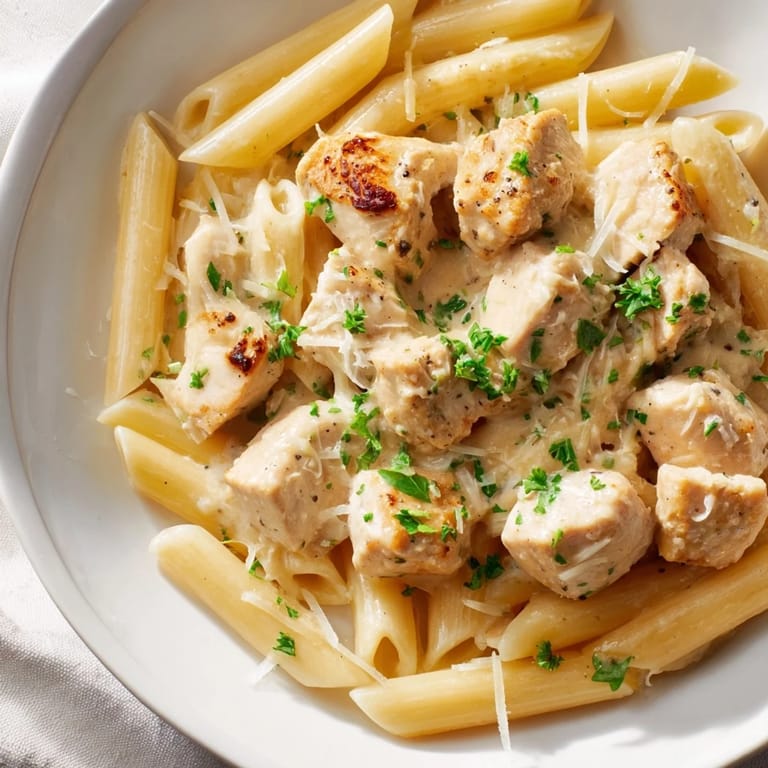
- Turn the heat down to low and pour in the heavy cream, stirring gently as you sprinkle in the Parmesan cheese. Watch as it melts and thickens into something silky and luxurious, coating every piece of pasta.
- Finish and serve:
- Return the chicken to the skillet, toss everything together, and let it warm through for a minute or two. Stir in the fresh parsley, taste it, and adjust the seasoning with more salt, pepper, or red pepper flakes if it needs your personal touch before serving hot with extra Parmesan on top.
 Save
Save My daughter asked for thirds one night and said it tasted like fancy restaurant food, which made me realize that sometimes the most meaningful moments in cooking aren't about impressing anyone—they're about feeding the people you love with something they'll actually want to eat. This dish does that without pretense or stress.
Why This Works as a One-Pan Meal
The genius of this recipe lies in timing and technique rather than complexity. By cooking the pasta directly in the broth alongside everything else, you're essentially making a pasta risotto where the starch from the pasta itself helps create the creamy sauce as the liquid reduces. This eliminates the need for a separate pot and lets all the flavors mingle together naturally, which is why each bite tastes cohesive and intentional. When you finish with the cream and cheese, you're not fighting against a separated or watery sauce—you're building on a foundation that already understands how to come together.
Simple Variations to Keep It Fresh
Once you've made this a few times, you'll notice how flexible it really is. A handful of fresh spinach stirred in at the end adds color and nutrition without changing the character of the dish. Sliced mushrooms sautéed with the onions bring an earthy note that plays beautifully with garlic and Parmesan. Some nights I add a small pinch of lemon zest at the very end, just enough to cut through the richness and make everything taste brighter. The foundation stays solid while you adapt it to what's in your fridge or what you're craving.
Making It Your Own at the Table
Part of the charm of this dish is how it invites personalization even as you're serving it. Set out the red pepper flakes and extra Parmesan and let people adjust the heat and richness to their own taste—it's a small gesture that makes everyone feel like they're part of the creation. I've watched people discover they like more herbs by adding extra parsley, or that a crack of black pepper right at the table changes everything.
- Fresh lemon juice squeezed over a bowl makes it feel lighter and more sophisticated.
- Crusty bread alongside it becomes essential for soaking up every drop of sauce.
- A simple green salad with vinaigrette on the side provides the perfect counterpoint to all that richness.
 Save
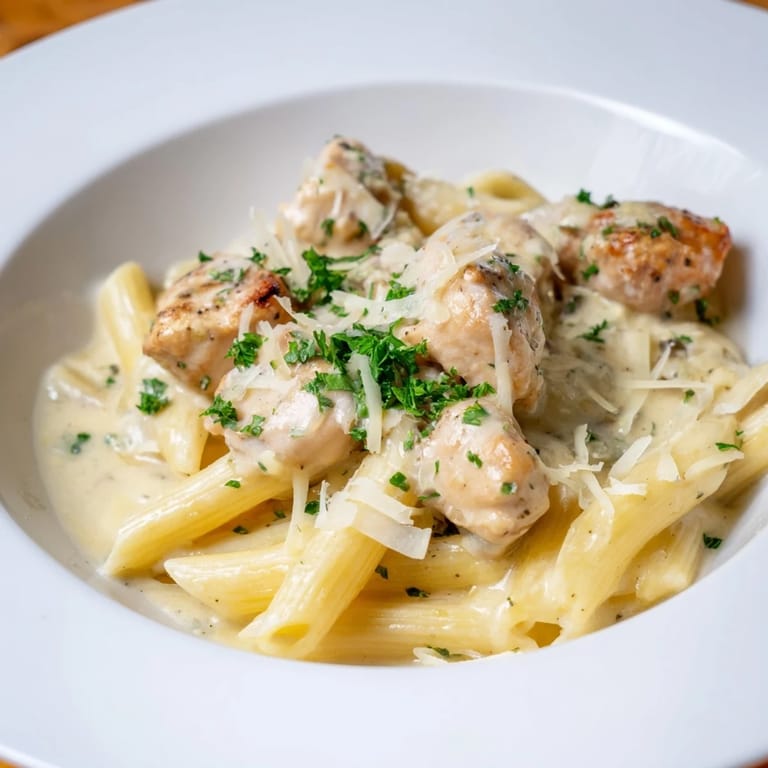
Save This is the kind of recipe that proves you don't need hours or complicated techniques to create something that feels like real cooking. Make it once and it becomes yours forever.
Recipe FAQs
- → Can I use different pasta shapes?
Yes, penne or rotini work best for absorbing the sauce, but fusilli or farfalle can be used as substitutes.
- → How can I lighten the creamy sauce?
Replace heavy cream with half-and-half or use milk combined with a small amount of flour for a lighter texture.
- → Is it possible to add vegetables?
Absolutely, baby spinach or sliced mushrooms can be added with the onions to enhance the dish’s flavor and nutrition.
- → What’s the best way to prevent the pasta from sticking?
Stir the pasta occasionally while simmering and use plenty of broth so it absorbs gradually without clumping.
- → Can gluten-free pasta be used?
Yes, substituting with gluten-free pasta works well; just ensure the chicken broth is also gluten-free.