 Save
Save My cooking got quiet one afternoon when a friend brought back nori sheets from a trip to Tokyo, and I realized I'd been overthinking Japanese bowls for years. There's something about standing at your kitchen counter, watching the steam rise from freshly cooked sushi rice while you're cutting seaweed into thin ribbons, that makes you understand simplicity isn't boring—it's clarity. This bowl came together almost by accident, but it's been a regular thing ever since, especially on days when I want something that tastes like care without the complicated fuss.
I made this for my partner after a long day, and watching them close their eyes on the first bite felt like the whole meal was worth it. The way the vinegared rice cuts through the salty nori, with that little crunch of sesame—it became our default order-in replacement in about two weeks.
Ingredients
- Sushi rice: The short-grain type matters here because it holds together and gets tender without falling apart, giving you that signature sticky-but-not-gluey texture.
- Water: The ratio is crucial—too little and you'll have crunchy rice, too much and it becomes porridge, so measure carefully and trust the 1.25:1 ratio.
- Rice vinegar: This is your acid backbone, making everything brighter and keeping the bowl from tasting flat or one-dimensional.
- Sugar and salt: These two work together to balance the vinegar, creating that seasoned rice flavor you recognize from sushi restaurants.
- Nori sheets: Cutting them into strips instead of using whole sheets lets them distribute through the bowl, giving you umami in every bite.
- Wakame seaweed: Rehydrating it properly (just until tender, not mushy) is the difference between a textured bowl and one that feels soggy and sad.
- Cucumber: Use a small one and slice it thin—it's your cooling element and crispness anchor.
- Scallions: They add a sharp, fresh note that prevents the bowl from tasting heavy or monotonous.
- Toasted sesame seeds: Buy them already toasted if you can, because toasting them yourself adds a 5-minute step that changes nothing about the final result.
- Pickled ginger and soy sauce: These are your flavor adjusters—use them to taste and personalize the bowl to your preference.
Tired of Takeout? 🥡
Get 10 meals you can make faster than delivery arrives. Seriously.
One email. No spam. Unsubscribe anytime.
Instructions
- Rinse and cook your rice:
- Run the sushi rice under cold water and stir it with your fingers until the water goes from milky to clear—this removes excess starch and prevents gumminess. Add it to a saucepan with water, bring to a boil uncovered, then cover, drop the heat to low, and let it sit undisturbed for 15 minutes until the water disappears.
- Prepare the seasoning liquid:
- Combine rice vinegar, sugar, and salt in a small bowl and microwave for just 20 seconds—you're dissolving the sugar and salt, not cooking anything. The warmth helps them integrate faster into the rice.
- Season the warm rice gently:
- Pour the vinegar mixture over the rice and use a rice paddle or wooden spoon to fold it in with slow, deliberate motions, turning the rice from the outside in. This keeps the grains intact instead of mashing them into mush, and it distributes the seasoning evenly.
- Prepare your seaweed components:
- Rehydrate the wakame according to its package (usually 3 to 5 minutes in water), then drain it thoroughly and squeeze gently to remove excess liquid. Use scissors to cut nori sheets into thin strips—they're easier to manage and look more intentional in the bowl than torn pieces.
- Build your bowl:
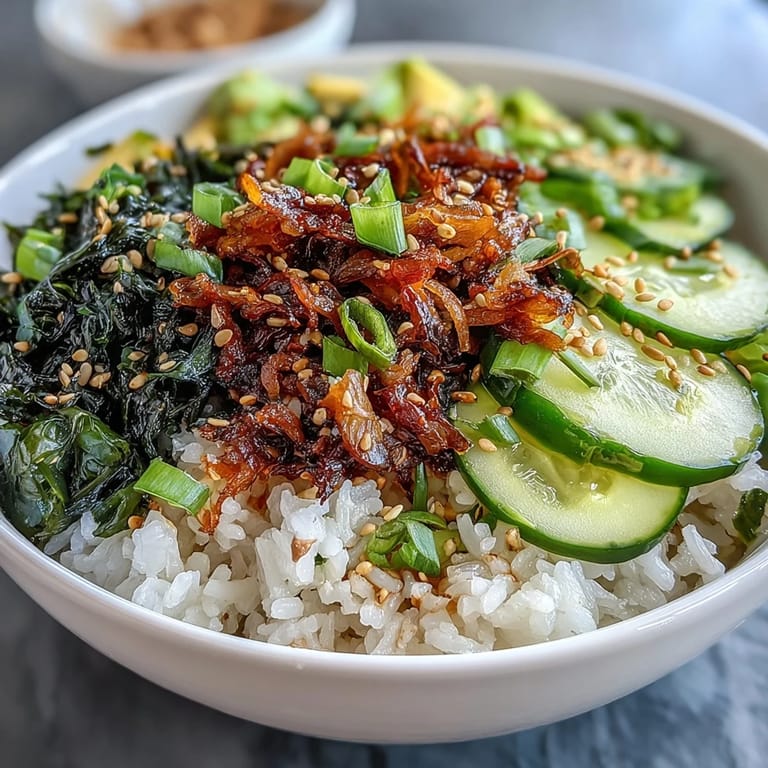
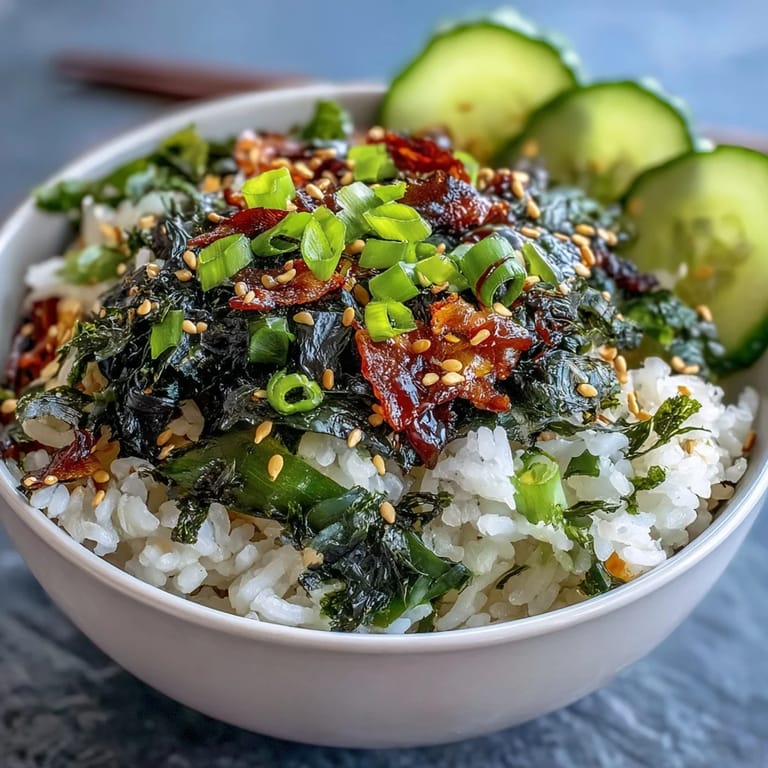
- Divide the cooled seasoned rice between two bowls, creating a shallow base. Arrange wakame, nori strips, cucumber slices, and scallions on top in whatever pattern feels right to you.
- Finish and serve:
- Sprinkle sesame seeds across the top, add furikake if you're using it, and set pickled ginger on the side for guests to add as they like. Serve immediately with soy sauce for drizzling.
 Save
Save There's a moment when you're standing over two bowls of perfectly white rice, about to arrange the dark strips of nori on top, and you realize how much this dish is about arrangement and intention. It stops being just ingredients and becomes something closer to an art form, something you built with your own hands and choices.
Why This Bowl Works
Japanese food has always taught me that you don't need many ingredients to build something deeply satisfying—you need the right ones. Here, nori brings the umami anchor, sesame seeds add warmth and toasted depth, and the seasoned rice ties everything together. The cucumber is there not just for texture but for freshness, cutting through the richness and reminding you that this meal is supposed to feel light despite being filling.
Building Your Perfect Bowl
The beauty of this recipe is that it's a template, not a rule. I've made it with avocado when I had one, with edamame for protein, with shredded carrot for sweetness and color. Some days I add a soft-boiled egg, some days I keep it strictly vegan. The seasoned rice and nori are your non-negotiables—everything else is you making it your own.
Storage and Serving Notes
This bowl is best served fresh, while the rice is still slightly warm and the nori hasn't had time to absorb moisture and lose its crunch. If you're making it ahead, store the components separately and assemble just before eating—the rice can sit in the refrigerator for a day, but the assembled bowl doesn't travel well or age gracefully.
- Keep soy sauce and pickled ginger separate so guests can adjust the seasoning to their taste.
- If you're doubling the recipe for meal prep, consider making the rice fresh each time rather than reheating, as it changes the texture and loses some of its subtle seasoning clarity.
- Nori stays crispest when it touches the rice just minutes before eating, so arrange it last if you're not serving immediately.
 Save
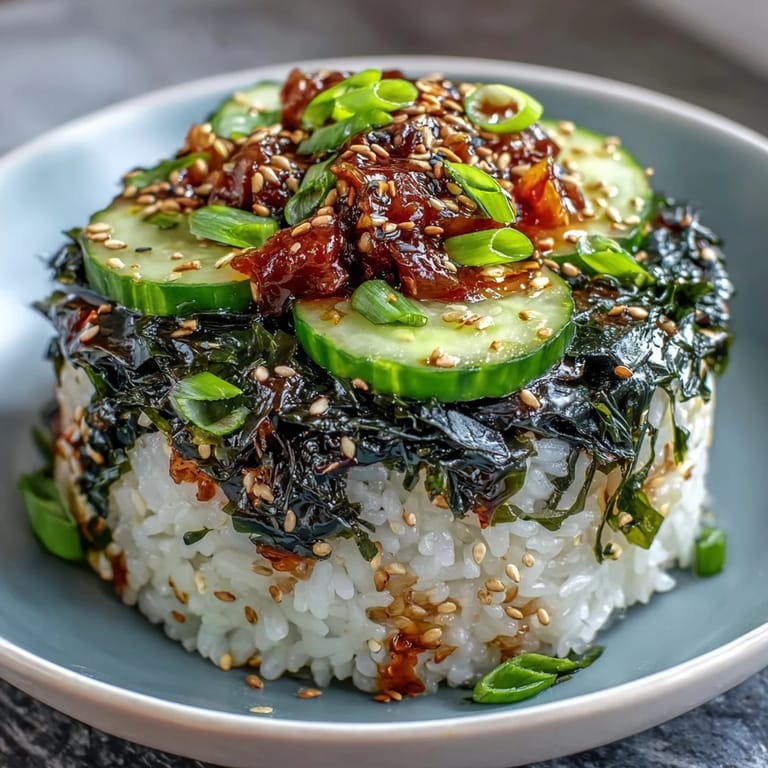
Save This bowl reminds me that the simplest meals often teach us the most about cooking and eating well. Make it once, taste it, and then make it again your way.
Recipe FAQs
- → How do I properly cook sushi rice for this bowl?
Rinse the rice under cold water until clear, then combine with water and bring to a boil. Cover and simmer on low for 15 minutes, then let it stand covered for 10 minutes to finish absorbing moisture.
- → What is the best way to prepare the seaweed?
Rehydrate dried wakame according to package instructions and drain well. Cut nori sheets into thin strips using scissors for an even distribution.
- → Can I add protein to this dish?
Yes, marinated tofu or a soft-boiled egg can be added for extra protein. Omit these for a fully vegan dish.
- → What are good garnishes to enhance flavor?
Toasted sesame seeds, pickled ginger, and furikake sprinkle add nuttiness, a tangy bite, and umami depth respectively.
- → Are there any common allergens to note?
The dish contains soy (soy sauce and optional furikake) and sesame seeds. Always check ingredients for possible gluten or fish additives.