 Save
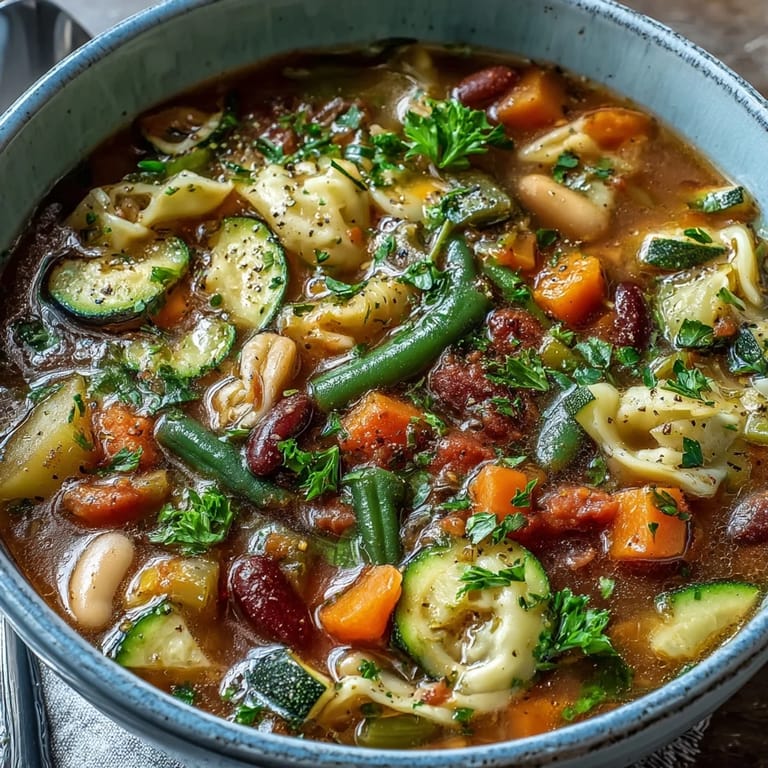
Save My neighbor Maria taught me that minestrone isn't a recipe you follow precisely—it's a canvas for whatever's in your vegetable bin and whatever mood you're cooking in. One rainy Tuesday, she showed up at my door with a pot of hers, and I watched as she casually tossed in leftover zucchini, a handful of green beans, and pasta scraps, all while telling me stories about her grandmother in Tuscany. That soup changed how I thought about cooking.
I made this for my book club on a February evening when everyone arrived looking tired and a little defeated by winter. By the time they finished their bowls with crusty bread and Parmesan, the whole mood shifted—suddenly people were laughing, asking for seconds, planning dinner dates. That's when I understood minestrone isn't really about nutrition or technique; it's about how a simple pot of soup can remind people they're taken care of.
Ingredients
- Olive oil: Use good oil here because you taste it early, and it's the foundation of everything else that follows.
- Yellow onion, carrots, and celery: This holy trinity builds flavor in a way that nothing else can—don't skip the aromatics step.
- Garlic: Mince it fresh right before you add it so the kitchen smells incredible and the flavor stays bright.
- Zucchini, potato, and green beans: These are your texture anchors and they should be cut into roughly similar sizes so everything cooks evenly.
- Diced tomatoes: The canned ones work beautifully here because they're already soft and flavorful without requiring fresh tomato season.
- Cannellini beans: Always rinse them thoroughly because that starchy liquid can make the soup cloudy and change the texture you're aiming for.
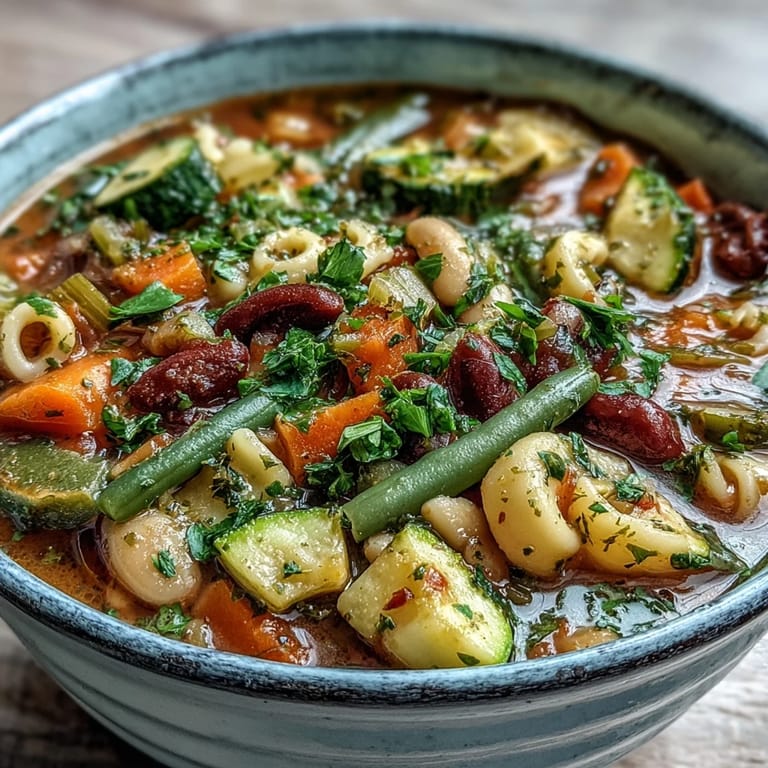
- Small pasta: Ditalini or elbow macaroni work best because they don't overpower the vegetables and cook quickly without getting mushy.
- Vegetable broth: This is your backbone—use something you actually enjoy drinking because it matters more than people realize.
- Dried Italian herbs: A blend of oregano, basil, and thyme gives you the Mediterranean moment without having to fuss with fresh herbs early on.
- Bay leaf: This leaf seems small but it brings an herbal sophistication that makes people ask what your secret ingredient is.
- Spinach or kale: Add it at the very end so it stays vibrant green and slightly tender rather than cooked into submission.
- Fresh parsley: The final flourish that adds color and a peppery freshness that brightens everything.
- Parmesan cheese: Optional but transformative—grate it fresh because pre-grated loses something essential.
Tired of Takeout? 🥡
Get 10 meals you can make faster than delivery arrives. Seriously.
One email. No spam. Unsubscribe anytime.
Instructions
- Build your flavor foundation:
- Heat the olive oil in a large pot over medium heat and add the diced onion, carrots, and celery. Sauté for about 5 minutes until they soften and start to turn golden at the edges—this is when you'll hear the sizzle calm down and smell that sweet, deep aroma. Don't rush this step; it's where the magic actually begins.
- Add the supporting vegetables:
- Stir in the garlic, zucchini, potato, and green beans and let them cook for 3 more minutes so the garlic releases its fragrance and the harder vegetables start to soften. You're creating layers of flavor here, not just dumping everything in at once.
- Bring in the broth and beans:
- Pour in the diced tomatoes, drained cannellini beans, vegetable broth, dried herbs, and bay leaf. Bring everything to a boil, which usually takes about 5 minutes and signals that the broth is now hot enough to cook everything through.
- Let it simmer and soften:
- Reduce the heat to medium-low, cover the pot, and simmer for 20 minutes so the vegetables become tender and the flavors marry together. This is the patient part—resist the urge to open the lid too often because you're creating a gentle, steamy environment.
- Add the pasta:
- Stir in the small pasta and simmer uncovered for 8 to 10 minutes until the pasta is tender but still has a slight bite and the vegetables are soft all the way through. Taste a piece of potato to know when you're close.
- Finish with greens:
- Remove the bay leaf, add the spinach or kale, and cook for just 2 minutes until it wilts down and turns a deeper green. This final addition brightens the whole bowl.
- Season and serve:
- Taste the soup and adjust the salt and pepper until it feels right to you—remember that Parmesan will add saltiness too if you're planning to use it. Ladle it into bowls and finish with fresh parsley and a generous shower of grated Parmesan if you have it.
 Save
Save My five-year-old nephew came into the kitchen while I was making this and asked why I was putting "so many colors" into one pot. I told him it was because good things deserve good company, and he nodded like that made perfect sense. When he tasted it later, he ate three bowls quietly, which for him is the highest compliment.
The Flexibility That Makes It Work
The best part about minestrone is that it genuinely welcomes improvisation. I've made it with cabbage, peas, diced bell peppers, mushrooms, and even some leftover roasted cauliflower—and every version tastes like it was meant to be that way. The soup has enough structure in its broth and beans to hold together whatever vegetables you add, which means you're never really making a mistake as long as you follow the cooking method and don't overcrowd the pot.
Storage and Reheating for Busy Days
This soup gets even better the next day when everything softens a bit more and flavors deepen. Store it in an airtight container in the refrigerator for up to 5 days, and when you reheat it, do it slowly over medium heat with a splash of water or broth because the pasta continues absorbing liquid as it sits. I often make a double batch on Sunday and portion it into containers so I have lunch ready whenever Wednesday's chaos arrives.
Pairing and Serving Ideas
Serve this with something crispy and buttery on the side—thick slices of toasted bread, grilled bread rubbed with garlic, or focaccia if you're feeling fancy. A glass of Chianti works beautifully because the acidity cuts through the richness of the olive oil and cheese, and red wine somehow makes a bowl of soup feel more intentional, more like a meal you chose rather than something you grabbed.
- A small green salad with sharp vinaigrette on the side makes the whole experience feel balanced and complete.
- If you have fresh bread, turn it into panzanella by tearing it up and letting it soak in the soup for a moment—it's rustic and deeply satisfying.
- Don't skip the Parmesan, even if you think you might—it transforms the whole bowl in the most understated way.
 Save
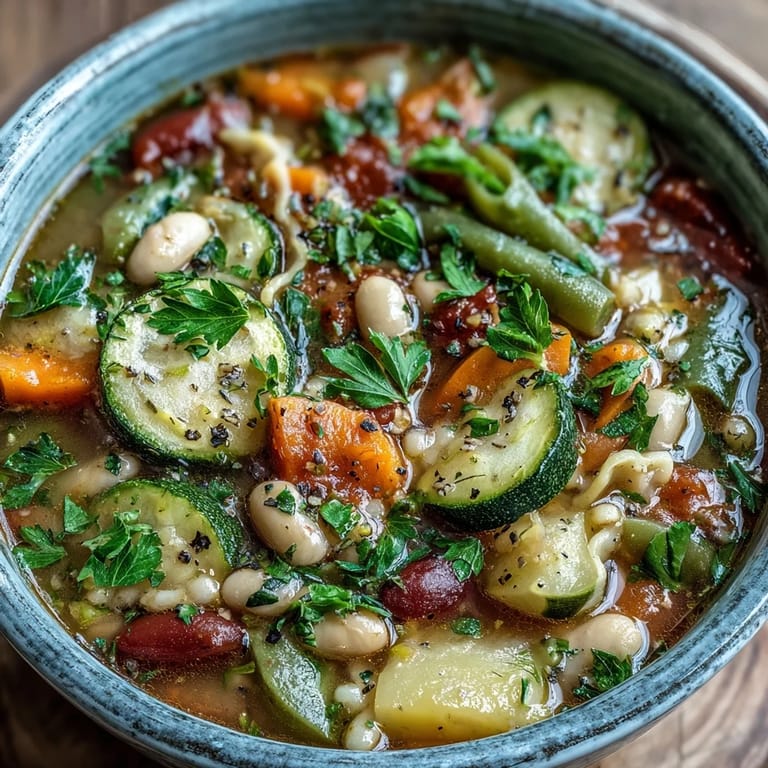
Save This is the soup you make when you want to feel like you're cooking something that matters, without all the fuss. It's honest food that says: I care about nourishing you, and I have the time to do it well.
Recipe FAQs
- → What vegetables go in minestrone?
Traditional minestrone includes onions, carrots, celery, zucchini, potatoes, and green beans. You can adapt based on season—add cabbage in winter or fresh peas in spring. The beauty lies in using whatever vegetables are fresh and available.
- → What pasta works best?
Small pasta shapes like ditalini, elbow macaroni, or shells are ideal because they scoop up easily with each spoonful. The pasta cooks directly in the broth, absorbing flavor and thickening the soup naturally.
- → Can I make this gluten-free?
Absolutely. Simply substitute regular pasta with gluten-free alternatives like rice-based pasta or quinoa spirals. The cooking time may vary slightly, so taste test for doneness before serving.
- → How long does minestrone keep?
Stored in airtight containers, minestrone keeps well for 4-5 days in the refrigerator. The flavors actually develop and deepen over time. Note that pasta may absorb more liquid, so add extra broth when reheating.
- → Can I freeze this soup?
Yes, though it's best to freeze without the pasta. Cook vegetables and beans, cool completely, then freeze for up to 3 months. Add fresh pasta when reheating to prevent it from becoming mushy.