 Save
Save There's something about celery root that catches people off guard—most home cooks walk past it in the produce section without a second glance, but once you taste it in a proper bisque, you understand why French kitchens have cherished it for generations. I discovered this soup quite by accident one autumn evening when a farmer's market vendor convinced me to take a knobby celery root home, promising it would change how I thought about vegetables. That first silky spoonful, warm and sophisticated, reminded me that the most elegant dishes often hide in plain sight, waiting for someone curious enough to try them.
I made this for my partner's parents one winter Sunday, nervous about the unfamiliar main ingredient, and watched their skepticism dissolve into quiet contentment with each spoonful. Their surprise—and subsequent requests for the recipe—cemented my confidence that this bisque deserves a permanent place in any cook's rotation, regardless of experience level.
Ingredients
- Celery root: The heart of this soup, with a subtle earthiness and mineral sweetness that deepens when cooked; peel away the tough outer skin generously, as the tender flesh underneath is what you're after.
- Leek: Use only the white and light green portions for a clean, mild onion-like sweetness that won't overpower the delicate celery root flavor.
- Yukon Gold potato: The natural starch from these waxy potatoes helps create silky texture without adding density or cloudiness.
- Vegetable stock: Choose a quality, unsalted version so you can season to your exact preference; homemade stock elevates this soup considerably if you have it on hand.
- Heavy cream and whole milk: Together they create richness without overwhelming the subtle vegetable flavors; the combination is more balanced than cream alone.
- Butter and olive oil: The butter adds richness to your initial sauté while olive oil prevents the butter from browning too quickly, keeping the aromatics pale and pure.
- Nutmeg: Freshly grated is non-negotiable here—pre-ground loses its delicate aroma, and you need only a whisper of it to round out the soup's flavor without announcing itself.
- White pepper: More refined than black pepper and less visually intrusive in this pale, elegant soup.
- Bay leaf and chives: The bay adds depth during cooking while chives offer a final fresh, onion-like brightness at the table.
Tired of Takeout? 🥡
Get 10 meals you can make faster than delivery arrives. Seriously.
One email. No spam. Unsubscribe anytime.
Instructions
- Prepare and warm your aromatics:
- Heat butter and olive oil together in your pot over medium heat, then add leek, onion, and garlic. Listen for that gentle sizzle and watch for the vegetables to turn translucent and soft—about 3 to 4 minutes—without letting them brown, which would muddy the soup's delicate color and flavor.
- Build your vegetable base:
- Add the peeled, diced celery root and potato to the softened aromatics, stirring everything together so the fat coats each piece evenly. Cook for another 3 to 4 minutes, letting the vegetables release their flavors and begin to soften.
- Simmer until completely tender:
- Pour in your vegetable stock, add the bay leaf, bring to a gentle simmer, cover, and let it cook undisturbed for 25 to 30 minutes until the celery root and potato are falling-apart tender. You'll know it's ready when a fork passes through with almost no resistance.
- Incorporate milk and spice:
- Remove the bay leaf carefully, then pour in the whole milk and add your nutmeg, stirring gently to distribute the warmth and spice throughout the pot.
- Purée to silky perfection:
- Using an immersion blender, work through the soup in slow, deliberate motions, being patient as you create that signature velvety texture. If using a countertop blender, work in careful batches to avoid burns, and return each batch to the pot.
- Finish with cream and seasoning:
- Stir in the heavy cream, then reheat gently without allowing the soup to boil—boiling breaks down the cream's emulsion and can leave it looking grainy. Taste carefully and season with salt and white pepper to your preference.
- Serve with intention:
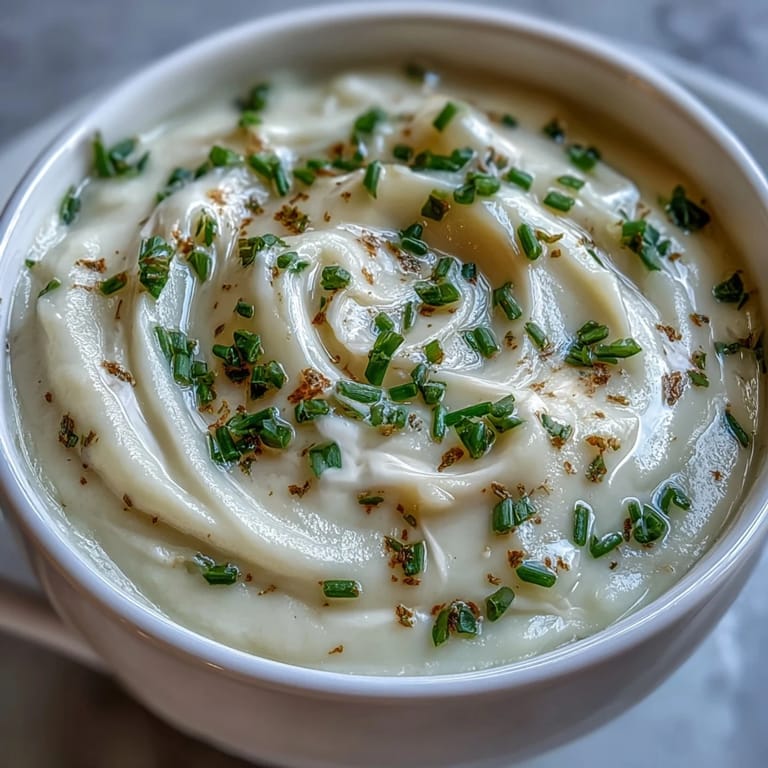
- Ladle into bowls that have been warmed by running them under hot water or placing them in a warm oven for a few minutes. Top with a scatter of fresh chives or microgreens, and if you're feeling luxurious, finish with a drizzle of cream or a few drops of truffle oil.
 Save
Save This soup became something of a quiet ritual for me during cold months, a way to slow down and remember that not every meal needs to be complicated to feel special. Warming a bowl in my hands, breathing in that delicate steam, I understood why the French elevated something as simple as root vegetables into art.
Why Celery Root Deserves Your Attention
If you've overlooked celery root your whole life, this soup is your introduction to why it matters. Unlike celery itself, which can taste grassy or intense, celery root offers something more subtle and refined—a flavor that sits somewhere between cream, earth, and a whisper of anise. Cooked down and pureed, it becomes almost luxurious, transforming into something that tastes far more exotic than its humble appearance suggests.
Scaling and Storage Considerations
This recipe doubles beautifully if you're cooking for a larger gathering, and the soup keeps well in the refrigerator for up to four days in an airtight container. For longer storage, freeze it in portions (without the garnish), though you may find the texture slightly less silky after thawing—simply warm gently and stir in a splash of fresh cream to restore its luxurious quality.
Variations and Pairing Ideas
Once you've mastered the basic version, this soup becomes a canvas for your creativity. Try infusing the stock with a few saffron threads, roasting the celery root before cooking for deeper caramelized notes, or stirring in a spoonful of good Dijon mustard for subtle sharpness. Serve it alongside a crusty bread rubbed with garlic, or offer herbed croutons on the side for those who want texture. It pairs beautifully with crisp white wines like Sauvignon Blanc or with a light, buttery Chardonnay if you're sharing it at a table with others.
- For a vegan version, substitute the heavy cream and milk with full-fat coconut milk or a silky cashew cream made by blending soaked raw cashews with water.
- A whisper of truffle oil at the finish transforms an everyday soup into something that feels restaurant-worthy and special.
- Warm your serving bowls beforehand—it keeps the soup at the perfect temperature and adds a touch of care to the presentation.
 Save
Save This soup has a way of making you feel like you've accomplished something meaningful, even when you've simply followed straightforward steps and let time and heat do most of the work. That's the quiet confidence of French cooking—elegance without pretension, reward without struggle.
Recipe FAQs
- → What does celery root taste like?
Celery root has a delicate, slightly sweet flavor reminiscent of celery and parsley with subtle nutty undertones. It's milder than stalk celery and develops a wonderful sweetness when cooked.
- → Can I make this bisque ahead of time?
Absolutely. This bisque actually develops more flavor when made ahead. Store in the refrigerator for up to 3 days. Reheat gently over low heat, adding a splash of cream or milk if needed to restore consistency.
- → What can I use instead of heavy cream?
For a lighter version, use half-and-half or evaporated milk. For vegan options, full-fat coconut milk adds richness, or blend soaked cashews with water for a neutral cream alternative.
- → Why is potato added to the bisque?
Potato acts as a natural thickener and provides body without overpowering the delicate celery root flavor. It helps create that luxuriously smooth, velvety texture that defines a perfect bisque.
- → What wine pairs well with celery root bisque?
Crisp white wines complement the earthy sweetness beautifully. Sauvignon Blanc, Chardonnay, or a dry Riesling are excellent choices. The wine's acidity cuts through the cream while enhancing the vegetable flavors.