 Save
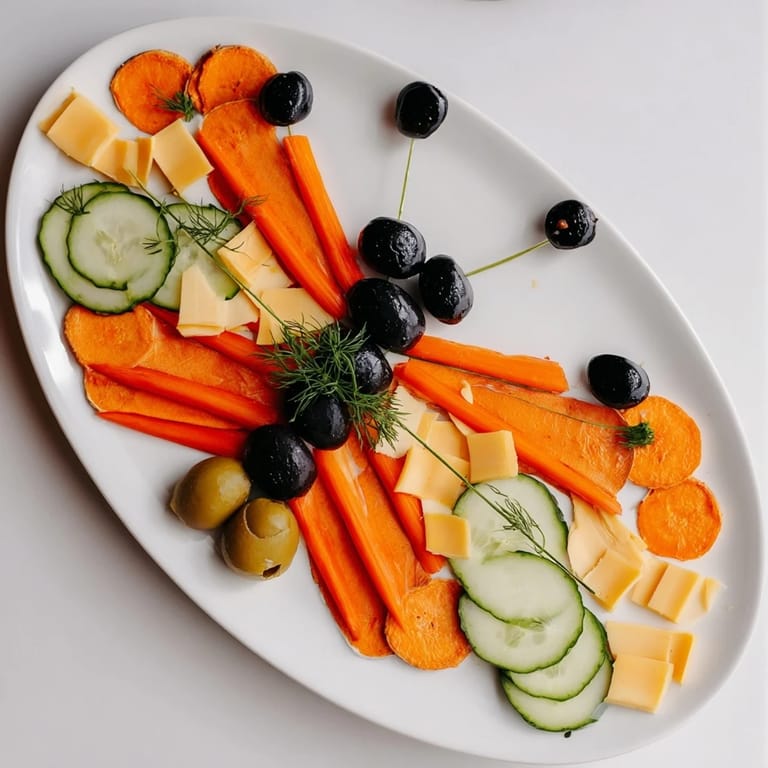
Save I'll never forget the moment my niece's eyes lit up when she saw the Monarch Butterfly Wings platter at her garden-themed birthday party. I had spent the morning arranging orange bell peppers and black olives into wing patterns, and watching her friends gather around—not just to eat, but to admire the beauty first—reminded me why I love creating food that tells a story. This appetizer taught me that the most memorable dishes engage all the senses, including wonder.
I remember assembling this platter the afternoon of my daughter's school fundraiser, thinking I'd create something simple. Instead, I found myself getting lost in the details—carefully placing each black olive to balance the orange segments, dotting cream cheese like tiny snowflakes along the wing edges. A parent walked by, paused, and said, 'That's too pretty to eat.' But of course, it was devoured in minutes, and watching people savor both the colors and the flavors made every careful arrangement worth it.
Ingredients
- Sweet potato, thinly sliced and roasted: The foundation of your orange palette—roasting brings out natural sweetness and creates a delicate, almost chip-like texture. I learned to slice them thin so they stay tender and look delicate on the platter
- Carrot, peeled and sliced into thin rounds: These bright circles add dimension and keep the orange section feeling fresh and varied. A mandoline slicer saves time here, though a steady hand with a sharp knife works beautifully too
- Orange bell pepper, deseeded and sliced into strips: Raw and crisp, these strips create the visual spine of your orange wing sections. Their natural sweetness pairs gorgeously with creamy cheese
- Cheddar cheese, cubed: The richness here balances all the fresh vegetables. Cut into small, uniform cubes so they nestle nicely into your wing pattern
- Black olives, pitted and halved: These create the iconic dark edge of the monarch wing pattern. Use good quality olives if you can—they deserve it
- Black grapes, halved: Their jewel-like appearance and natural sweetness add sophistication to the black sections. I was surprised how much they contribute to the overall elegance
- Black sesame crackers or black rice crackers: These add textural contrast and authenticity to the wing pattern. Gluten-free versions work just as well
- Balsamic glaze, for garnish: A whisper of this creates authentic wing pattern shadows without overwhelming the delicate arrangement
- Cucumber, sliced lengthwise into sticks: The body of your butterfly—choose firm cucumbers and arrange these down the center with intention
- Cream cheese, softened: Your secret weapon for securing elements and creating decorative dots. Softening it first makes the application feel like painting
- Fresh dill or microgreens: The antennae that complete the butterfly's personality. These finishing touches transform the platter from pretty to magical
Tired of Takeout? 🥡
Get 10 meals you can make faster than delivery arrives. Seriously.
One email. No spam. Unsubscribe anytime.
Instructions
- Prepare Your Canvas:
- Set aside about 30 minutes to prep everything in advance. Roast your sweet potato slices at 400°F until they're golden and tender (about 20-25 minutes), then let them cool completely. Slice your vegetables with care—thin, uniform pieces create a more polished look. Arrange everything on separate small plates or bowls near your serving platter so you can work without hunting for ingredients
- Create the Butterfly's Body:
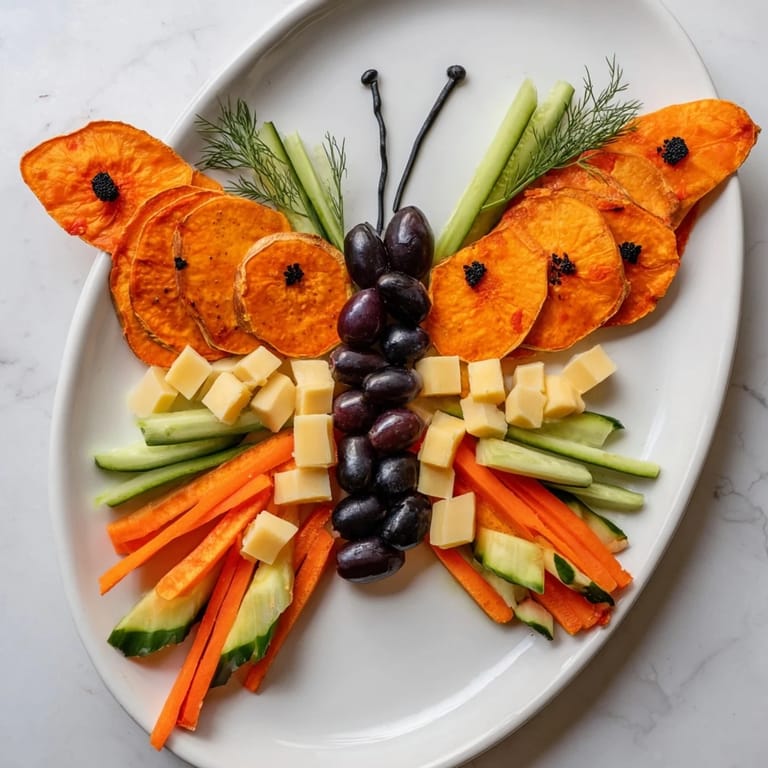
- Take your largest, most beautiful platter—oval or rectangular shapes mimic butterfly anatomy best. Lay your cucumber sticks down the center lengthwise, creating a clear midline. Press gently so they stay in place, and feel the satisfaction of establishing your foundation
- Build the Upper Wings:
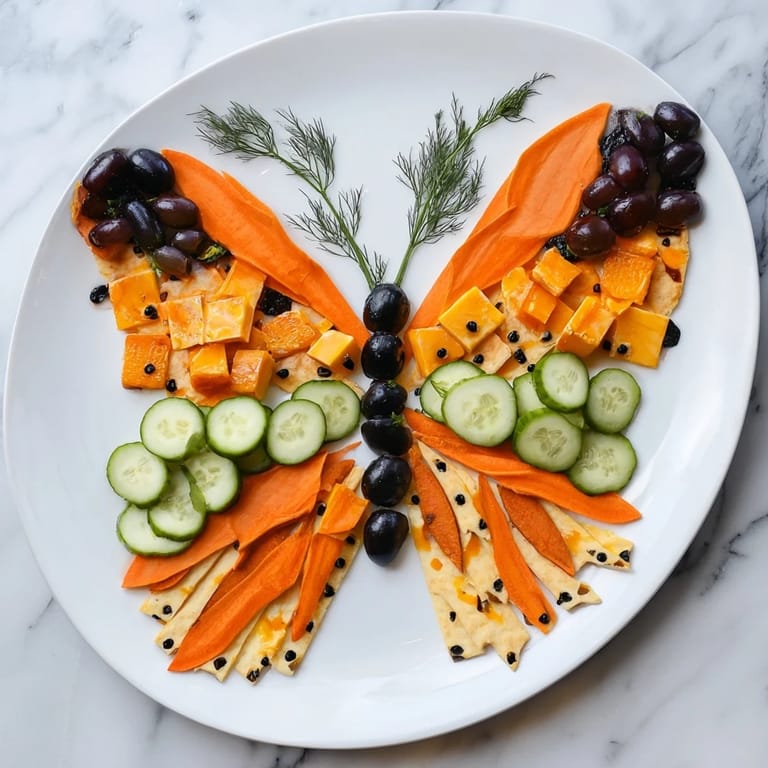
- Starting above the cucumber body, arrange your orange elements in a fan or wing-like pattern on the left side. Begin with the sweet potato slices, overlapping them slightly like roof tiles. Nestle some carrot rounds between them, then fill spaces with orange bell pepper strips. This is where your artistry shines—there's no single right way, only your interpretation of monarch beauty
- Mirror the Lower Wings:
- Repeat the same orange arrangement below your cucumber body on the left side, then mirror everything on the right side. Step back and look at your butterfly—does it feel balanced? Adjust as needed. Symmetry doesn't have to be perfect to feel intentional
- Add the Black Edges and Spots:
- This is where the monarch pattern truly emerges. Arrange your black olives and black grape halves around the outer edges of your orange sections, creating the distinctive black borders of a real monarch wing. Fill in gaps with black crackers. Scatter the remaining black elements throughout the orange areas to create the spotted pattern—trust your eye and the visual balance you're creating
- Dot with Cream Cheese:
- Using a small spoon or even your finger, place tiny dots of softened cream cheese along the black wing edges. These white spots are the final authentic touch that made me realize I was creating actual art, not just arranging food
- Add the Finishing Drizzle:
- Drizzle balsamic glaze sparingly across the wing patterns—just enough to highlight the design, not so much that it overwhelms. Less is more with this step
- Crown with Antennae:
- Top the cucumber body with fresh dill sprigs or delicate microgreens to create antennae. This final touch brings the entire butterfly to life
- Present and Serve:
- Bring your creation to the table with pride. Encourage guests to build their own bites, mixing colors and flavors as they go. Watch the joy unfold
 Save
Save When my husband asked why I spent so much time 'just arranging vegetables,' I realized I couldn't explain it in words. So I invited him to stand beside me as I worked, and I saw him begin to understand—this wasn't about the food alone, it was about creating a moment of beauty that made people stop, pause, and feel something. That's when appetizers become memories.
Shopping and Prep Strategy
I've learned that the secret to pulling off this platter with grace is doing your prep work the day before. Roast your sweet potatoes, slice your vegetables, and store everything in airtight containers in the refrigerator. The morning of your event, you'll only need 10-15 minutes of assembly time. This approach transforms what could feel stressful into something actually enjoyable, and you'll be calm when your guests arrive instead of frazzled in the kitchen.
Making It Your Own
This recipe is a foundation for your creativity. I've experimented with roasted butternut squash instead of sweet potato for deeper color, and orange cherry tomatoes for a juicier element. Purple carrots or thin beet slices add unexpected elegance to the black sections. The beauty of a platter is that it invites improvisation—you're not bound by exact measurements, only by color harmony and balance. Your butterfly will be utterly unique, which makes it infinitely more beautiful.
Pairing and Serving Suggestions
This platter deserves companions that respect its elegance. A crisp Sauvignon Blanc or sparkling water with fresh citrus keeps things light and refreshing. I've found that serving this at the beginning of a meal actually sets the tone for everything that follows—it tells your guests that care and thoughtfulness guided your planning. Consider placing it on a side table so people can gather around it naturally, making it a focal point rather than just an item to pass.
- Pair with goat cheese or hummus on the side for those who want something creamy to balance the fresh vegetables
- Add a small bowl of balsamic reduction for dipping if you want to encourage more interactive eating
- Serve this platter at room temperature—thirty minutes is the sweet spot before the cucumbers begin to soften
 Save
Save What started as an idea to make an appetizer beautiful has taught me that food is conversation, and presentation is the opening line. This butterfly platter carries something beyond nutrition—it carries the message that you see your guests, you want to delight them, and you're willing to take time to create that delight.
Recipe FAQs
- → What ingredients create the orange sections of the wings?
Thinly sliced roasted sweet potatoes, carrots, orange bell peppers, and cubed cheddar cheese form the vibrant orange elements.
- → How is the butterfly’s body represented on the platter?
Sliced cucumber sticks are laid down the center to act as the butterfly’s body and provide a fresh contrast.
- → What adds the black accents on the wing pattern?
Black olives, black grapes, and black rice or sesame crackers are arranged to form the dark wing edges and spots.
- → How are the white wing spots created?
Small dots of softened cream cheese are applied along the black edges to mimic authentic white spots of monarch wings.
- → Can ingredient alternatives be used for color variation?
Yes, roasted butternut squash or orange cherry tomatoes can replace orange elements, while purple carrot or beet slices add color contrast.
- → What garnishes enhance the appearance of antennae?
Fresh dill or microgreens are placed atop the cucumber body to resemble butterfly antennae.