 Save
Save I discovered Moroccan tile mosaics during a sun-soaked afternoon in Marrakech, wandering through a riad's courtyard where intricate zellige patterns seemed to dance across every surface. Years later, standing in my own kitchen, I realized that a proper Moroccan spread should feel just like that—a vibrant composition of colors, textures, and flavors arranged with intention. That's when I started creating this platter, transforming the visual poetry of those tiles into something you could actually taste and share with people you love.
I'll never forget hosting a dinner party where I nervously presented this platter for the first time. My hands were shaking as I arranged those final pomegranate seeds, convinced it might look too simple. But then something magical happened—people gathered around it like kids around a campfire, reaching for different combinations, discovering flavor pairings they'd never imagined, and suddenly the whole evening became about that shared moment of discovery on one beautiful board.
Ingredients
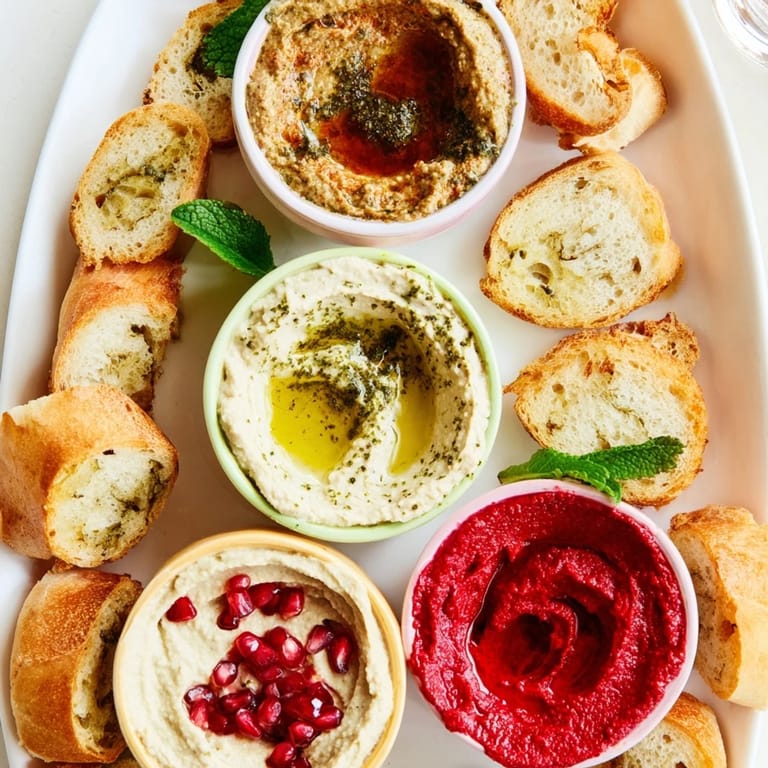
- Classic hummus: This creamy foundation is more forgiving than you'd think—a good hummus absorbs all the other flavors around it while providing that essential richness
- Baba ganoush: The smoky depth here is what makes people pause and ask what they're eating; don't skip it even if you think eggplant isn't your thing
- Muhammara: That red pepper and walnut dip is pure comfort—warm, slightly sweet, and unexpectedly addictive when paired with cool vegetables
- Labneh or Greek yogurt with zaatar: The tanginess cuts through the richness of everything else and those aromatic spices make it feel special
- Roasted red peppers: Buy them jarred if you need to; nobody will judge you and it saves precious time
- Marinated artichoke hearts: These tender hearts have already been kissed with garlic and herbs, so they arrive at the table ready to impress
- Moroccan carrot salad: The cumin and lemon juice combination is what transforms simple shredded carrots into something that tastes like a distant memory
- Preserved lemon slices: Salty, funky, and absolutely essential—they're the secret ingredient that makes people ask for your source
- Mixed Moroccan olives: Seek out a variety with different colors and brines; the complexity is what keeps people coming back
- Quick-pickled red onions: Sharp, bright, and the easiest thing on this platter to make fresh yourself—just vinegar, salt, and patience
- Cornichons or baby gherkins: Tiny pickles add a playful crunch and visual charm that larger pickles simply can't match
- Roasted almonds and pistachios: These are your textural anchors; the crunch against creamy dips is half the pleasure
- Toasted sesame seeds: Toast them yourself right before serving if you can—that warm, nutty aroma will make everyone's head turn
- Bread and pita: Toast the bread until it's just crispy enough to hold weight; you want texture without shattering
- Pomegranate seeds and fresh herbs: These are your paintbrush strokes—they make the whole thing sing with color and freshness
- Sumac: This tart spice is the final touch that ties the whole Moroccan story together with one bright sprinkle
- Extra virgin olive oil: A good one matters here because it's doing the real work of bringing richness and preventing everything from feeling dry
Tired of Takeout? 🥡
Get 10 meals you can make faster than delivery arrives. Seriously.
One email. No spam. Unsubscribe anytime.
Instructions
- Prepare your dips in advance:
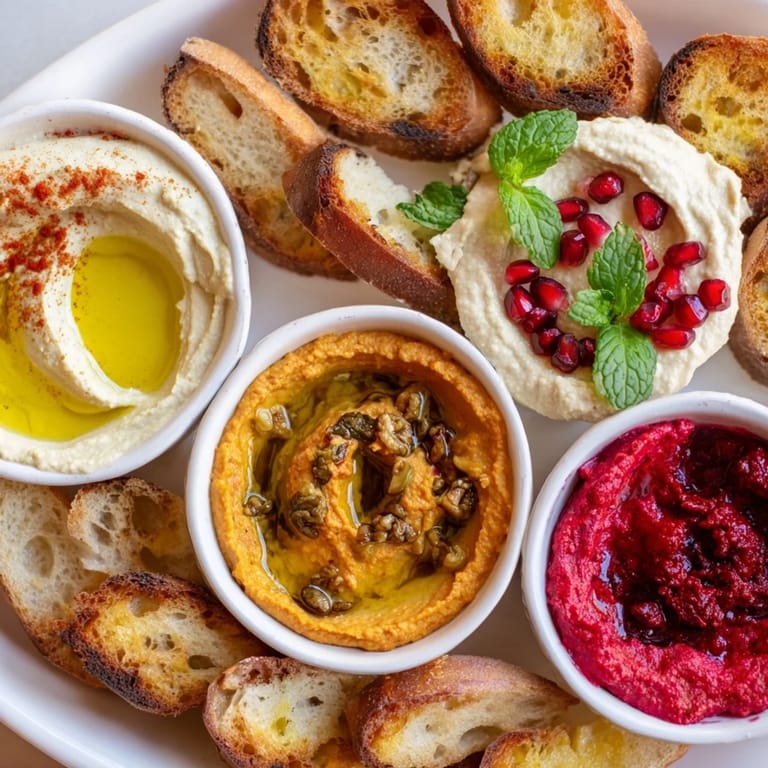
- Make or gather your hummus, baba ganoush, and muhammara earlier in the day if you can. These actually taste better when they've had time to settle and let flavors meld together. Place each one in its own small colorful bowl or ramekin—this is where the mosaic magic begins to take shape.
- Arrange your marinated vegetables:
- Give your roasted red peppers, artichoke hearts, Moroccan carrot salad, and preserved lemon slices their own bowls too. As you pour them in, take a moment to appreciate how different they all look from each other—that's exactly the point.
- Create stations for olives, nuts, and seeds:
- Each ingredient gets its own small vessel. This isn't about being fussy; it's about letting people choose their own adventure and giving each flavor room to be noticed.
- Toast your bread while everything is almost ready:
- There's a very narrow window between toasted and burnt, so stay present here. You want golden, fragrant bread that still has some give to it, not something that tastes like cardboard.
- Assemble on your canvas:
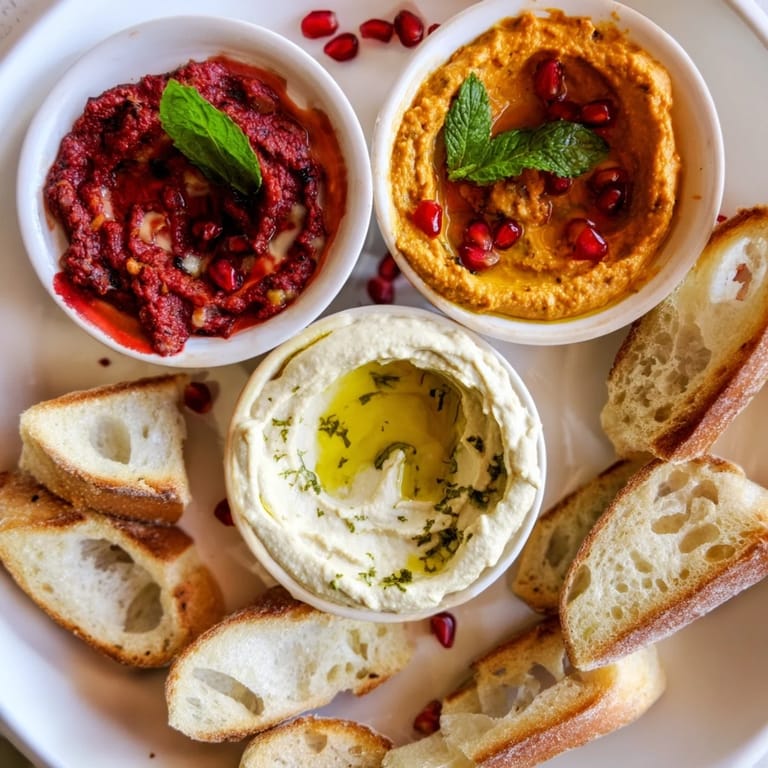
- Take a large serving tray or wooden board and start arranging your bowls like you're creating an actual mosaic pattern. Tightly arrange them, leaving small gaps that you'll fill with fresh mint, cilantro, and those ruby pomegranate seeds. Step back and look at it—does it feel balanced? If something looks lonely, add more color nearby.
- Add the finishing touches:
- Drizzle extra olive oil over the dips and any vegetables that look like they need a glossy invitation to be eaten. Sprinkle sumac across a few of the lighter dips for that final moment of visual drama.
- Serve with intention:
- Bring this to the table and watch it for just a moment before anyone touches it. Then encourage people to mix flavors, try unexpected combinations, and make their own discoveries. That's when a platter becomes a conversation.
 Save
Save There was one moment, about twenty minutes into that dinner party I mentioned, when I caught someone I barely knew sharing a piece of toasted bread between their friend and themselves, laughing about the flavor combination they'd just discovered together. That's when I realized this platter wasn't really about the ingredients at all—it was about creating a reason for people to linger at the table and connect.
The Artistry of Assembly
The real skill here isn't in cooking—it's in arranging. Think about color contrast and making sure you're not putting all the red things next to each other. Cool tones against warm tones, bright against earthy, creates visual interest that draws people's eyes around the entire board. I've learned that a platter people want to photograph is a platter that gets eaten completely, and there's something wonderful about that.
Building Flavor Combinations
One of my favorite discoveries was learning which flavors call to each other on this board. The preserved lemon's saltiness brightens the creamy richness of baba ganoush. The pomegranate seeds add a jewel-like tartness against the earthy roasted red peppers. The pistachios' subtle sweetness balances the sharp pickled onions. This isn't accidental—it's what makes people keep coming back for one more bite to try a new combination.
Making It Your Own
What I've come to love most about this platter is that it's infinitely adaptable. Each season, I change what I feature. Summer brings fresh grilled vegetables and young herbs. Winter calls for dried apricots and roasted root vegetables. The framework stays the same—that beautiful mosaic arrangement—but the story keeps changing. You can add grilled halloumi for richness, bring in merguez sausage if your guests aren't vegetarian, or layer in beet hummus for earthiness. The magic is in honoring the format while making it genuinely yours.
- Serve this alongside Moroccan mint tea steeped strong, or pair it with a crisp white wine that cuts through the richness
- Keep extra bread warming in the oven—people always eat more than you think they will
- Remember that this platter actually improves as an appetizer experience if you give people time to graze rather than rushing them toward the main course
 Save
Save Every time I make this, I'm reminded that some of the most memorable meals aren't about complicated recipes or fancy techniques—they're about creating a moment where people slow down and taste things together. This platter does exactly that.
Recipe FAQs
- → What are the main components of the mosaic platter?
The platter features an assortment of flavorful dips, marinated vegetables, pickles, olives, nuts, and fresh herbs arranged in small colorful bowls.
- → How can I make the platter gluten-free?
Serve the platter with gluten-free crackers or bread to maintain a gluten-free spread without altering the other ingredients.
- → Can the platter accommodate vegan preferences?
Yes, replace labneh or Greek yogurt with plant-based alternatives to keep it vegan without losing flavor.
- → What herbs and garnishes enhance the presentation?
Fresh mint, cilantro leaves, pomegranate seeds, and a drizzle of extra virgin olive oil add vibrant color and flavor.
- → How should the platter be assembled for best effect?
Arrange dips, vegetables, olives, and nuts in small bowls spread tightly on a tray, mimicking a colorful mosaic pattern for a striking centerpiece.
- → What nuts and seeds are used in this platter?
Roasted almonds, pistachios, and toasted sesame seeds provide crunchy texture and rich flavor.