 Save
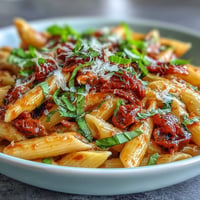
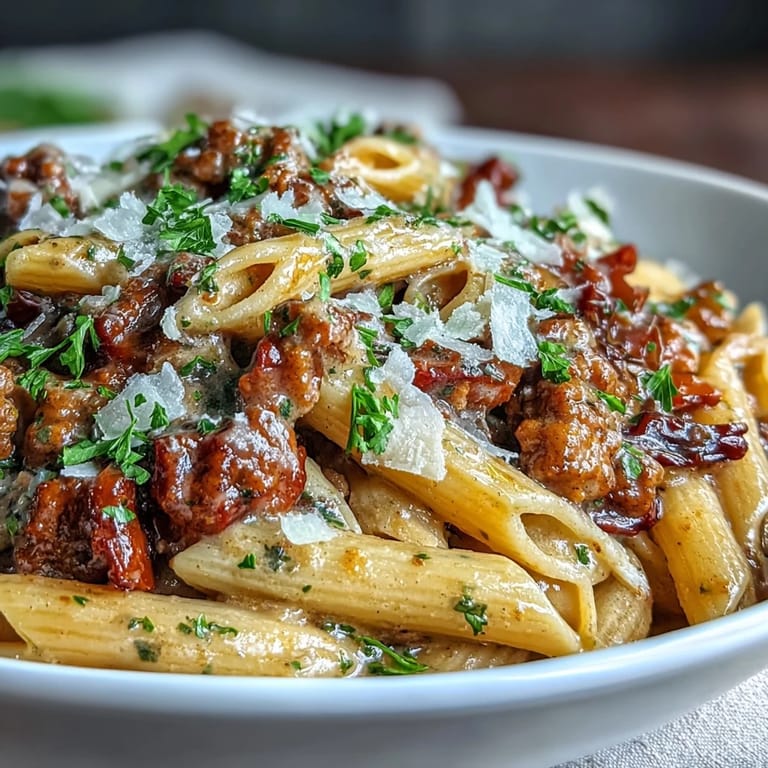
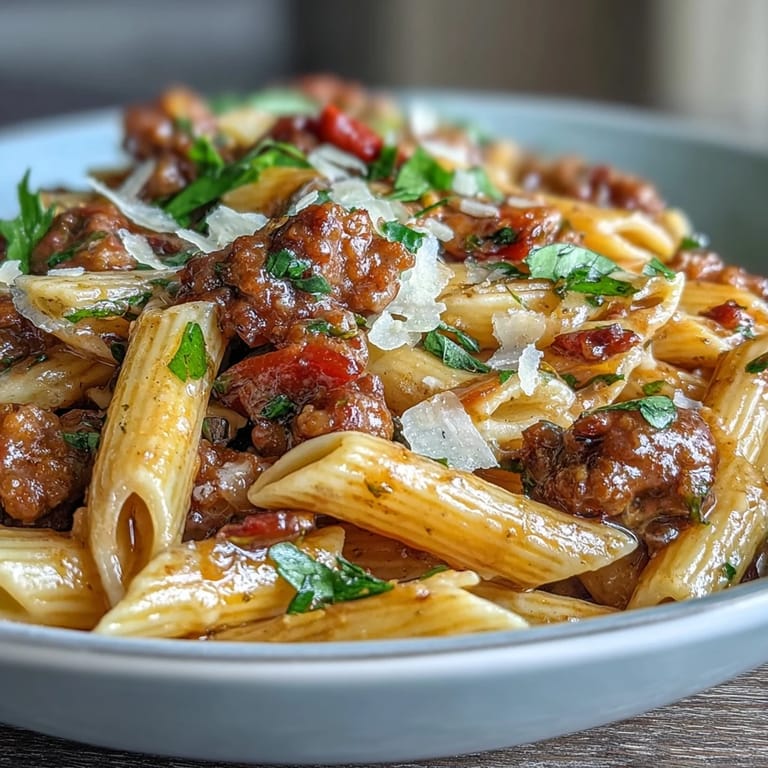
Save There's something about a rainy Tuesday when you're tired of decisions that makes you reach for a pot, some sausage, and whatever red wine is open on the counter. This one-pot creamy red wine sausage pasta arrived not from a culinary plan but from that moment of standing in front of the pantry, half-hungry, wholly impatient, and absolutely certain that everything needed could go into one pot. The first time I made it, the kitchen filled with this deep, wine-rich smell that felt like it had been cooking for hours when it was really just thirty minutes. My partner walked in mid-stir and asked what restaurant we were ordering from, which felt like the highest compliment I could receive at that exact moment.
I made this for a small dinner where everyone arrived skeptical about one-pot pasta, convinced it would taste somehow unfinished or separated. By the third bite, there was this quiet moment of contentment around the table, forks clinking a little louder, and someone asking for seconds before they'd even finished first. That's when I knew this dish worked not because it was complicated, but because it trusted its ingredients to do what they do best together.
Ingredients
- Italian sausage, 400 g: Remove the casings and let it brown properly in the pot first, this gives you a flavor base that the whole dish builds on, and honestly, don't rush this step even though you're tempted.
- Onion, 1 medium: Finely chop it so it softens into the sauce and disappears a little, adding sweetness without texture.
- Garlic, 3 cloves: Mince it fine so it distributes evenly through the pot and doesn't leave you with harsh bites.
- Red bell pepper, 1: Dice it into pieces about the size of your pinky nail so it cooks through and stays tender.
- Canned chopped tomatoes, 400 g: Use the good stuff if you can, the kind without extra citric acid, because you're only adding five ingredients and tomato quality matters here.
- Short pasta, 300 g: Choose penne, rigatoni, or fusilli because they catch the sauce in their ridges and tubes, making every bite creamy and full.
- Dry red wine, 120 ml: Pour some into your glass first, then use the rest in the pot, because this isn't fancy enough for wine you wouldn't drink.
- Chicken or vegetable broth, 700 ml: Low-sodium is important here because the soy sauce will add salt and you want control over the final taste.
- Heavy cream, 120 ml: Add this at the very end so it doesn't curdle from the heat, and watch how it transforms everything from tangy to silky.
- Parmesan cheese, 40 g: Freshly grated if possible, because the pre-grated stuff has anti-caking agents that keep it from melting as smoothly.
- Soy sauce, 2 tbsp: This is the secret ingredient that deepens the tomato flavor and adds umami without you tasting soy at all.
- Dried oregano, 1 tsp: A pinch of Italian-ness that ties everything to a place and mood.
- Chili flakes, 1/2 tsp: Optional, but a small amount adds complexity without heat if you add it early enough.
- Black pepper, 1/2 tsp: Freshly ground if you have it, because the flavor is cleaner and brighter.
- Salt, to taste: Add it at the end after tasting, never before.
- Fresh basil or parsley: Torn or chopped just before serving so it stays bright and fragrant.
Tired of Takeout? 🥡
Get 10 meals you can make faster than delivery arrives. Seriously.
One email. No spam. Unsubscribe anytime.
Instructions
- Brown the sausage:
- Heat your pot over medium and add the sausage without any oil, breaking it apart with a spatula as it cooks for about five to six minutes. You're looking for it to lose its pink color and the bottom of the pot to develop little brown bits, which is exactly what you want because those bits are flavor.
- Build the base:
- Add the onion, garlic, and red pepper to the browned sausage and let everything soften together for three to four minutes, stirring occasionally. The kitchen will smell incredible at this point and you'll feel like you're actually cooking something real.
- Deglaze with wine:
- Pour in the red wine and use a wooden spoon to scrape up all the brown bits stuck to the bottom, then let it simmer for two minutes. This isn't about getting fancy, it's about not wasting the flavor that's already there.
- Add the body:
- Stir in the tomatoes, broth, soy sauce, oregano, chili flakes if you're using them, and black pepper, mixing everything so nothing sticks to the bottom. Bring it to a gentle boil and taste once, adjusting nothing yet because the pasta will absorb some of the salt.
- Cook the pasta in the sauce:
- Add the uncooked pasta directly to the pot, push it down so most of it is submerged, then reduce heat to medium-low and cover. Stir every couple of minutes so nothing sticks, and in about twelve to fifteen minutes, the pasta will be tender and the liquid will have mostly disappeared.
- Finish with cream:
- Stir in the heavy cream and Parmesan cheese, cooking uncovered for another two to three minutes until everything is creamy and coats the pasta. The transformation is quiet but real, the sauce going from thin to luxurious in just a few minutes of stirring.
- Taste and serve:
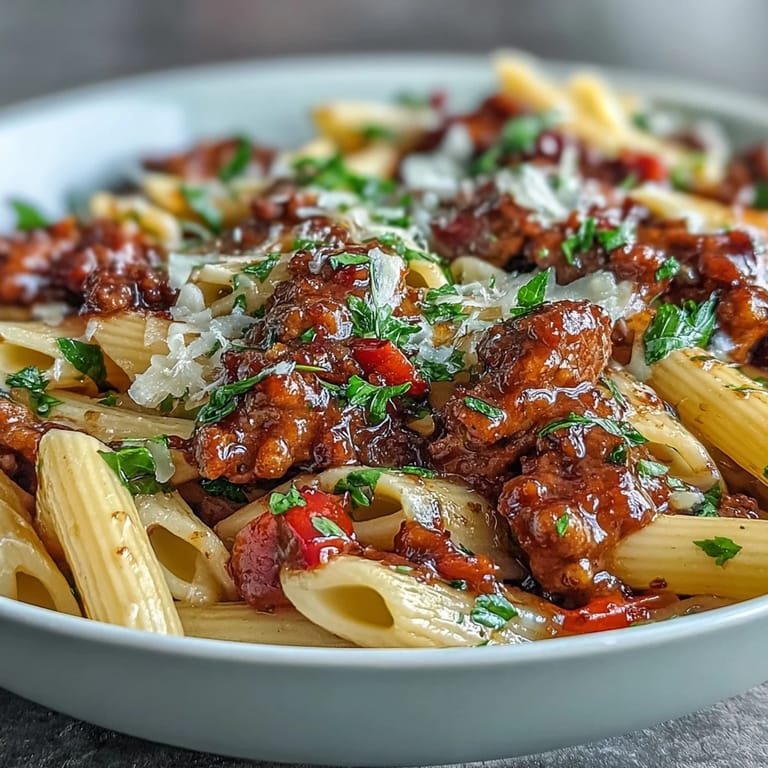
- Add salt if it needs it, tear the fresh basil over the top, and serve while it's still hot and steaming. Serve it in bowls so people get the sauce with every spoonful.
 Save
Save I made this again last month on a night when someone I hadn't seen in years called unexpectedly, and we ended up on the phone while I cooked, the smell of red wine and sausage somehow making the conversation feel more real and less forced. By the time we hung up, the pasta was done and I was eating it alone at the counter, and it tasted like being connected to someone even from far away.
Why This Works as a One-Pot Meal
The magic of one-pot pasta isn't in some fancy technique, it's in understanding that pasta releases starch as it cooks, and that starch combined with the broth creates its own sauce without any cream or flour. When you cook the pasta directly in the liquid with all the other ingredients, every component gets to know the others, and the flavors bind together more completely than if you cooked everything separately. This is why it tastes better than you'd expect, and why people always ask for the recipe.
The Soy Sauce Secret
The soy sauce here isn't about making it taste Asian, it's about deepening the tomato flavor and adding umami, which is that savory fullness that makes people say this tastes restaurant-quality without being able to name what they're tasting. When you add it in with the broth and tomatoes, it melds into the sauce and becomes invisible, but if you leave it out, everyone will notice something is missing even if they can't say what. It's the difference between a recipe that tastes good and one that tastes memorable.
Make It Your Own
This recipe is forgiving enough that you can change it without breaking it, and flexible enough that your version will taste a little different from mine, which is exactly how it should be. If you like more heat, double the chili flakes or crack fresh pepper over the top at the end, and if you like it richer, add another splash of cream and don't apologize for it. The bones of this dish are strong enough to hold whatever you want to do with them.
- Swap the Italian sausage for turkey sausage if you want something lighter, or use plant-based sausage and vegetable broth for a vegetarian version.
- Use whatever short pasta you have, because the shape matters less than the sauce coating it properly.
- If you don't have red wine, use a splash of balsamic vinegar or skip it entirely and add an extra splash of broth instead, the dish will still work.
 Save
Save This dish became a regular in my rotation not because I planned it that way, but because it keeps asking to be made, and every time it shows up on the table, people slow down and enjoy it. That's the kind of recipe worth keeping.
Recipe FAQs
- → What pasta types work best for this dish?
Short pasta like penne, rigatoni, or fusilli hold up well during cooking and absorb the creamy sauce beautifully.
- → Can I use another meat instead of Italian sausage?
Yes, turkey or plant-based sausages are good substitutes for a lighter or vegetarian-friendly version.
- → How does red wine enhance the flavors?
Red wine adds a depth and slight acidity that balances the richness of the cream and sausage, enriching the sauce.
- → What if I want to make it spicier?
Add extra chili flakes or use spicy Italian sausage to introduce more heat while keeping the dish balanced.
- → How can I make the sauce creamier?
Stir in additional heavy cream at the end of cooking to increase creaminess and smoothness.
- → Is it better to use fresh herbs or dried herbs?
Dried oregano is used during cooking for robust flavor; fresh basil or parsley added at the end brightens and freshens the dish.