 Save
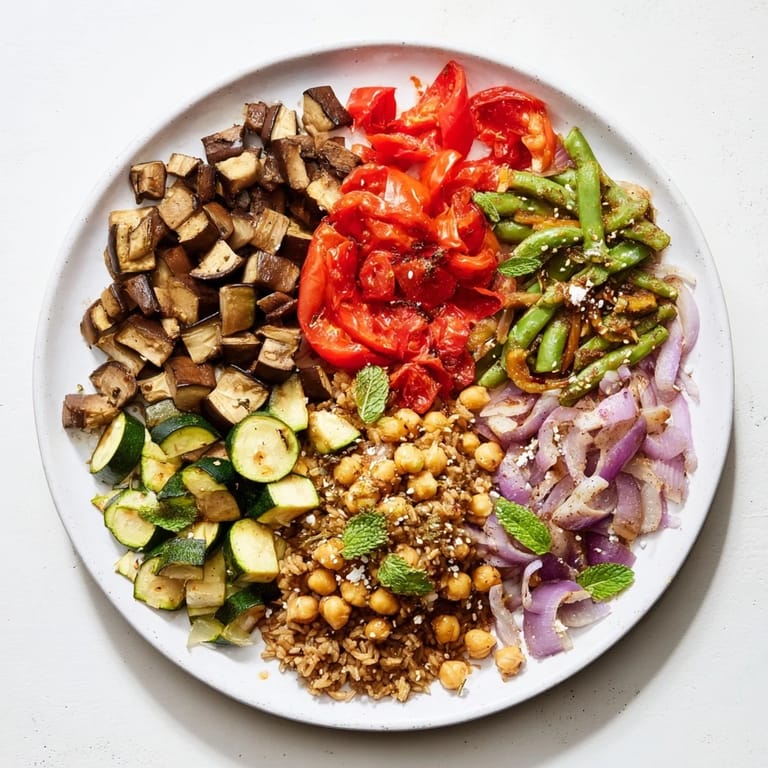
Save The moment I tasted three cuisines simultaneously on one plate, something clicked. I was at a dinner party where a friend served different global flavors arranged like they were meant to be discovered together, and I couldn't stop mixing bites from each section. That night, I realized the most interesting meals don't need to choose a single tradition—they invite you to travel without leaving the table. This recipe captures that exact feeling: three distinct flavor worlds arranged side by side, waiting for you to decide which journey each forkful takes.
I remember the first time I made this for a group of friends with wildly different eating preferences. One friend was pescatarian, another avoided gluten, someone else was skeptical about anything with chickpeas. Instead of stressing about pleasing everyone, I just set out three little worlds on one plate. Everyone ate more than they usually did, moving between clusters like they were visiting different countries. By the end of dinner, they were mixing everything together anyway, creating their own hybrid flavors.
Ingredients
- Extra-virgin olive oil: Use the good stuff for the Mediterranean cluster—it's the backbone of the flavor.
- Eggplant: Dice it smaller than you think; it shrinks down and gets tender if given space to breathe in the pan.
- Red bell pepper: The sweetness balances the earthiness of eggplant beautifully.
- Cherry tomatoes: Halve them so they release their juices into the pan.
- Garlic: Mince it fine so it distributes evenly and doesn't overpower any single bite.
- Shiitake mushrooms: Their meaty texture gives the Asian cluster real substance.
- Snap peas: These should stay crisp-tender, not soft, so timing matters here.
- Sesame oil: Toasted sesame oil has more flavor than regular; use it sparingly since it's potent.
- Soy sauce or tamari: Tamari is naturally gluten-free and tastes just as good if you need it.
- Ginger: Fresh ginger adds warmth; ground ginger won't give you the same brightness.
- Chickpeas: Canned and rinsed work perfectly; they absorb the spices beautifully.
- Bulgur or quinoa: Bulgur cooks faster, but quinoa is naturally gluten-free and nuttier.
- Ground spices: Cumin, coriander, and cinnamon together create that warm, Middle Eastern hug.
- Fresh parsley and mint: These herbs are the final brightness—don't skip them or cook them away.
- Lemon juice: Squeeze it fresh over the Middle Eastern cluster to wake everything up.
Tired of Takeout? 🥡
Get 10 meals you can make faster than delivery arrives. Seriously.
One email. No spam. Unsubscribe anytime.
Instructions
- Gather and prep everything first:
- Dice the eggplant, chop the bell pepper, slice the zucchini, halve the tomatoes. Set out your three pans so you're not scrambling once the heat is on. This is the difference between cooking feeling smooth and feeling chaotic.
- Start the Mediterranean magic:
- Heat your best olive oil over medium heat, then let the eggplant have a moment alone for three minutes—it needs a head start. Watch for it to soften slightly before adding the other vegetables. The kitchen will smell like warm garlic and oregano, and that's your signal everything is working.
- Build the Asian energy:
- Sesame oil heats faster and burns easier than olive oil, so medium-high heat is right, but stay close. The mushrooms will release their moisture—let them cook for a full two minutes so they develop a little color. Add snap peas and carrot next, and the pan will sound crisp and alive.
- Layer the Middle Eastern warmth:
- The red onion needs to soften first, about three minutes, so it releases its sweetness and loses its raw bite. Then add your cooked chickpeas and grains—they're already tender, so you're just warming them through and letting the spices do their work. The cumin, coriander, and cinnamon will bloom in the heat, filling your kitchen with something that smells like travel.
- Time the finish together:
- All three clusters should be done within a minute or two of each other. Toss the lemon juice and fresh herbs into the Middle Eastern cluster right before plating—the acid and freshness are the final note. Everything stays warm on the platter, and the beauty is in the arrangement.
 Save
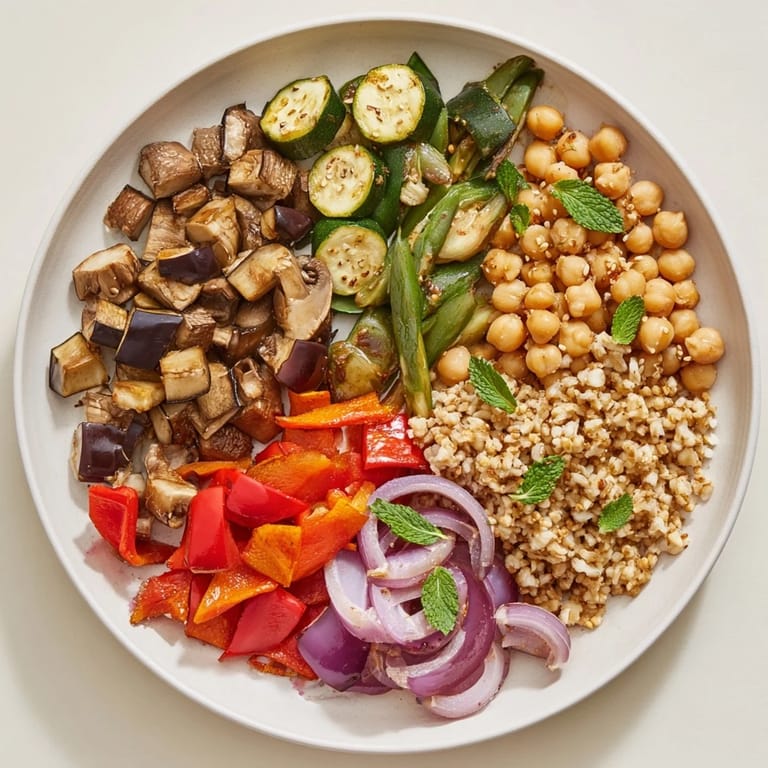
Save There's something magical about watching people eat something this colorful. The plate looks like it belongs in a gallery, and somehow that beauty makes the food taste better. I've noticed that when people see three distinct worlds arranged thoughtfully, they slow down and actually taste what's in front of them instead of rushing through.
The Power of Cooking in Clusters
The reason this recipe works is that each flavor world gets its own moment of attention. When you're juggling three pans, you're not trying to balance a dozen ingredients in one pot—each cluster is simple enough to master on its own. The Mediterranean cluster is just vegetables and olive oil and herbs. The Asian cluster is about sesame and ginger and umami. The Middle Eastern cluster celebrates warm spices and grains. Separately, they're each confident and clear. Together, they become a conversation.
Making It Yours
This recipe thrives on adaptation. If you don't have shiitake mushrooms, cremini or oyster mushrooms work fine. If chickpeas aren't calling to you, white beans or lentils belong there too. The genius of clustering is that you can swap ingredients within each flavor world without breaking the balance. I've made this with grilled chicken in the Mediterranean section, crispy tofu in the Asian section, and spiced lamb in the Middle Eastern section—all on the same night, for different people at the same table.
Serving and Sharing
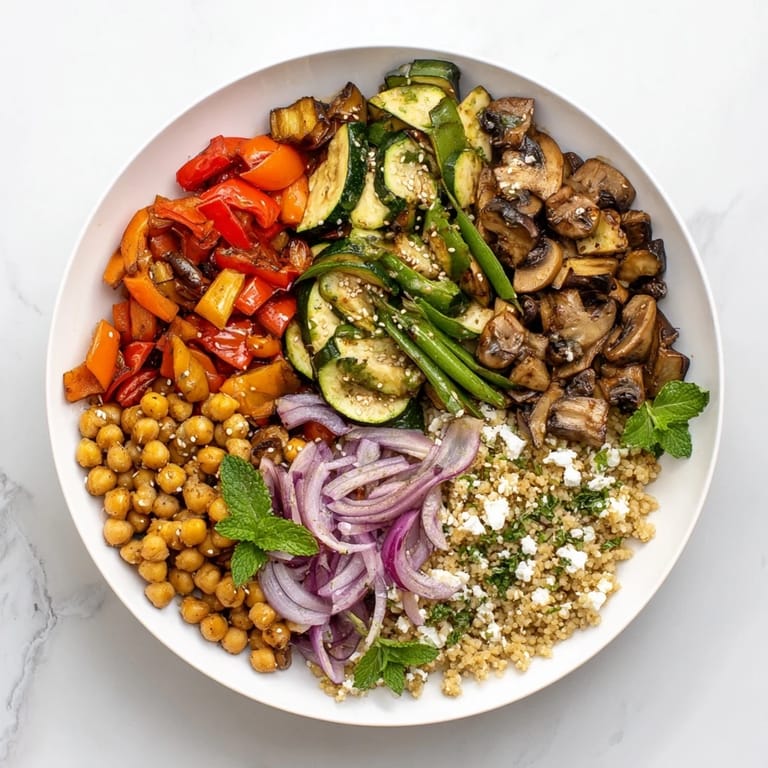
The first time you serve this, arrange the clusters with intention. Let each one have its own space on the plate so people understand they're meant to explore. Set out the garnishes separately—sesame seeds, fresh herbs, crumbled feta—so people can finish their own plate exactly how they want it. The beauty of this dish is that it's collaborative; the cook brings it to the table, but everyone else decides their own journey through it.
- Flatbread or rice makes this heartier and gives people something to build wraps or grain bowls with.
- A crisp white wine or light red wine bridges all three flavor worlds without overwhelming any of them.
- Leftovers are just as good cold the next day, and they reheat gently in a low oven if you want them warm again.
 Save
Save This recipe taught me that sometimes the best meals don't need to choose. They invite everyone to the table as they are, celebrate different tastes without apology, and trust that the magic happens when different things sit beside each other respectfully. That's the whole world on one plate.
Recipe FAQs
- → How can I add protein options to this dish?
Grilled chicken, tofu, or lamb can be added to any of the clusters for extra protein, enhancing texture and flavor.
- → What are suitable side dishes to pair with the clusters?
Flatbread or steamed rice are excellent accompaniments, complementing the aromatic flavors and offering a heartier meal.
- → Can the dish be made vegan-friendly?
Yes, simply omit the feta cheese for a fully vegan experience without compromising taste.
- → Are there gluten-free options included?
Using quinoa and tamari instead of bulgur and soy sauce provides a gluten-free alternative suitable for sensitive diets.
- → What cooking vessels are best for preparing the clusters?
Three large skillets or sauté pans allow each cluster to develop its distinct flavors and textures without blending them prematurely.