 Save
Save The winter solstice has always made me think about balance—that peculiar moment when darkness reaches its peak before the light returns. One December, I was hosting a small gathering on the darkest day of the year, and instead of the usual heavy winter fare, I wanted something that felt both grounding and celebratory. A cheese board seemed right, but I couldn't shake the idea of making it intentional, almost ceremonial. So I split it down the middle: one half rich and dark, the other bright and alive. My guests arrived and immediately understood what I was doing without my saying a word.
I remember watching my friends navigate the board, how they'd start on one side and almost instinctively drift toward the other, as if drawn by some invisible pull. Someone commented that it felt like a puzzle they actually wanted to solve, picking pieces slowly, savoring how different flavors worked together. That's when I realized this wasn't just a board—it was an invitation to slow down and think about what you were eating.
Ingredients
- Kalamata olives (100 g), pitted: These are your dark, briny anchors—use pitted ones unless you enjoy the surprise of a pit mid-bite.
- Oil-cured black olives (100 g): These are earthier and deeper than Kalamatas, adding complexity to the dark side.
- Dried mission figs (120 g), halved: They're naturally sweet but not cloying, and they bridge the gap between savory and dessert beautifully.
- Fig jam (2 tbsp): A little dab adds concentration of flavor and creates a sticky moment when pairing with cheese or crackers.
- Dark chocolate (40 g), broken into pieces: Choose something around 70% cacao—dark enough to taste grown-up, not so bitter it dominates.
- Roasted almonds (60 g): The crunch is essential; they prevent the dark side from feeling too soft and jammy.
- Fresh rosemary (1 sprig): Use this as both garnish and divider, letting its needle-like leaves create natural visual separation.
- Ripe Brie cheese (200 g): Room-temperature Brie is creamy and forgiving; cold Brie tastes like rubber, so plan ahead.
- Ripe pears (2), thinly sliced: Slice these just before serving to prevent browning, or toss lightly in lemon juice if you're prepping ahead.
- Honeycomb or honey (60 g or 2 tbsp): Honeycomb looks more dramatic and adds texture; honey is simpler but equally delicious.
- Toasted walnuts (40 g): The toasting matters—it wakes up the nuts and adds a gentle bitterness that balances the Brie's richness.
- Seedless green grapes (60 g): These are your bright, juicy punctuation marks; they taste like little pockets of freshness.
- Fresh thyme (1 small bunch): Its subtle anise note complements the pear and honey without shouting.
- Baguette slices: Use day-old bread if you have it—it has better texture and doesn't disappear into mush when spread.
- Assorted crackers (100 g): Pick a mix of shapes and flavors; some subtle, some with seeds or herbs.
Tired of Takeout? 🥡
Get 10 meals you can make faster than delivery arrives. Seriously.
One email. No spam. Unsubscribe anytime.
Instructions
- Find your dividing line:
- Lay out your board and imagine it split perfectly in half. You can use a row of fresh rosemary sprigs, a line of crackers placed vertically, or even a small empty gap—whatever feels right and makes sense visually. This is your anchor; everything else flows from it.
- Build the dark side:
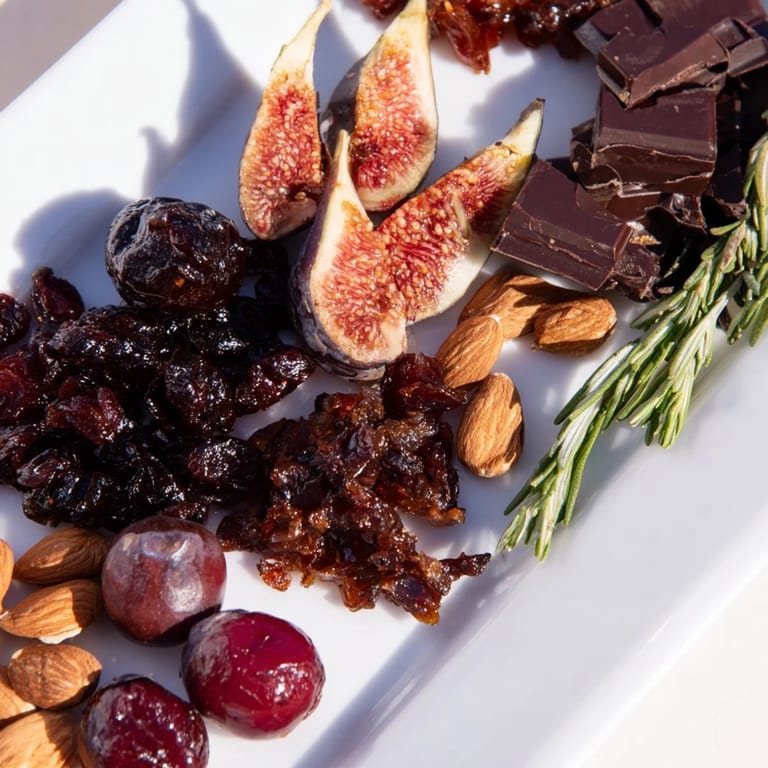
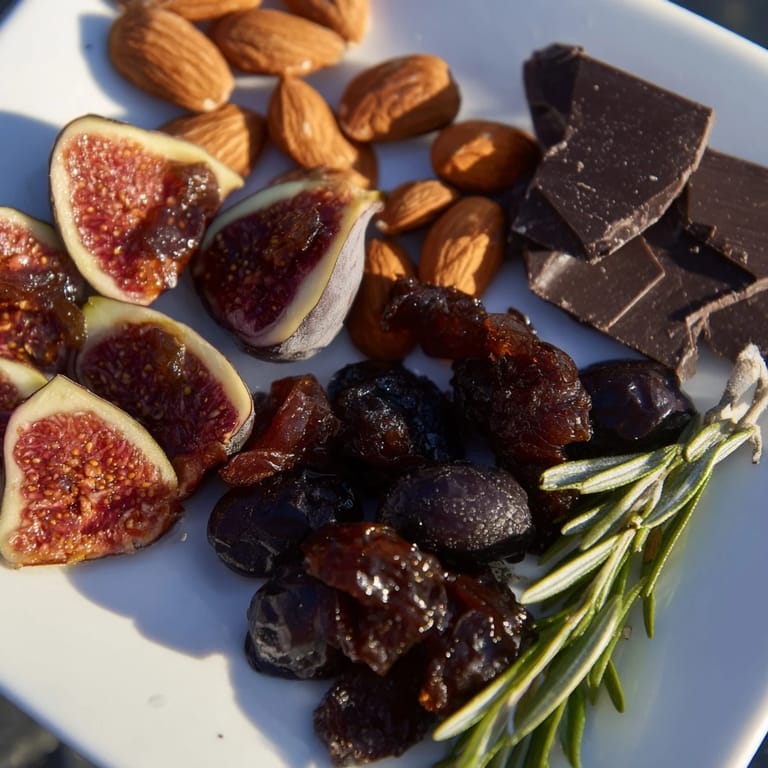
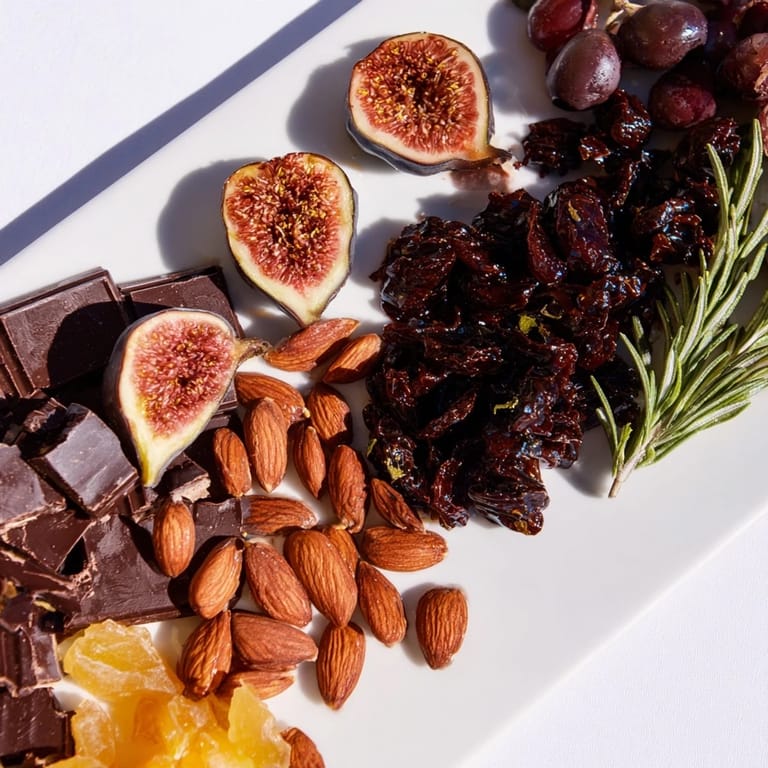
- Start by scattering both types of olives on one half, leaving some breathing room. Nestle the fig halves between them, add small clusters of roasted almonds, and scatter the dark chocolate pieces as if placing gems. Drop a small spoonful or two of fig jam somewhere accessible, and arrange fresh rosemary sprigs as a finishing touch.
- Compose the light side:
- Place the Brie wedge or wheel as your anchor, then fan the pear slices around it like they're leading somewhere. Scatter the toasted walnuts in small clusters, pile the green grapes in one corner, and either place honeycomb nearby or drizzle honey across the cheese. Finish with thyme sprigs tucked into gaps.
- Add the navigational pieces:
- Arrange baguette slices and crackers along the center line or on separate small plates nearby. This gives your guests clear entry points and prevents them from feeling lost.
- Serve and step back:
- Set it out at room temperature and let people discover it on their own pace. The beauty is in the exploration, not the perfection.
 Save
Save What surprised me most was how this board became a conversation. Instead of people just eating, they were comparing flavors, debating which side they preferred, and making little discoveries—someone realized the Brie and honeycomb combination was like dessert, another person found that chocolate and fig together felt almost decadent. It was quiet but engaged, the kind of eating that feels intentional.
The Symbolism Behind the Divide
The winter solstice marks the darkest day and the promise of returning light. Splitting the board this way isn't just aesthetically pleasing—it becomes a gentle reminder that both darkness and light are necessary, and they can coexist beautifully on the same table. The dark side with its olives, figs, and chocolate feels grounded and rich, while the light side with its pears, honey, and pale cheese feels hopeful and fresh. When you build this board, you're actually building a small philosophy about balance, which somehow makes the whole thing taste better.
Playing with Substitutions
The loveliness of a board is that it's endlessly flexible. If you can't find mission figs, dried apricots work beautifully on the dark side and add a slightly brighter note. Roquefort or Camembert replace Brie easily, each bringing their own personality—Roquefort is sharper and crumbly, Camembert is earthy and soft. Apples slice just as nicely as pears and hold up better to browning. Even the nuts can shift depending on what you have: hazelnuts are wonderful toasted, pecans add a buttery richness, and in a pinch, sunflower seeds give you crunch without tree nuts. The structure stays the same, but the flavors shift like seasons.
Pairing and Serving
A dry sparkling wine is the obvious choice—it cuts through the richness of the Brie while playing nicely with the bright pears and grapes. But don't overlook a light-bodied red like Pinot Noir; it finds unexpected harmony with the dark chocolate and olives. If you're not serving wine, a crisp hard cider or even a floral herbal tea works surprisingly well. The board itself should rest at room temperature for about 15 minutes before serving, so the cheese softens and everything becomes inviting rather than cold and distant. Serve it on your best board, no apologies.
- Let guests serve themselves—the exploration is half the pleasure.
- Put small plates nearby so people aren't balancing snacks in their palms all evening.
- If making this for a crowd, you can build it an hour or two ahead; just keep the pear slices separated until the last moment.
 Save
Save These boards have a quiet power—they slow things down and invite people to really taste instead of just eat. Make this one with intention, and watch what happens when everyone gathers around.
Recipe FAQs
- → How do I create the dark and light sections on the board?
Use a rosemary sprig or a row of crackers to separate the board into two halves, placing savory items like olives and figs on one side, and milder cheeses and fruits on the other.
- → Can I substitute the Brie cheese with another option?
Yes, cheeses such as Roquefort or Camembert work well as alternatives, offering a similar creamy texture and complementary flavor.
- → What pairs well as a beverage with this board?
A dry sparkling wine or a light-bodied red wine complements the varied flavors beautifully, enhancing the contrast between savory and fresh elements.
- → Are there any suggested add-ons to enhance the board?
Adding a few slices of prosciutto provides extra richness and contrast, but can be omitted for vegetarian preferences.
- → How should the board be served for best flavor?
Serve immediately at room temperature to allow the cheeses and fruits to reveal their full flavors and textures.