 Save
Save I discovered the magic of balance boards at a dinner party where a friend arranged an incredible spread in a perfect yin-yang pattern. The moment guests saw it, their eyes lit up before they even tasted anything. That night, I realized that food arranged with intention becomes more than sustenance—it becomes conversation, art, and connection all on one board. Now, whenever I want to impress without stress, I create this Yin and Yang Balance Board, letting the contrast between dark and light ingredients tell the story of harmony.
I remember arranging this board for my sister's engagement party, and watching her fiancé—who claimed he never ate "fancy appetizers"—reach for a piece of dark chocolate, then a cashew, then a cracker, completely mesmerized by the balance. By the end of the night, they were calling it the best part of the celebration. That's when I knew this wasn't just pretty—it was meaningful.
Ingredients
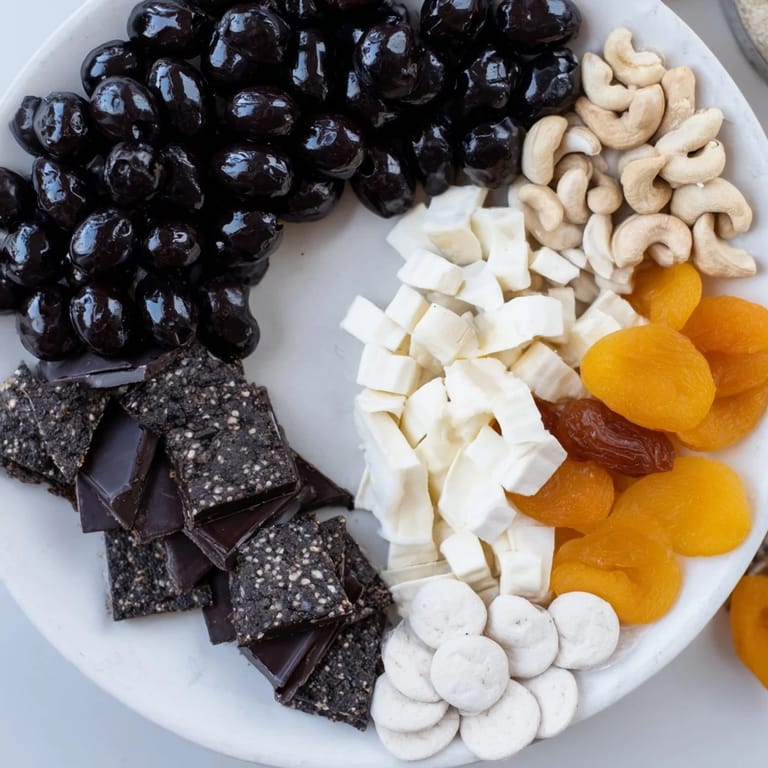
- Black olives, pitted (1 cup): These are your anchors on the dark side. I learned to always pit them beforehand because nothing ruins a moment like a guest biting into a stone. They bring a briny, sophisticated note that balances the sweetness of the grapes.
- Dark rye crackers (80 g): The earthiness here grounds the dark side. I prefer ones with a little texture—they should feel substantial in your hand, almost like tiny toasted platforms waiting for toppings.
- Aged balsamic-glazed mushrooms (80 g, sliced, optional): If you include these, they're the umami secret that makes people pause and ask what they just tasted. The slight sweetness from the glaze plays beautifully against the dark chocolate.
- Black grapes or blackberries (60 g): These jewels add juiciness and a pop of natural sweetness. I choose them based on season and mood—grapes feel more formal, blackberries feel more playful.
- Dark chocolate squares (50 g, 70% cacao or above): This is the surprise that delights. Bitter-sweet chocolate on a savory board feels like a secret being shared. Choose quality chocolate—this is where your guests will taste the difference.
- White cheese, sliced or cubed (120 g): Goat cheese, brie, or mozzarella all work beautifully. I rotate based on what I find at the market, but creamy, mild cheeses work best here to balance the richer dark side. Soft cheeses stay more elegant on a board.
- Rice crackers or water crackers (80 g): These should be delicate and neutral, almost like edible palate cleansers. They're the bridge between savory and sweet, between dark and light.
- Raw cashews or blanched almonds (60 g): Nuts add that essential textural contrast and a subtle richness. I prefer unsalted so they don't compete with all the other flavors happening at once.
- Dried apricots or white grapes (50 g): The light side's sweetness. Apricots feel more sophisticated and chewy, while white grapes are crisp and refreshing. Choose whichever calls to you.
- Honey for drizzling (1 tablespoon, optional): A thin drizzle over the light side adds luxury and catches the light beautifully. It's optional but absolutely worth the extra touch.
Tired of Takeout? 🥡
Get 10 meals you can make faster than delivery arrives. Seriously.
One email. No spam. Unsubscribe anytime.
Instructions
- Set your stage:
- Place your large round serving board on your work surface. Take a moment to appreciate its emptiness—this is a blank canvas waiting for your vision. Make sure your board is clean and dry; you want nothing distracting from what you're about to create.
- Mark your balance:
- Using a small bowl or circular cutter as a guide, lightly mark an S-shaped curve down the center. You're not committing here—just a gentle suggestion of where the boundary lives. I use a piece of chalk or a tiny bit of flour that I'll brush away later. This is the moment where intention becomes physical.
- Build the dark side:
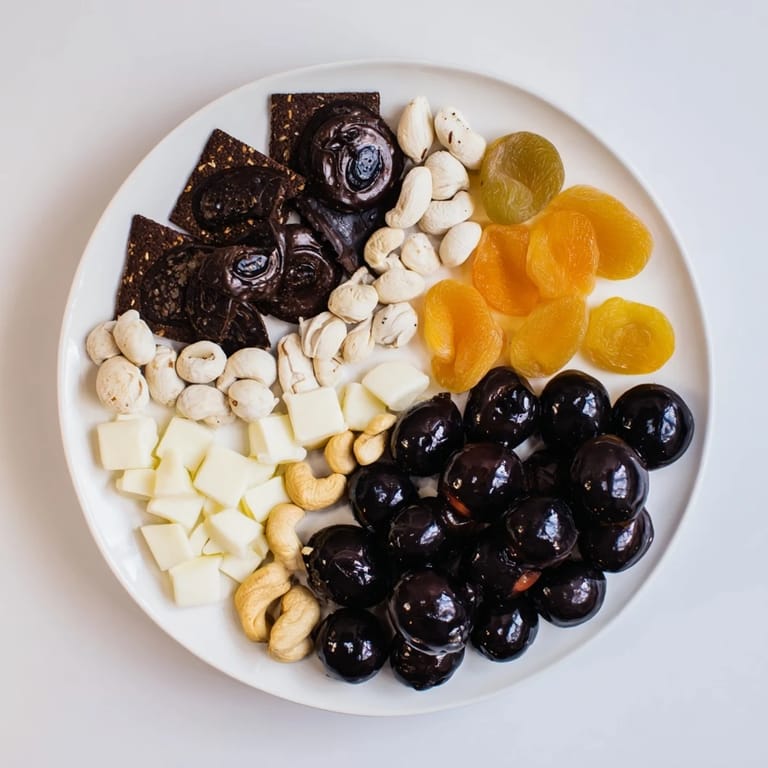
- Begin arranging your black olives, dark rye crackers, mushrooms if using them, black grapes or blackberries, and dark chocolate squares on one half. Think of this as creating pockets of flavor and texture. Don't line them up like soldiers—let them cluster naturally, overlapping slightly. Leave tiny gaps between items so the board beneath shows through, creating visual rhythm.
- Illuminate the light side:
- On the opposite half, arrange your white cheese, rice or water crackers, cashews or almonds, dried apricots or white grapes. Mirror the casual abundance of the dark side. This isn't symmetrical precision—it's balanced generosity. If you're drizzling honey, save this for just before serving so it glistens fresh.
- Add the cosmic dots:
- For that authentic yin-yang moment, place a small round cheese ball or a single olive in the curve of each swirl. This isn't just decoration—it's the moment your board becomes a complete thought, a finished philosophy rendered in food.
- Serve with intention:
- Bring your board to the table and watch the magic happen. Encourage guests to take from both sides, letting their taste buds experience the conversation between light and dark, sweet and savory, simple and complex.
 Save
Save My favorite memory is when my neighbor saw this board and said, "I didn't know you were a philosopher," because apparently I'd accidentally been making zen food art. Food that makes people think, smile, and connect—that's when a recipe becomes something more than ingredients.
The Art of Board Arrangement
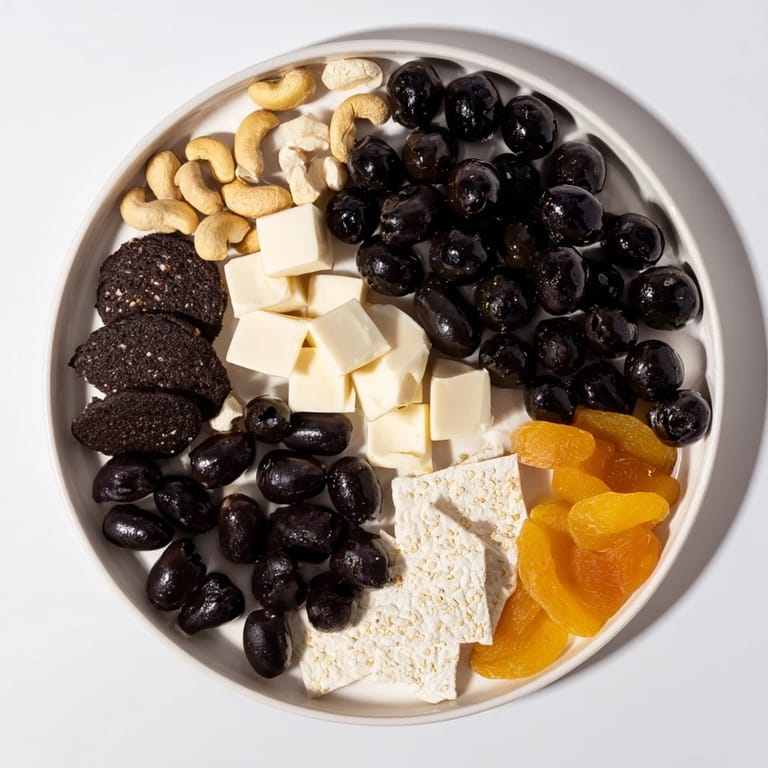
There's a rhythm to arranging a balance board that you develop with practice. The secret is thinking in clusters rather than lines. Group your dark chocolate pieces together, then scatter some olives nearby, create a small nest of mushrooms. On the light side, let your cheese pieces anchor the arrangement, then build conversations around them with nuts and fruit. The board should feel abundant but not chaotic, intentional but not stiff. I like to step back halfway through and look at it from my guests' perspective—from above, from the side, from across the room. Is there enough visual variety? Are the colors actually contrasting? Can I spot a clear journey for the eye to follow?
Flavor Pairings That Work
The genius of this board is how the flavors speak to each other across the curve. The dark chocolate's bitterness plays against the white grapes' sweetness. The briny olives complement the creamy cheese. The crunch of nuts echoes the crispness of crackers. When people try this board, they instinctively start creating their own flavor combinations—a cracker with cheese and apricot, an olive paired with chocolate, nuts mixed with berries. It becomes interactive without any instruction. I've learned that the best boards are ones where guests feel like they're discovering flavors rather than being told what to eat.
Making It Your Own
This is where your personal touch becomes the secret ingredient. Don't feel locked into the specific ingredients I've listed. Substitute cheeses and crackers based on what you love or what's available. Add fresh herbs or edible flowers for extra color and aroma. Consider adding fresh figs if they're in season, or substituting the chocolate with dark dates for variety. The beauty of a balance board is that it's a philosophy you can make your own. The structure—the yin-yang arrangement, the dark-and-light concept, the careful balance—that stays. But the specific flavors? Those are yours to explore. I've made versions with everything from aged cheddar to burrata, from candied walnuts to toasted pine nuts. Each one told a different story about what I was feeling that day or what my guests loved.
- Try pairing your board with sparkling white wine for a fresh, celebratory feel.
- A light red wine also works beautifully if your guests prefer something with a bit more body.
- Remember that this board serves six as an appetizer, but could easily feed more if it's the main event alongside other dishes.
 Save
Save This board reminds me every time I make it that the most impressive dishes are often the simplest ones—just quality ingredients arranged with care and intention. There's poetry in balance, and dinner parties in philosophy.
Recipe FAQs
- → How do I create the yin and yang division on the board?
Use a small bowl or circular cutter to lightly mark an S-shaped curve down the center of the round serving board, creating two distinct halves for dark and light ingredients.
- → What are some good alternatives for cheeses and crackers?
Soft cheeses like goat cheese or brie work well; for crackers, rice or water crackers provide a light, crisp contrast.
- → Can I add herbs or garnishes to the board?
Yes, fresh herbs or edible flowers can add extra color and aroma, enhancing the visual and flavor appeal.
- → What nuts are best suited for the light side?
Raw cashews or blanched almonds complement the creamy cheeses and add pleasant crunch without overpowering flavors.
- → How should I serve the balance board for best effect?
Arrange ingredients carefully for visual contrast, use small cheese balls or olives for dots in the yin and yang swirls, and encourage guests to enjoy both sides for balanced tasting.
- → Are there pairing suggestions for beverages?
This board pairs wonderfully with sparkling white wine or a light red, enhancing the contrasting flavors.