 Save
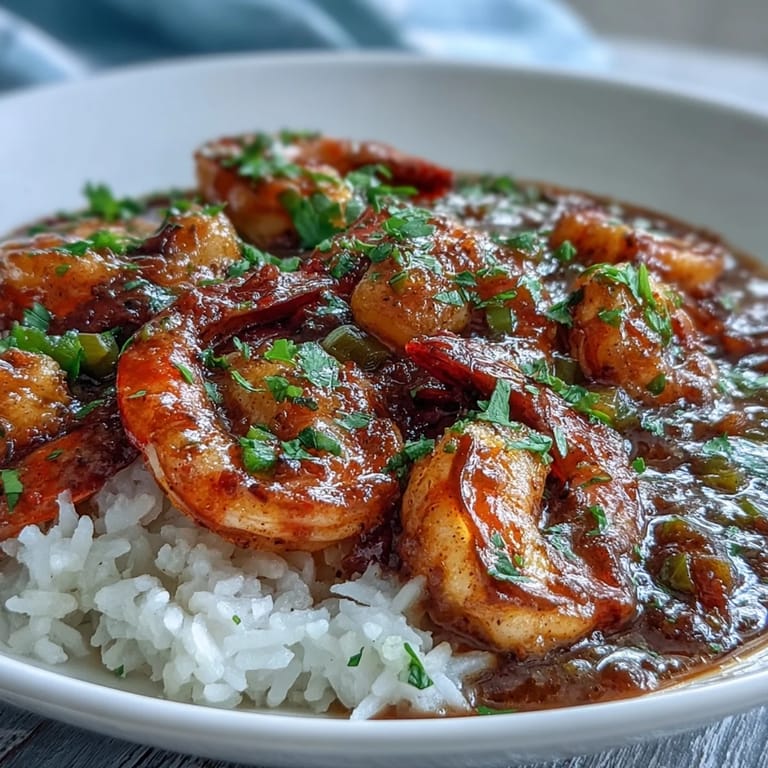
Save The kitchen was thick with steam and the smell of browning flour when my neighbor knocked on the door, asking what on earth I was making. I was twenty minutes into stirring a roux, my arm aching, wondering if I'd bitten off more than I could chew. She stepped inside, took one look at the pot, and said, "You're making étouffée? You better not stop stirring." That's how I learned that some dishes demand your full attention, and the reward is a bowl of something so rich and soulful it feels like a hug from New Orleans itself.
I made this for my brother's birthday one year, and he went quiet after the first bite. He looked up and said, "This tastes like the trip we took to Louisiana." I hadn't been on that trip, but I'd captured something real, something that mattered. That's when I realized étouffée isn't just about following steps. It's about coaxing out a memory, a place, a feeling, all from a pot on your stove.
Ingredients
- Vegetable oil and all purpose flour: These two combine to form the roux, the soul of the dish, and you need equal parts of each to get that perfect chocolate colored base.
- Onion, green bell pepper, and celery: The holy trinity of Cajun cooking, this trio builds the aromatic foundation and you'll smell the magic the moment they hit the pot.
- Garlic: Fresh is essential here, it blooms in the heat and adds a sharpness that balances the richness of the roux.
- Shrimp or crawfish: Use the freshest seafood you can find, and if frozen, make sure it's fully thawed and patted dry to avoid a watery sauce.
- Seafood stock: Homemade is ideal, but a good quality store bought version works beautifully, just taste it first to check the salt level.
- Worcestershire sauce: It's optional, but it adds a subtle umami depth that makes people ask, "What's in this?"
- Cajun seasoning and cayenne pepper: Start conservatively, you can always add more heat, but you can't take it back once it's in.
- Bay leaf: Don't skip it, this single leaf infuses the sauce with an earthy undertone that ties everything together.
- Cooked white rice: The fluffy, neutral canvas that soaks up all that gorgeous, spicy gravy.
- Green onions and fresh parsley: A bright, fresh finish that cuts through the richness and makes every bowl look as good as it tastes.
Tired of Takeout? 🥡
Get 10 meals you can make faster than delivery arrives. Seriously.
One email. No spam. Unsubscribe anytime.
Instructions
- Start the roux:
- Heat the oil in a heavy pot over medium heat, then whisk in the flour slowly and steadily. This is where patience lives, keep stirring constantly and watch it transform from pale to golden to a deep, almost mahogany brown.
- Build the base:
- Once your roux is the color of dark chocolate, toss in the onion, bell pepper, and celery. The vegetables will sizzle and soften, releasing their sweetness into the roux and filling your kitchen with the unmistakable scent of Cajun cooking.
- Add the garlic:
- Stir in the minced garlic and let it cook for just a minute until fragrant. Don't let it burn or it'll turn bitter and ruin all your hard work.
- Incorporate the stock:
- Pour in the seafood stock gradually, whisking as you go to avoid lumps. The roux will seize up at first, but keep stirring and it'll smooth out into a velvety base.
- Season and simmer:
- Add the shrimp, Worcestershire sauce, Cajun seasoning, cayenne, bay leaf, salt, and pepper. Bring everything to a gentle simmer, then lower the heat and let it cook uncovered for 20 to 30 minutes, stirring now and then as the sauce thickens and the shrimp turn pink and tender.
- Finish and serve:
- Taste and adjust the seasoning, fish out the bay leaf, and spoon the étouffée over bowls of hot rice. Scatter green onions and parsley on top, and serve it while it's still steaming.
 Save
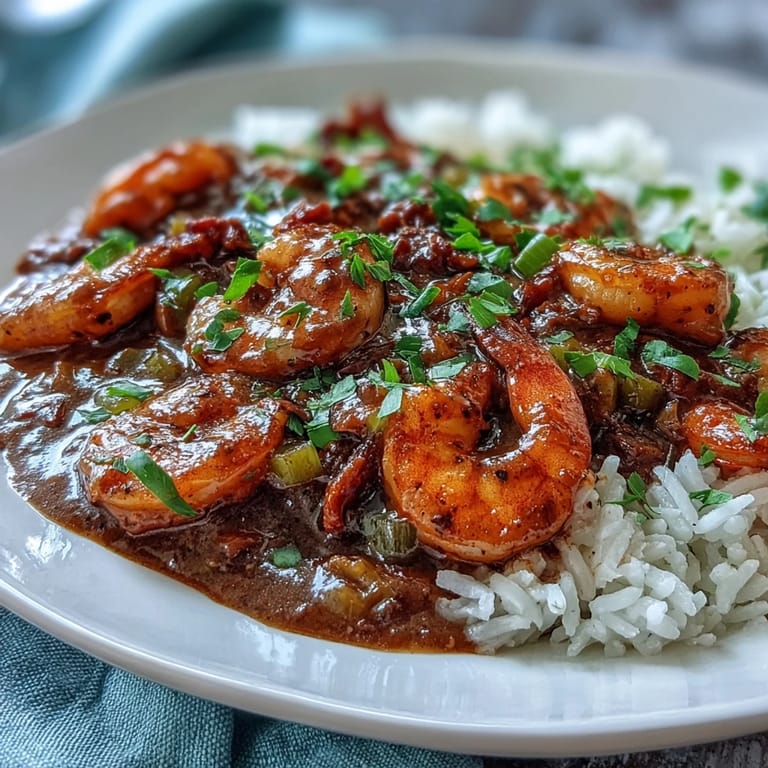
Save One rainy Tuesday, I made a double batch and brought some to my elderly neighbor who'd been feeling under the weather. She called me that night, voice shaky, and said it reminded her of her late husband's cooking. Food has this way of holding people and moments inside it, and sometimes a bowl of étouffée is more than dinner, it's a bridge to something tender and true.
Making It Your Own
If shrimp isn't your thing, swap in chicken thighs cut into chunks, or smoky andouille sausage sliced thick. I've even made a vegetarian version with mushrooms and it was shockingly good, earthy and rich. The beauty of étouffée is that the technique stays the same, but the protein is yours to play with.
Storage and Reheating
Store leftovers in an airtight container in the fridge for up to three days, and honestly, the flavors deepen and marry overnight. Reheat gently on the stovetop with a splash of stock to loosen it up, microwaving works too, but low and slow keeps the shrimp from turning rubbery. I've never tried freezing it because it never lasts long enough, but if you do, leave out the shrimp and add it fresh when you reheat.
Serving Suggestions
Serve this with a crusty baguette for mopping up every last bit of sauce, or a simple green salad dressed with lemon and olive oil to cut the richness. A cold beer or a glass of chilled white wine wouldn't hurt either. If you're feeding a crowd, set out hot sauce and extra green onions and let everyone customize their bowl.
- Offer a side of cornbread for a Southern touch that soaks up the gravy beautifully.
- A crisp coleslaw adds crunch and brightness to balance the deep, savory flavors.
- Don't forget to put out plenty of napkins, this is the kind of meal that gets deliciously messy.
 Save
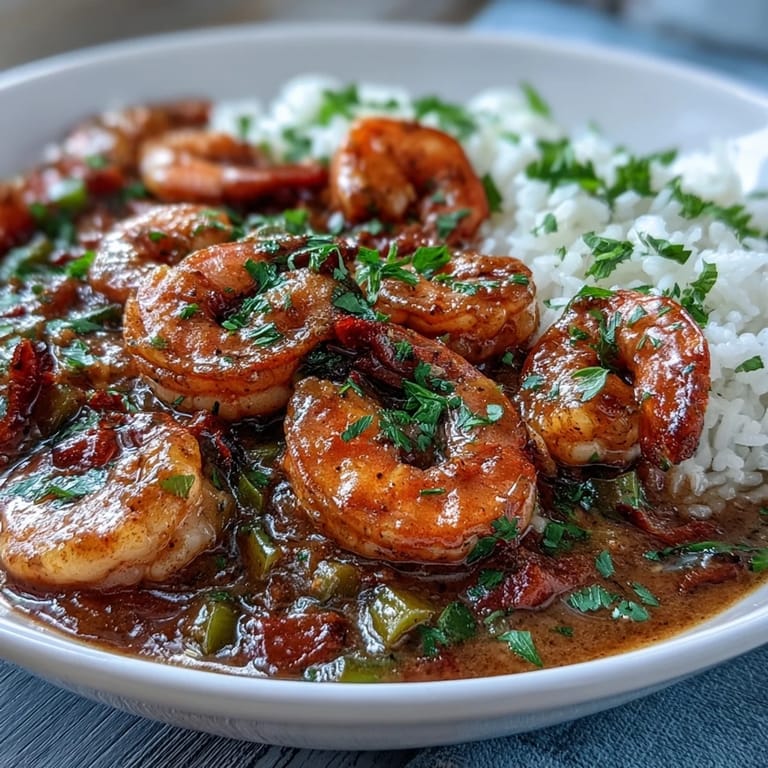
Save This dish taught me that some recipes ask for your time and attention, and in return, they give you something worth remembering. I hope your kitchen smells as good as mine did, and that every spoonful feels like a little trip to New Orleans.
Recipe FAQs
- → What is the difference between étouffée and gumbo?
Étouffée has a thicker, roux-based sauce and typically features one protein like shrimp or crawfish, while gumbo is a thinner soup with multiple proteins and vegetables, often including okra or filé powder.
- → Can I use crawfish instead of shrimp?
Absolutely! Crawfish is the traditional protein for étouffée in Louisiana. Use one pound of peeled crawfish tails and follow the same cooking instructions for authentic Cajun flavor.
- → How do I prevent burning the roux?
Use medium heat and stir constantly with a wooden spoon or whisk. Never leave the roux unattended. If you see black specks, discard and start over—burnt roux will ruin the entire dish.
- → What can I substitute for seafood stock?
Chicken stock works well as a substitute. For deeper flavor, add a splash of clam juice or dissolve a seafood bouillon cube in water to enhance the oceanic notes.
- → How should I store and reheat leftovers?
Store étouffée in an airtight container in the refrigerator for up to 3 days. Reheat gently on the stovetop over low heat, adding a splash of stock if needed to loosen the sauce. The flavors intensify overnight.
- → Can I make this dish less spicy?
Yes, reduce or omit the cayenne pepper and use a mild Cajun seasoning blend. You can always add hot sauce at the table for those who prefer more heat.