 Save
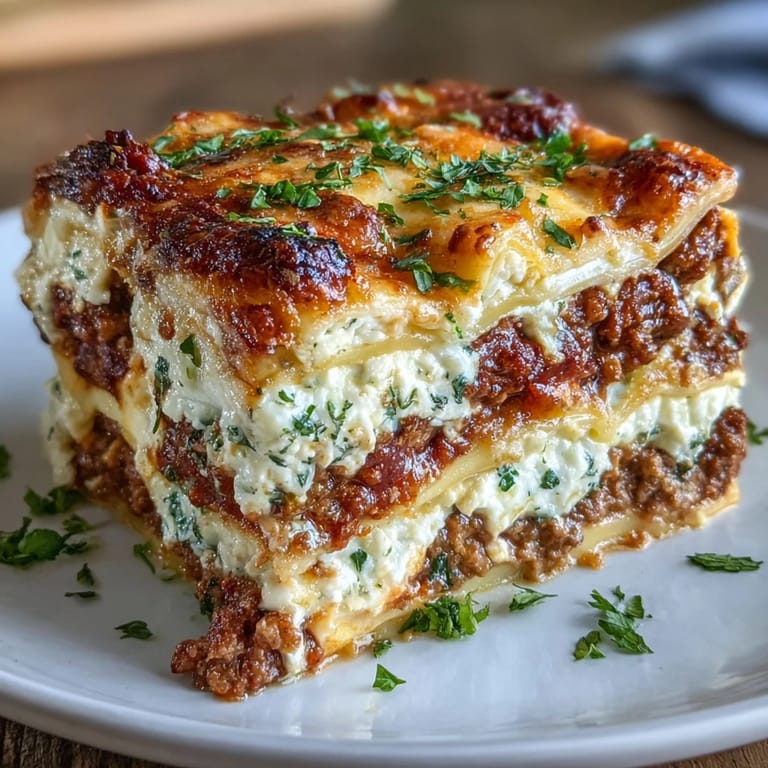
Save My kitchen filled with steam one Sunday afternoon when my neighbor stopped by with a jar of homemade tomato sauce and a challenge: make something worthy of it. That lasagna taught me that comfort food isn't about fancy techniques—it's about layers of honest ingredients building something greater than themselves. The way the ricotta melted into creamy pockets between the noodles, how the meat sauce clung to every surface, the golden cheese bubbling at the edges—it felt like edible architecture. Now, whenever someone needs feeding or celebrating, this is the dish I reach for without hesitation.
I made this for my sister's housewarming, and watching her family dig in with their eyes closed, completely silent except for happy sounds—that's when I realized lasagna is less about feeding stomachs and more about creating moments. Her daughter asked for seconds before finishing her first plate, and her husband came back into the kitchen specifically to tell me the ricotta was perfect. Those reactions, more than any recipe review, told me I'd gotten something right.
Ingredients
- Ground beef: The backbone of your sauce—it grounds the dish with deep, savory notes.
- Italian sausage: This adds a subtle fennel sweetness and richness that beef alone can't deliver, so don't skip it.
- Onion and garlic: The aromatic foundation; sauté them until they're soft and fragrant, as this is where your flavor journey begins.
- Crushed tomatoes and tomato sauce: Use quality canned tomatoes if fresh aren't available—they cook down into a rich, cohesive sauce.
- Tomato paste: A concentrate of umami that deepens the sauce's complexity with just a few tablespoons.
- Oregano and basil: Dried herbs work perfectly here; they infuse slowly into the sauce and become more pronounced as it simmers.
- Ricotta cheese: Whip it smooth with the egg so it spreads easily and creates creamy layers without clumping.
- Mozzarella cheese: The stretchy, melty finish—use whole milk mozzarella for the best bubble and pull.
- Parmesan cheese: It's sharper than mozzarella, adding a salty, nutty counterpoint that keeps the dish from tasting one-dimensional.
- Lasagna noodles: No-boil saves time, but traditional noodles give you better control over texture if you're patient.
Tired of Takeout? 🥡
Get 10 meals you can make faster than delivery arrives. Seriously.
One email. No spam. Unsubscribe anytime.
Instructions
- Get your oven ready and prep your pan:
- Preheat to 375°F and lightly oil your 9x13-inch baking dish so nothing sticks when you're pulling this beauty out later.
- Handle the noodles:
- If you're using traditional noodles, cook them just shy of fully tender—they'll finish cooking in the oven and you don't want mush. Drain and lay them flat so they don't stick together.
- Build your aromatic base:
- Heat olive oil in a large skillet and sauté your onion until it turns translucent and soft, about three minutes. Add the garlic and let it perfume the oil for just a minute—timing matters here because burnt garlic tastes bitter.
- Brown the meat properly:
- Crumble the beef and sausage into the pan, breaking it into small pieces as it cooks. This step takes about 8 to 10 minutes; you want it cooked through and lightly browned, not gray. Drain excess fat if there's more than a thin layer pooling at the bottom.
- Build the sauce:
- Add your tomatoes, sauce, and paste, then season with oregano, basil, salt, pepper, sugar, and red pepper flakes. The sugar balances acidity from the tomatoes—don't skip it. Simmer uncovered for 15 to 20 minutes, stirring now and then, until the sauce thickens slightly and the flavors marry together.
- Prepare the ricotta mixture:
- Combine ricotta, egg, Parmesan, parsley, salt, and pepper in a bowl and mix until smooth and spreadable. The egg binds everything so it holds together in layers rather than sliding around.
- Assemble with intention:
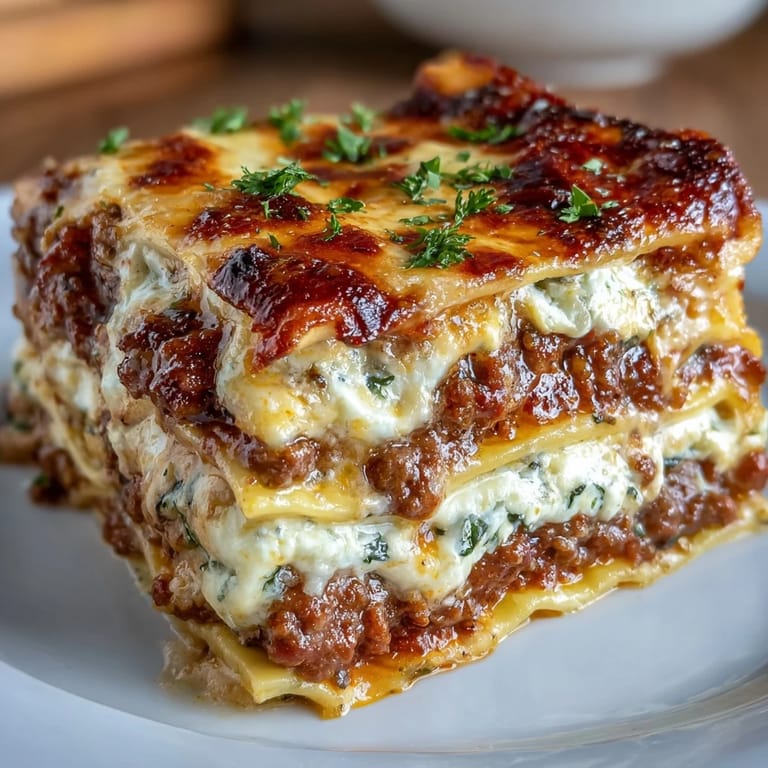
- Spread one cup of sauce on the bottom of your dish, then layer four noodles. Spread one-third of the ricotta mixture, add one cup of sauce, and sprinkle one cup of mozzarella. Repeat this pattern twice more, ending with remaining sauce and mozzarella on top so you get that golden, bubbly finish.
- Bake covered, then uncovered:
- Cover tightly with foil and bake 25 minutes to trap steam and cook everything through. Remove the foil and bake another 20 minutes until the cheese on top turns golden and bubbles at the edges—that's your signal it's ready.
- Let it rest:
- Pull it out and let it sit for 15 minutes before slicing. This cooling period lets the layers set so you get clean, intact pieces instead of a delicious mess.
 Save
Save There's something almost meditative about layering lasagna, the repetition of spreading sauce, noodles, ricotta, cheese, sauce again. It becomes a rhythm, and by the time you're arranging that final layer, your hands know exactly what they're doing. When a dish requires this kind of mindful assembly, you're already halfway to making it special.
Why This Lasagna Works
The magic happens because you're balancing richness with acidity, creaminess with structure, meat with vegetables hidden in the sauce. The sausage brings something beef can't—a slight spice and herbal note that makes people wonder what's different without being able to pinpoint it. The sugar in the sauce isn't about sweetness; it's a whisper that rounds out the tomato's natural tartness so the sauce tastes balanced and grown-up rather than aggressively acidic.
Customizing for Your Table
This recipe is a template, not a decree. I've made it with ground turkey when I wanted something lighter, and honestly, it's still wonderful—just slightly less rich. For vegetarian guests, I've swapped the meat entirely for sautéed spinach, zucchini, and mushrooms cooked down until they release their water and concentrate in flavor. The structure stays the same; you're just changing what fills the layers.
Timing and Make-Ahead Magic
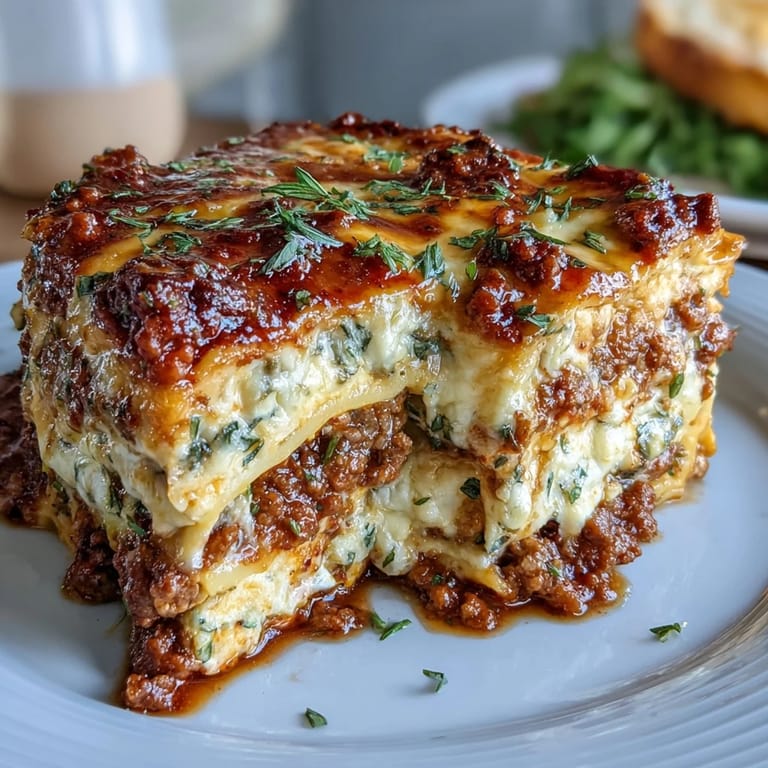
You can assemble this lasagna the morning of and bake it in the evening, which means your kitchen smells incredible right when people are getting hungry. You can also make it fully, let it cool completely, wrap it tightly, and freeze it for up to three months—bake from frozen, just add about 15 extra minutes to your cooking time.
- Red wine like Chianti or Sangiovese pairs beautifully if you're making this for a dinner party.
- Leftovers taste noticeably better on day two, when all the flavors have melded and deepened.
- A simple green salad with lemon vinaigrette cuts through the richness and makes the meal feel complete.
 Save
Save This lasagna has fed my family through lazy Sundays, celebrated milestones, and comforted friends during hard times. Make it once and it becomes yours—a dish you'll return to again and again, each time knowing exactly what you're doing and why.
Recipe FAQs
- → What type of cheese is used in the layering?
Ricotta, mozzarella, and Parmesan cheeses create the creamy and melty layers that define this dish.
- → Can I prepare the meat sauce in advance?
Yes, cooking the meat sauce ahead allows the flavors to deepen, making the final dish even more flavorful.
- → How should I cook the lasagna noodles?
Use regular noodles boiled until al dente or no-boil noodles as a convenient alternative.
- → What herbs enhance the sauce flavor?
Dried oregano and basil provide traditional Italian aroma and flavor to the meat sauce.
- → Is there a way to make this dish vegetarian?
Omit the meat and include sautéed vegetables like spinach, zucchini, and mushrooms for a flavorful plant-based version.
- → How long should the dish rest after baking?
Letting the lasagna rest for about 15 minutes helps it set, making slicing neater and enhancing flavor melding.