 Save
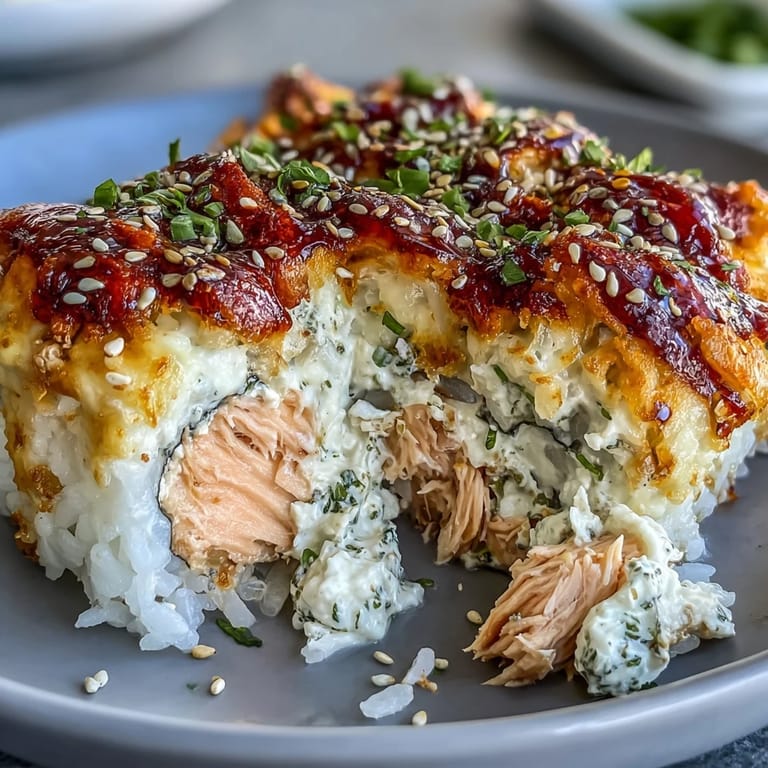
Save The first time I made salmon sushi bake, it was a lazy Sunday afternoon and I'd promised to bring something to a potluck that didn't require sushi-rolling skills I definitely don't possess. Standing in my kitchen, I realized I could get all those flavors I love—creamy, savory, just a kiss of heat—without the fussy handwork. Twenty minutes later, as the aroma of roasting salmon filled the apartment, I understood why this deconstructed approach had become so popular. It tastes fancy but feels wonderfully simple, and honestly, that's the best kind of cooking.
I'll never forget watching my sister's face light up when she tried this at a family dinner—she'd been skeptical about anything called a sushi 'bake' until that first bite. The way the warm rice, creamy filling, and crispy furikake came together seemed to surprise her, and then she immediately asked for seconds. That moment made me realize how food doesn't always have to be traditional or complicated to feel special when it's shared with the right people.
Ingredients
- Sushi rice: The short-grain variety matters here because it holds moisture and creates that slightly sticky texture that makes everything bind beautifully in the baking dish.
- Rice vinegar, sugar, and salt: This seasoning mixture is what transforms plain rice into something with actual personality—don't skip microwaving it first, as it helps everything dissolve evenly.
- Salmon fillet: Fresh or frozen works equally well; I've had better results cooking it until just flaked through, as overdone salmon becomes dry in the oven later.
- Imitation crab sticks: Yes, they're processed, but they add a subtle sweetness and tender texture that real crab sometimes overpowers—save the upgrade for when you want to splurge.
- Cream cheese: Make sure it's softened to room temperature or your mixture will have lumps that refuse to blend smoothly.
- Sriracha mayo: Mixing this yourself gives you control over the heat level, which I've learned matters more than you'd think when feeding guests.
- Furikake seasoning: This is the secret that makes everything taste authentically sushi-forward; it's a blend of sesame seeds, dried seaweed, and fish flakes that you can find in most grocery stores now.
- Sesame seeds and green onion: These fresh toppings are what wake up the dish right before serving, preventing it from feeling heavy.
Tired of Takeout? 🥡
Get 10 meals you can make faster than delivery arrives. Seriously.
One email. No spam. Unsubscribe anytime.
Instructions
- Start your rice base:
- Cook your sushi rice according to the package directions—this is your foundation. While it's still warm, heat that rice vinegar mixture in the microwave for about thirty seconds until the sugar dissolves completely, then fold it gently into the rice with a spatula, being careful not to smash the grains.
- Cook the salmon until tender:
- Season your salmon fillet with salt and pepper, then cook it at 400°F in an air fryer for ten to twelve minutes, or bake it at 375°F for fifteen to seventeen minutes—you're aiming for that moment when it flakes easily with a fork. Let it cool just enough to handle, then shred it gently so you get nice, distinct pieces rather than a paste.
- Build the filling:
- Shred your imitation crab into a large mixing bowl, then add the cooled salmon, softened cream cheese, and your Sriracha mayo mixture. Fold everything together until it's smooth and cohesive—this is where the magic happens, and it should taste savory, creamy, and just a little spicy.
- Layer and press:
- Spread your seasoned rice evenly across a greased nine-by-nine or nine-by-thirteen inch baking dish and press it down gently with the back of a spatula—you want it compact but not rock-hard. Sprinkle generously with furikake right away so it gets a little toasted in the oven.
- Top with the salmon mixture:
- Spread your salmon-crab mixture over the rice in an even layer, then smooth the surface and press it down just lightly. You're not making it dense; you're just helping everything make contact.
- Bake until everything is warm:
- Bake at 400°F for ten to fifteen minutes, watching until the top is just starting to turn golden and you can smell that toasted aroma wafting out. This is the smell that tells people something delicious is about to happen.
- Finish and serve:
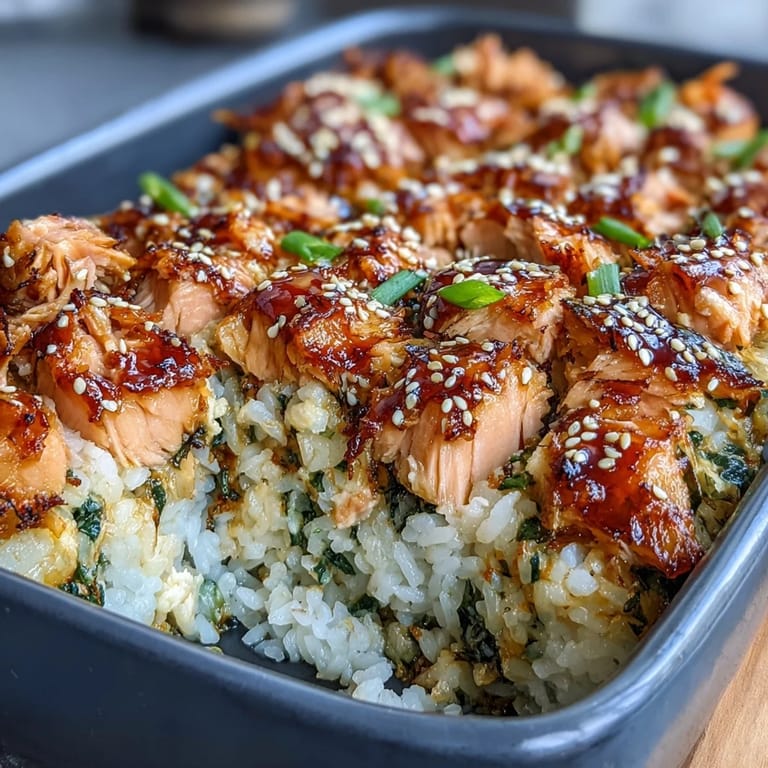
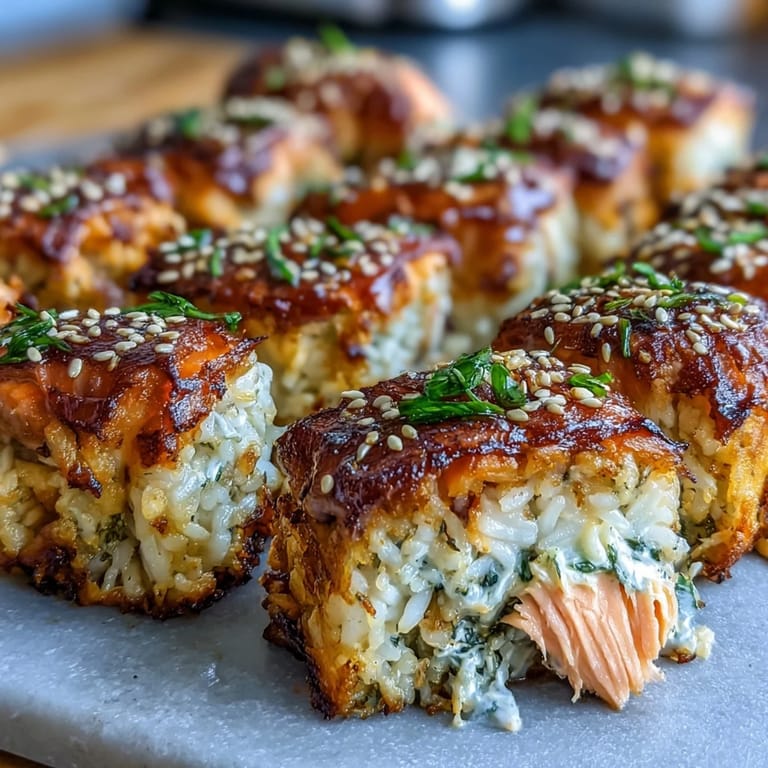
- Right after pulling it from the oven, drizzle with more Sriracha mayo, shower it with extra furikake and sesame seeds, and scatter chopped green onions across the top. Serve it warm with pieces of seaweed snack on the side so everyone can wrap their portions.
 Save
Save There's something about this dish that transforms a regular weeknight into something that feels a bit more intentional. My partner mentioned once that it reminded him of the sushi restaurants he'd loved in college, but in a form that didn't require leaving the house or spending a small fortune. Now it's become our go-to when friends are coming over and I want to impress without spending hours in the kitchen.
Why the Bake Method Works
I spent years assuming sushi had to be carefully rolled by hand, and then someone finally explained that the flavors and textures are what matter—the presentation is just the package they come in. Baking this instead of rolling means the rice gets a chance to soak up all the moisture from the filling, creating something that's actually more cohesive and easier to eat than traditional rolls. The heat also brings everything to the same warm temperature, which somehow makes the flavors feel more blended and satisfying.
Customizing the Heat Level
Sriracha mayo sounds spicy, but the cream cheese mellows it considerably, so even people who claim they don't like heat usually end up enjoying this. I've found that if you're cooking for a mixed crowd, starting with just one tablespoon of Sriracha in your mayo is wise—you can always drizzle more on individual portions at the table, and nobody feels left out. For people who love real fire, chili flakes sprinkled on top right before serving give a pop of heat without changing the texture.
Storage and Leftovers
This might sound unusual, but this bake actually tastes better on day two because all the flavors have time to get to know each other. The rice firms up slightly, making it easier to scoop clean portions, and the filling stays moist and flavorful even after refrigeration. Reheat gently in a 300°F oven for about ten minutes with a loose foil cover, or eat it cold straight from the fridge if you're in a hurry—it works both ways.
- Always store leftovers in an airtight container to keep the rice from drying out.
- Add fresh green onions and furikake again after reheating so the toppings taste bright rather than tired.
- Don't keep it longer than two days, as the seafood component is best enjoyed fresh.
 Save
Save This recipe is proof that you don't need to be a sushi chef to create something that feels authentic and delicious. It's comfort food that happens to be elegant, which is really the best thing any dish can be.
Recipe FAQs
- → Can I substitute imitation crab with real crab?
Yes, using real crab enhances the flavor for a more authentic seafood experience.
- → What is the best way to cook the salmon for this dish?
You can bake the salmon at 375°F for 15–17 minutes or air fry at 400°F for 10–12 minutes until fully cooked and flaky.
- → How do I make the spiced mayo topping?
Mix mayonnaise with Sriracha sauce to taste, adjusting spice levels to your preference for a creamy, spicy kick.
- → What rice is used in this dish?
Sushi rice is prepared and seasoned with rice vinegar, sugar, and salt for a slightly tangy base that complements the seafood.
- → Can leftovers be stored and reheated?
Yes, refrigerate leftovers for up to 2 days and reheat gently to maintain texture and flavor.
- → What toppings enhance this baked dish?
Furikake seasoning, sesame seeds, and chopped green onions add flavorful texture and visual appeal.