 Save
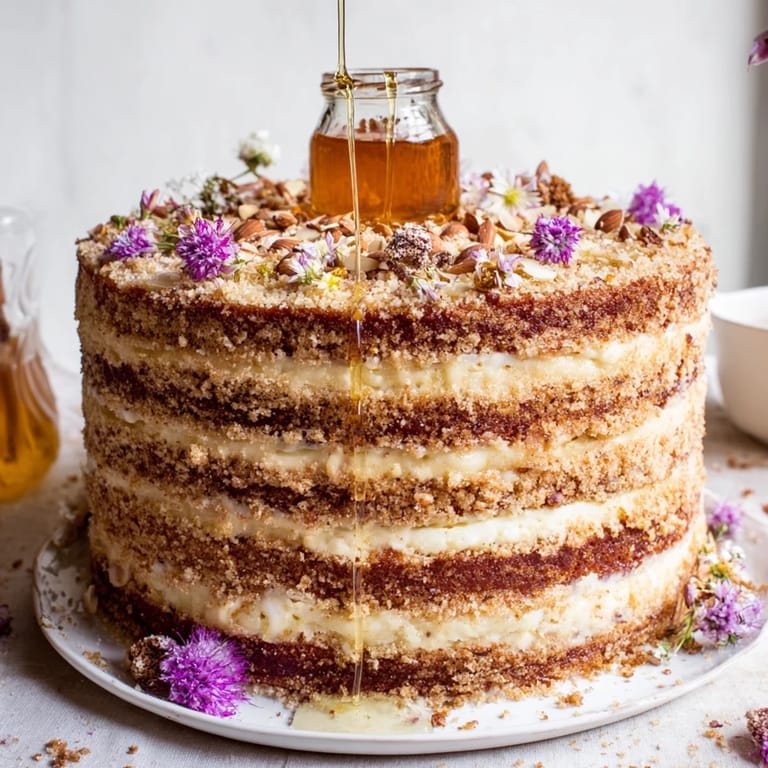
Save The first time I served this honey-drip cake, my guests actually gasped when they saw that golden pot of honey nestled in the center, waiting to be discovered. I'd been thinking about how to make dessert feel less like just another plate and more like an experience, and watching everyone lean in to dip their forks into warm honey felt like I'd finally gotten it right. There's something almost theatrical about a dessert that asks you to participate, that makes you slow down and savor each bite differently because of what's at the center.
I made this for my sister's dinner party on a rainy October evening, and I remember the smell of honey warming slightly as it sat in the center pot, mixing with the vanilla and butter from the cake layers. She kept rearranging the flowers on top, not because anything was wrong, but because she couldn't stop fussing over it. When the first person dipped their cake into that honey and closed their eyes, I knew this recipe had become something I'd make again and again.
Ingredients
- All-purpose flour: The foundation that keeps the cake tender and moist rather than dense, so sift it if you have the time and patience.
- Baking powder and baking soda: Together they give the cake that perfect rise without making it feel like you're biting into a sponge.
- Unsalted butter: You need control over the salt, and softened butter creams better than cold, creating that light, fluffy base.
- Honey: The star of the show both in the cake and the filling, and different varieties will shift the whole flavor profile.
- Eggs: Three large ones bind everything while adding richness that grocery store cake mixes could never touch.
- Whole milk: It keeps things moist and helps the honey flavor come through without competing with other tastes.
- Heavy cream: Whipped to stiff peaks, it becomes clouds that hold the honey and mascarpone together.
- Mascarpone cheese: This is what transforms regular whipped cream into something creamy and slightly tangy that makes sense with honey.
- High-quality liquid honey: Wildflower or acacia honey will taste noticeably better in the center pot than generic supermarket varieties.
- Toasted almonds: They add crunch and a subtle earthiness that keeps the sweetness from overwhelming your palate.
Tired of Takeout? 🥡
Get 10 meals you can make faster than delivery arrives. Seriously.
One email. No spam. Unsubscribe anytime.
Instructions
- Set your oven and pans:
- Preheat to 350°F and line two 8-inch round pans with parchment so your cakes slip out without sticking. This step takes two minutes but saves you twenty minutes of frustration later.
- Combine your dry ingredients:
- Whisk flour, baking powder, baking soda, and salt together in a bowl, breaking up any lumps you find. This prevents streaks of unmixed baking soda that taste bitter in random bites.
- Cream the butter and sugar:
- Beat them until the mixture looks pale and fluffy, about three minutes with an electric mixer. You're incorporating air here, which is what makes the cake light rather than dense.
- Add the wet ingredients:
- Pour in honey, eggs one at a time, and vanilla, beating well after each addition so everything emulsifies smoothly. This is where patience pays off, because rushing can separate the mixture.
- Layer wet and dry:
- Add the dry mixture and milk in alternating batches, starting and ending with dry, mixing only until combined. Overmixing develops gluten and makes the cake tough, so stop as soon as you don't see flour streaks.
- Bake the layers:
- Divide batter equally between pans and bake for 22 to 25 minutes until a toothpick comes out with just a few moist crumbs. The cake should spring back gently when you touch the top.
- Make the honey cream filling:
- Whip heavy cream to soft peaks, then add honey and mascarpone, continuing to whip until stiff peaks form. Taste it and adjust honey if needed, because this is where the filling's personality comes through.
- Slice and stack:
- Once cakes are completely cool, slice each layer horizontally to create four thin layers total, then begin stacking with honey cream between each. Each layer should be thin enough that you can taste it, not so thin that it crumbles.
- Create the honey well:
- Using a 3-inch round cutter, carefully bore a hole through the center of the stacked cake, then nestle a small honey pot into the opening. Wiggle it gently to settle it so it won't tip when guests start dipping.
- Garnish and serve:
- Scatter toasted almonds across the top, add edible flowers if you're feeling fancy, and drizzle a little extra honey around the edges. Chill until just before serving so the honey cream stays set and the cake stays fresh.
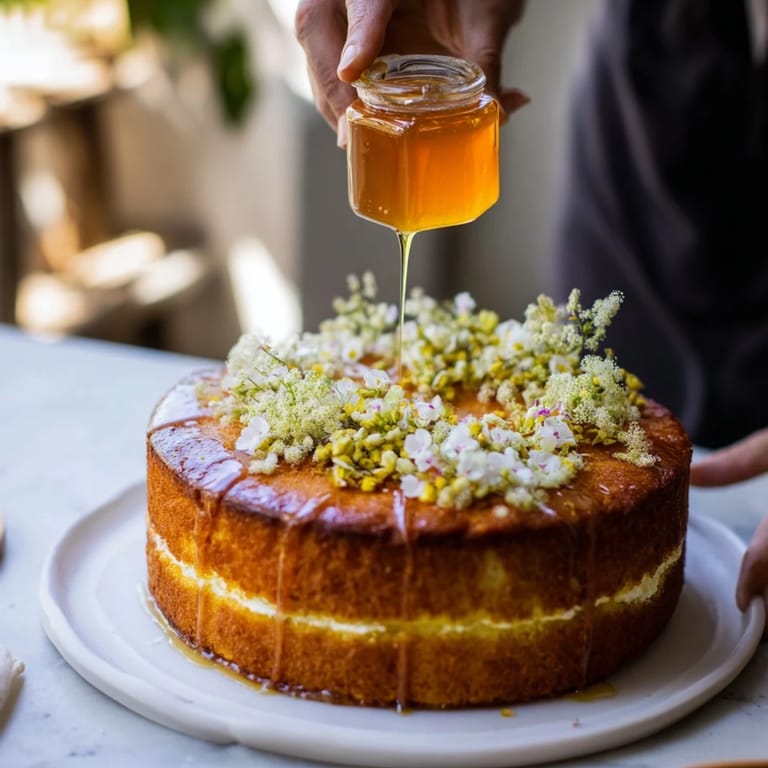 Save
Save The moment that really stuck with me was watching my nephew, who usually pushes desserts around his plate, actually request seconds and ask to help make it again the next weekend. Dessert had finally become more than obligation; it had become an event he wanted to participate in.
Choosing Your Honey
Not all honey tastes the same, and this is where you can have real fun experimenting. Wildflower honey brings complexity and a slightly floral sweetness that feels sophisticated, while acacia honey is mellow and clean. I once tried lavender honey in the center pot and it changed everything, making the whole dessert taste more like a memory of a garden than just cake. The honey in the cake batter itself doesn't need to be fancy, but the honey that guests will actually taste and experience should be something you genuinely enjoy eating straight from a spoon.
Cake Consistency Matters
The slicing process is where this recipe shows its true colors, and it's also where most people stumble. You need cake layers thin enough to feel delicate but sturdy enough that they don't crumble when you cut through them. The honey cream filling acts like glue holding everything together, but only if the cake underneath is actually cool and firm. I learned this the hard way by trying to stack warm cake layers and watching them slide sideways like they were on an ice rink.
Make It Your Own
The beauty of this recipe is that it welcomes variation without losing its soul. Orange blossom honey transforms it into something Mediterranean and elegant, while chestnut honey brings an almost savory depth that surprises people. You can swap the almonds for pistachios, add a pinch of cardamom to the batter, or even brush each layer with a touch of honey syrup to make it even more luxurious. The core idea stays the same—that moment of dipping into warm honey—but the flavors can shift based on what speaks to you.
- Toast your own almonds for better flavor than pre-toasted ones, or skip them entirely if nuts aren't your thing.
- Make sure your honey pot is actually food-safe ceramics or glass, not something decorative that will leach weird flavors.
- This cake actually tastes better the next day when flavors have had time to settle and marry together.
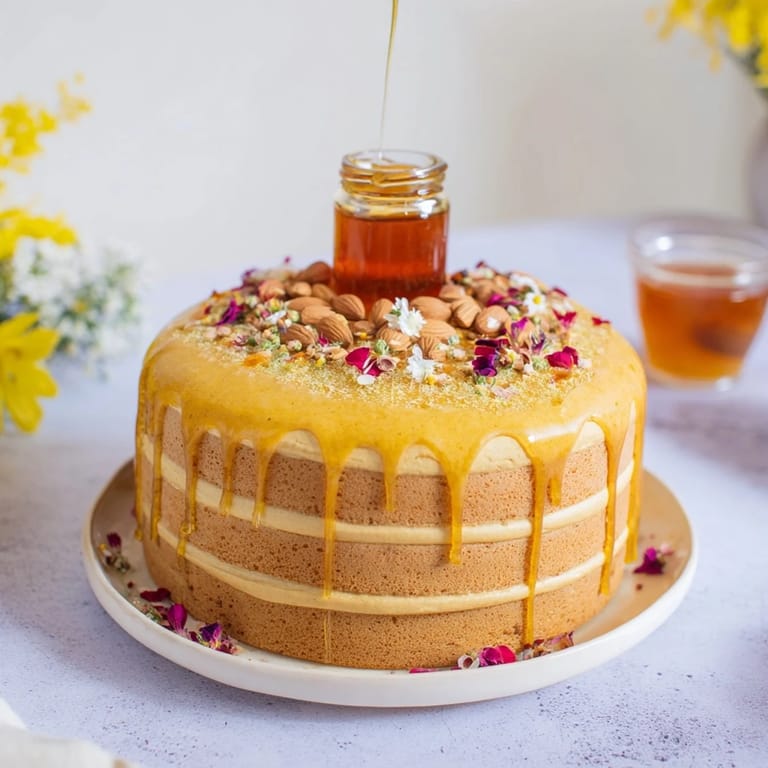 Save
Save This dessert reminds me why I love cooking, because it's not just about flavor or technique—it's about creating a moment people will talk about. Every time someone dips that fork into warm honey, you're giving them permission to slow down and really taste.
Recipe FAQs
- → What type of honey works best for the cake?
Use high-quality liquid honey like wildflower or acacia for a smooth texture and floral notes that complement the cake layers.
- → Can I make this dessert nut-free?
Yes, simply omit the toasted almonds garnish to accommodate nut-free preferences without affecting the core flavors.
- → How do I create the central honey pot in the cake?
After stacking the cake layers with honey cream, use a 3-inch round cutter to carefully remove the center, then place a small honey pot filled with liquid honey inside.
- → What is the best way to serve this dessert?
Serve by slicing the cake around the honey pot, allowing guests to dip each bite into the flowing honey for enhanced richness.
- → Can different honey varieties be used for unique flavors?
Absolutely, experimenting with orange blossom or lavender honey adds floral nuances and depth to the overall profile.