 Save
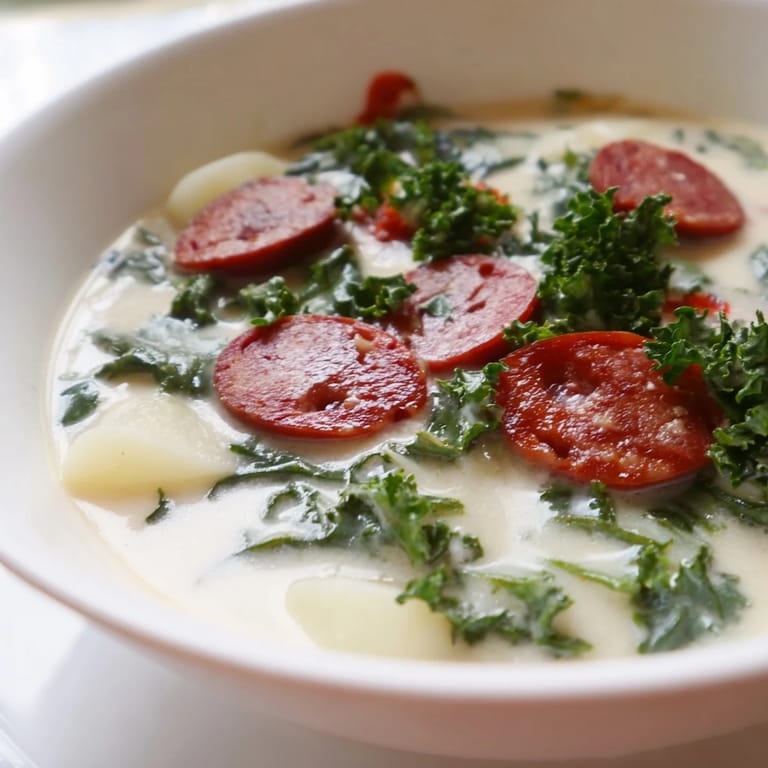
Save My neighbor Maria handed me a steaming bowl of caldo verde one November evening, and I understood immediately why this soup has sustained Portuguese families through countless winters. The first spoonful—earthy, creamy, with that unexpected pop of smoky chorizo—made me determined to recreate it. I pestered her for details until she finally laughed and gave me her loose recipe, which I've since refined into something that tastes like her kitchen feels: warm, unpretentious, deeply satisfying.
I served this to my book club on a cold February night, doubling the recipe and worrying it wouldn't be substantial enough for the crowd. By the end of the evening, the pot was nearly empty and someone asked for the recipe before even saying goodbye. That's when I realized caldo verde isn't just soup—it's a conversation starter, a moment where people slow down and actually taste what's in their bowl.
Ingredients
- Potatoes (600g): Use waxy varieties like Yukon Gold that hold their shape; they create a naturally creamy base when partially blended without turning gluey.
- Kale (120g): Portuguese couve is traditional, but collard greens work beautifully and are often easier to find—the key is slicing it thin so it wilts quickly into the soup.
- Chorizo (150g): This isn't a garnish; it's the soul of the dish, releasing its paprika-infused fat into the broth as it cooks.
- Onion and garlic: These create the aromatic foundation—don't rush this step, as translucent onions indicate properly released sweetness.
- Chicken or vegetable broth (1.2L): Quality broth matters here since there are so few ingredients; homemade is ideal, but a good store-bought version works fine.
- Olive oil (2 tbsp total): Use a fruity extra virgin oil for the finishing drizzle; it adds a peppery note that ties everything together.
Tired of Takeout? 🥡
Get 10 meals you can make faster than delivery arrives. Seriously.
One email. No spam. Unsubscribe anytime.
Instructions
- Build the base:
- Heat 1 tablespoon of olive oil in a large pot over medium heat and add the onion and garlic. You'll know they're ready when the kitchen smells sweet and the onion turns translucent, about 4 minutes—don't let them brown or the delicate flavor will shift.
- Marry the flavors:
- Add the diced potatoes and chorizo slices, stirring for 3 minutes so the chorizo's oils coat everything. This brief cooking period is when the soup gains its signature warmth and richness.
- Simmer until tender:
- Pour in the broth and bring to a boil, then reduce heat, cover, and let it bubble gently for 20 minutes. The potatoes should be fork-tender and starting to break down slightly at the edges.
- Reserve the chorizo:
- Fish out the chorizo slices with a slotted spoon and set them aside on a plate. This step lets you control the texture and prevents the meat from breaking apart during blending.
- Create the creamy base:
- Using an immersion blender, pulse the soup until it's smooth and velvety—some cooks leave tiny potato flecks for texture, but the goal is a luxurious mouthfeel. If using a standard blender, work in careful batches and return the pureed soup to the pot.
- Finish with greens:
- Return the chorizo to the pot, add the thinly sliced kale, and simmer for 5 to 7 minutes, stirring occasionally. The kale will go from bright green to soft and tender, releasing its mineral earthiness into the soup.
- Season and serve:
- Drizzle in the remaining olive oil, taste carefully, and adjust salt and pepper. Serve in wide bowls with a ladle so each person gets plenty of broth, potatoes, kale, and chorizo.
 Save
Save My daughter, who claims to dislike soup, asked for a second bowl and wanted to know if we could make it every week. Watching someone you love discover a dish that feels like home to you is a small magic—that's what caldo verde does.
The Chorizo Question
Portuguese chouriço and Spanish chorizo aren't identical, but they're close enough that substitution works beautifully in this recipe. Chouriço tends to be slightly more garlicky and less sweet, while Spanish chorizo leans paprika-forward. Either way, the sausage's oils infuse the entire pot and define the soup's character. If you can find Portuguese chorizo at a specialty shop, it's worth seeking out, but don't let the search delay you from making this soup—good Spanish chorizo will deliver the same comfort.
Making It Your Own
The beauty of caldo verde is its flexibility within simplicity. Some families add a splash of white wine when the broth comes to a boil, and I've tasted versions with a hint of red pepper flakes or smoked paprika stirred through. The vegetarian version, swapping vegetable broth for chicken and adding smoked paprika instead of chorizo, is equally satisfying—it just becomes a different kind of comfort. I've also stretched this soup when unexpected guests arrived by adding more broth and potatoes, and it somehow tasted even better, like it had more time to become itself.
Serving Suggestions
This soup shines on its own, but a slice of crusty bread or a hunk of cornbread transforms it into something almost celebratory. A sharp cheese like aged manchego on the side, a simple green salad afterward, or even a modest glass of white wine all feel right alongside caldo verde. The cool months are when this soup truly belongs on the table, though I've found myself making it year-round because one spoonful is enough to settle both body and mood.
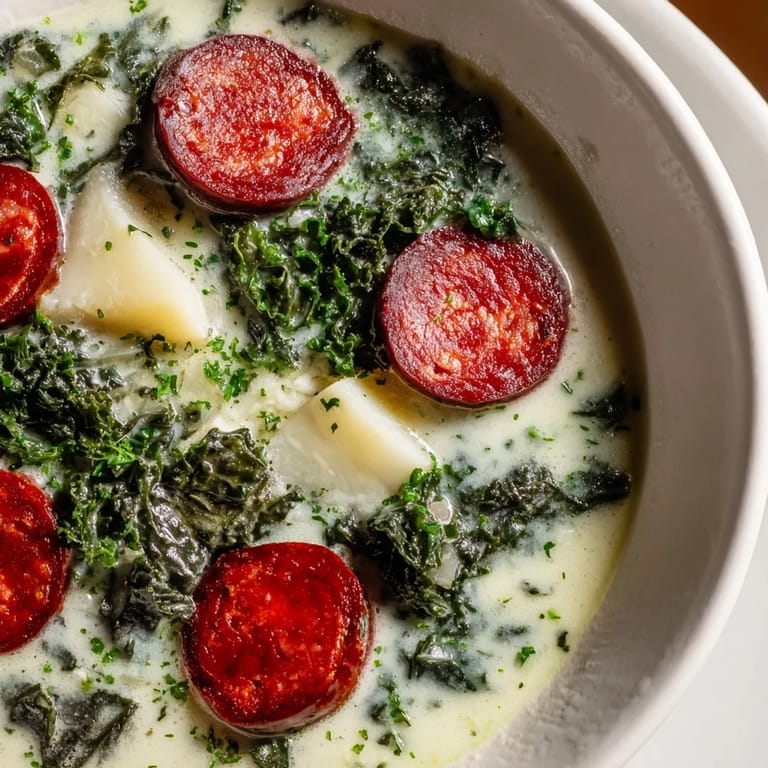
- Serve immediately in wide bowls to showcase the creamy base and tender kale.
- A rustic bread and a simple side salad complement the soup without overshadowing it.
- Leftover soup tastes richer the next day as flavors continue to meld together.
 Save
Save Caldo verde tastes like someone cares about you, which is perhaps the most important ingredient of all. Make it for yourself on a quiet evening, or make it for the people you want to feed—either way, you're honoring a tradition that has warmed countless tables across generations.
Recipe FAQs
- → What is the best type of kale to use?
Traditionally, Portuguese couve is preferred, but collard greens or kale with tender leaves are excellent substitutes.
- → Can I make this dish without chorizo?
Yes, omitting the chorizo and using vegetable broth creates a vegetarian-friendly version with a smoky paprika twist.
- → How do I achieve a creamy texture?
Puree the cooked potatoes and broth using an immersion blender or standard blender until smooth and silky.
- → What type of broth works best?
Chicken or vegetable broth both add depth; vegetable broth is ideal for a lighter or vegetarian option.
- → How long should the kale be cooked?
Simmer the kale for about 5–7 minutes until wilted and tender, preserving its vibrant color and texture.