 Save
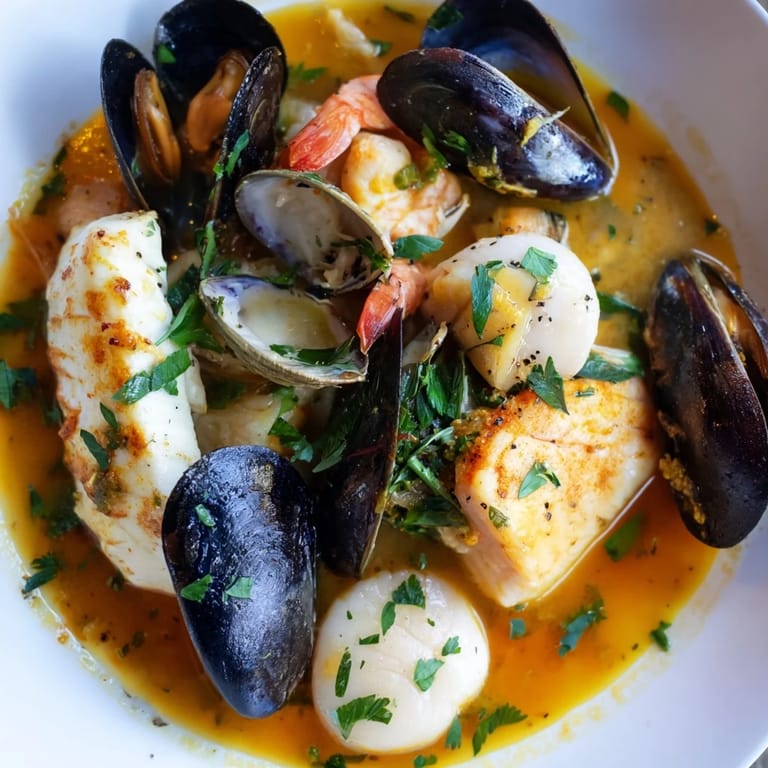
Save A friend's grandmother in Marseille taught me that bouillabaisse isn't just a recipe—it's a conversation between the sea and the market. She'd wake before dawn, selecting fish so fresh they still gleamed under the morning light, then simmer them with saffron and orange zest until the entire kitchen smelled like the Mediterranean coast. The first time I made it at home, I realized the magic wasn't in following steps; it was in understanding that each ingredient had traveled far to meet in that golden broth. Now, whenever I make this stew, I'm transported to that small kitchen where nothing was rushed, and every bowl told a story.
I made this for my partner during an unexpectedly gray afternoon, thinking comfort food might lift the mood. The moment the saffron hit the pot, something shifted—the aroma alone felt like an invitation. When we sat down to eat, passing the rouille back and forth, spreading it on toasted bread, and fishing for mussels, we weren't just eating dinner. We were creating a moment that stayed with us long after the bowls were empty.
Ingredients
- Firm white fish fillets (monkfish, sea bass): These hold their shape beautifully and don't dissolve into the broth, giving you distinct bites of tender fish.
- Oily fish fillets (red mullet): The richness adds depth and that authentic Provençal character; don't skip this layer of flavor.
- Mussels and shrimp: Mussels must be alive when you buy them and opened only when cooked—unopened ones go straight to the trash, no exceptions.
- Saffron threads: Buy the real thing; it's expensive but transforms the entire dish into liquid gold with just a pinch.
- Fennel: Both the bulb and seeds create that subtle anise note that whispers rather than shouts.
- Orange zest: A single strip does wonders—it brightens everything without making the stew taste like dessert.
- Fish stock: If you can't find proper fish stock, water works, but quality stock makes a noticeable difference.
Tired of Takeout? 🥡
Get 10 meals you can make faster than delivery arrives. Seriously.
One email. No spam. Unsubscribe anytime.
Instructions
- Build your fragrant base:
- Heat olive oil over medium heat and let the onion, leek, fennel, carrot, and garlic soften gently for 8–10 minutes, watching them turn translucent and tender without browning. You're coaxing out sweetness, not creating color.
- Layer in the aromatics:
- Add tomatoes, orange zest, bay leaf, thyme, parsley, saffron, fennel seeds, and peppercorns, stirring to coat everything in the fragrant oil. Let this simmer for 5 minutes so the flavors start knitting together.
- Deglaze and simmer:
- Pour in the white wine and let it bubble for 2 minutes, then add your fish stock or water and bring to a gentle boil. Lower the heat and let it simmer uncovered for 25 minutes, allowing the broth to taste like it's been simmering all day.
- Strain for clarity:
- Pour the broth through a fine sieve, pressing gently on the solids to extract every bit of flavor without pushing vegetable bits through. This step transforms a good stew into a refined one.
- Add the seafood with purpose:
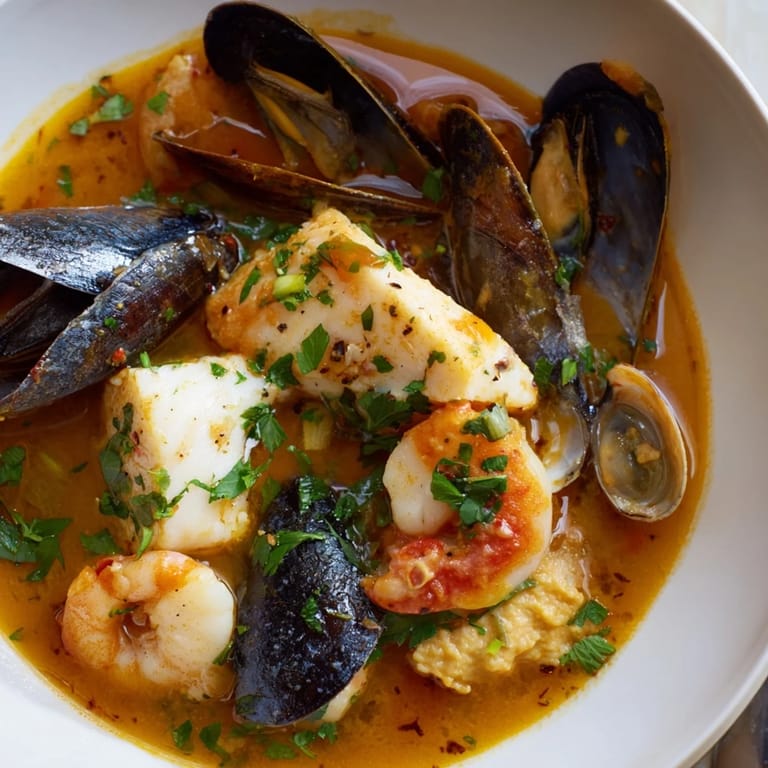
- Return the strained broth to the pot and bring to a gentle simmer. Add firm white fish first and cook for 5 minutes, then add oily fish, mussels, shrimp, and scallops, simmering for another 5–6 minutes until everything is just cooked and mussels have opened. Discard any stubborn unopened mussels.
- Make the rouille:
- In a separate bowl, whisk together egg yolk, garlic, chili, saffron with its soaking water, and mustard until smooth. Drizzle in olive oil drop by drop while whisking constantly until the mixture thickens into a rich, creamy sauce like homemade mayonnaise. Season with salt.
- Serve with ceremony:
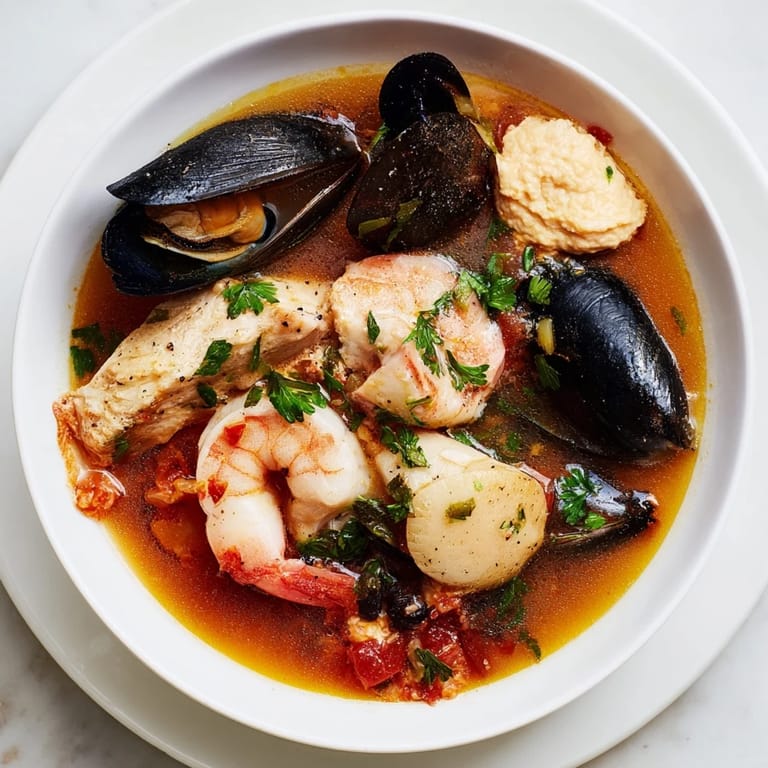
- Ladle the bouillabaisse into warm bowls, top with fresh parsley, and serve alongside toasted baguette slices brushed with olive oil and a generous spoonful of rouille on the side.
 Save
Save The real revelation came when I realized bouillabaisse isn't about perfection—it's about the ritual of bringing people together with something warm and lavish. Every bowl is a little different depending on what fish you found that day, and that variability is the whole point.
Why Bouillabaisse Feels Special
This stew carries history in every spoonful. The Provençal coast created bouillabaisse as a way to honor humble fish that wouldn't sell at market, transforming scraps into a celebration. What started as resourcefulness became luxury, and now making it feels like you're keeping a centuries-old tradition alive. There's something about dishes with deep roots that makes them taste better than their ingredient list suggests.
Choosing Your Seafood
The best bouillabaisse uses whatever is freshest that day—three or four types of local fish at minimum, according to tradition. Visit a fish counter, look into the eyes of your fishmonger, and ask what came in this morning. They'll steer you right. The mix of firm white fish and oily fish matters because they cook differently and bring different flavors, creating layers in the bowl.
The Magic of Rouille and Bread
Rouille is garlicky, spicy mayonnaise that sounds simple but changes everything—it's the reason you want crusty bread nearby. Spread it on toasted slices and dip them into the broth, letting the bread soak up that golden liquid while the rouille adds punch. Without this ritual, you're missing half the experience. Make the rouille ahead if you like; it keeps for a day in the fridge and actually tastes better when flavors have had time to meld.
- Toast your bread slices until they're golden and crisp so they don't dissolve immediately into the broth.
- If you're nervous about making rouille (whisking egg yolk and oil), do it slowly and calmly—rushing causes it to break.
- A bowl of bouillabaisse without rouille and bread is like a song without melody; they complete each other.
 Save
Save Bouillabaisse is the kind of meal that doesn't just fill you; it roots you in a place and moment. Make it when you want to slow down and remember that cooking is, at its best, an act of generosity.
Recipe FAQs
- → What types of fish work best for this stew?
Use a mix of firm white fish like monkfish or sea bass and oily fish such as red mullet for a balanced texture and flavor.
- → How is the rouille sauce prepared?
Whisk together egg yolk, minced garlic, chopped chili, soaked saffron, and Dijon mustard while slowly drizzling in olive oil to create a thick, creamy sauce.
- → Can I prepare the rouille in advance?
Yes, the rouille can be made ahead and refrigerated for up to one day without losing flavor or texture.
- → What is the purpose of straining the broth?
Straining removes solids, creating a clear, flavorful base that enhances the delicate seafood flavors without excess texture.
- → How do I know when the seafood is cooked properly?
The seafood should be just cooked through: fish becomes opaque, mussels open fully, and shrimp turn pink and firm but still tender.