 Save
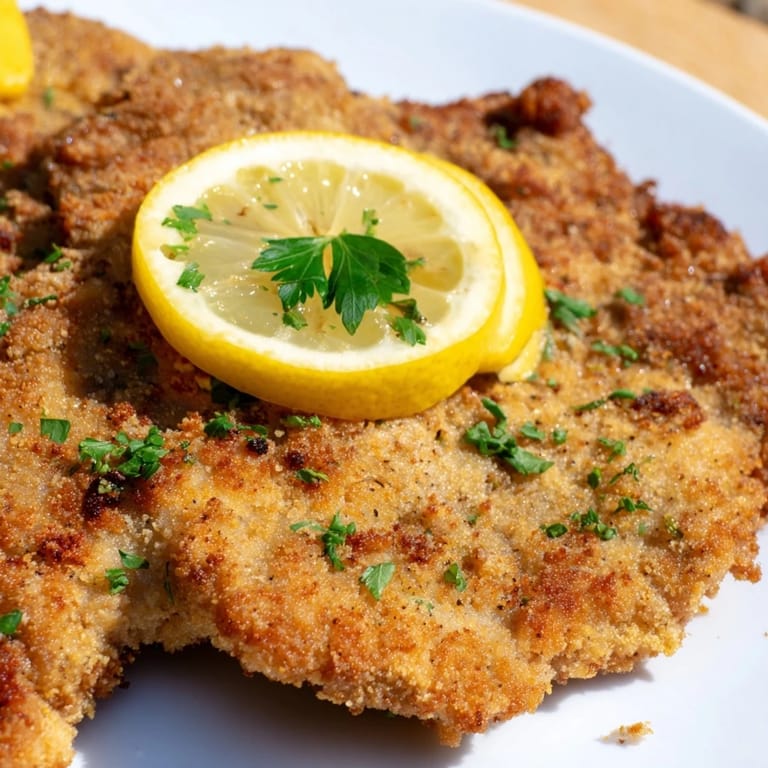
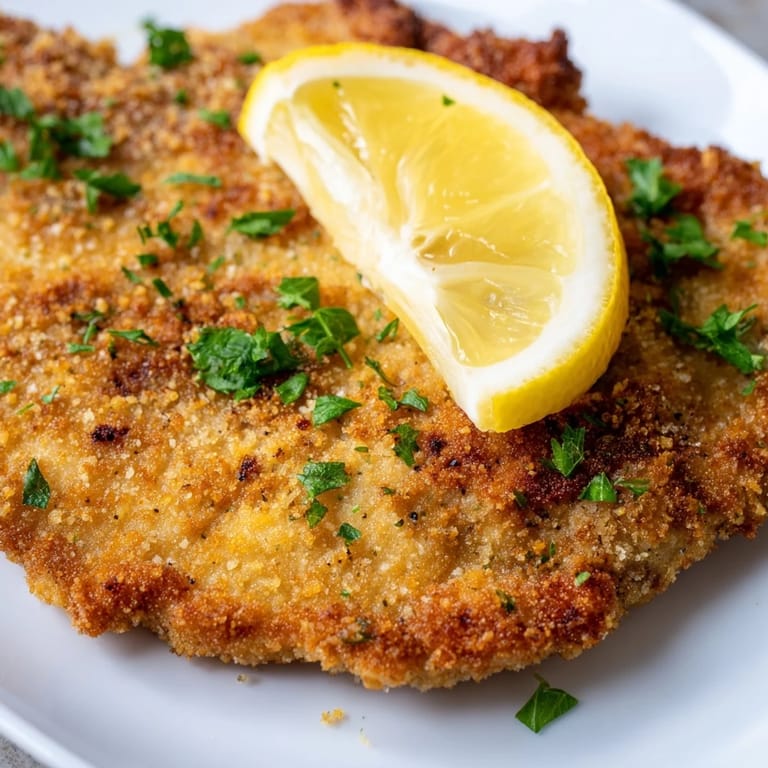
Save My first wiener schnitzel arrived on a white plate in a small Viennese café, golden and impossibly thin, with a crisp shell that shattered under my fork. The waiter slid it in front of me with such casual confidence that I knew this wasn't fancy food—it was just the way things were done here. One bite and I understood why this dish has survived centuries in Austria unchanged: it's perfect in its simplicity, a conversation between butter, breadcrumbs, and the thinnest slice of veal you've ever seen.
I made this for four friends on a chilly October evening, and halfway through frying the second batch, my kitchen filled with this unmistakable aroma of butter and golden breadcrumbs that made everyone crowd toward the stove. One friend admitted she'd never eaten veal before, and watching her taste that first crispy bite—her eyes going wide—reminded me that the best meals aren't the complicated ones, they're the ones that make people pause and actually notice what they're eating.
Ingredients
- Veal cutlets (4 pieces, about 150 g each): Pounded to 1/4 inch thickness, this is your star—look for pale pink color and ask the butcher to pound them if your mallet arm needs mercy.
- All-purpose flour (100 g): The first barrier between breading and meat, nothing fancy needed here.
- Large eggs (2): Mixed with milk to create a glue that holds everything together; don't skip whisking them properly.
- Milk (4 tbsp): Stretches the egg mixture so it coats evenly without being too thick.
- Fine dry breadcrumbs (150 g): The crispy backbone of this dish—use panko or finely ground breadcrumbs, not chunky ones.
- Clarified butter or neutral oil (250 ml): The magic ingredient that makes schnitzels sing; clarified butter gives the most authentic taste, but a high-heat oil works if that's what you have.
- Lemon (1): Cut into wedges for brightness and acidity that cuts through the richness.
- Fresh parsley (2 tbsp, chopped): Optional but adds color and a whisper of freshness.
Tired of Takeout? 🥡
Get 10 meals you can make faster than delivery arrives. Seriously.
One email. No spam. Unsubscribe anytime.
Instructions
- Pound the veal to paper-thin:
- Place each cutlet between plastic wrap and use steady, gentle strokes with your mallet—you're persuading the meat to spread, not beating it into submission. Pat everything dry with paper towels afterward; moisture is the enemy of crispiness.
- Build your breading station:
- Shallow dishes work best: flour in one, eggs whisked with milk in the second, breadcrumbs in the third. Line them up left to right so you move through each in one confident motion.
- Bread each cutlet with a light hand:
- Coat in flour, tap off the excess, dip in egg until fully covered, then roll gently through breadcrumbs without pressing—you want a loose, delicate coating that will shatter when you bite it. The less you compress, the crispier it gets.
- Heat your fat until it's ready:
- Medium-high heat, and wait until the butter or oil is shimmering and almost smoking slightly. Drop a breadcrumb in—if it immediately sizzles and browns, you're ready.
- Fry with confidence:
- Two cutlets at a time so they have room to swim; 2–3 minutes per side until they turn a deep golden brown. Tilt the pan frequently and spoon the hot fat over the top for even color and crispiness.
- Drain and serve immediately:
- A slotted spatula lets the fat drip away; a quick rest on paper towels removes excess without cooling them down. Serve hot with lemon wedges beside each piece.
 Save
Save There's a moment when your schnitzels hit the hot fat and the kitchen fills with that particular sizzle and smell—it's the sound of a hundred family dinners at once. In that instant, you're not just frying meat, you're continuing a tradition that's been unbroken in Vienna for generations.
Pounding Without Fear
The scariest part of making schnitzel is the pounding, but it's actually forgiving—plastic wrap on both sides means you can't mess this up. Use steady, overlapping strokes that spread the meat outward rather than smash straight down; you'll feel when it hits that perfect 1/4 inch thickness where it's thin enough to cook through quickly but thick enough to stay juicy inside. A meat mallet is worth the five dollars, but a heavy skillet turned sideways works in a pinch.
The Three-Dish Breading Station
Setting up your flour, egg, and breadcrumb stations beforehand changes everything—you move through the process with one hand staying dry and one hand staying wet, almost like a dance. Place them left to right and you'll naturally flow through each station without confusion. Having shallow dishes instead of deep bowls gives you better control and less mess, and everything moves faster when you're not hunting for space on your counter.
Timing and Temperature Matter Most
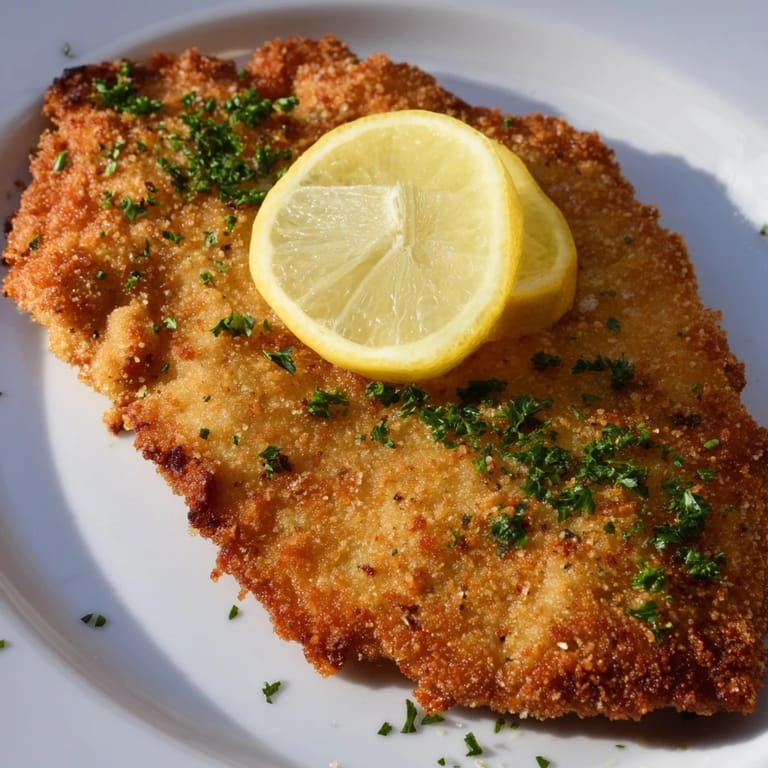
The difference between a flabby schnitzel and a crisp one comes down to two things: hot enough fat and not too much time in the pan. If your fat isn't hot enough, the breading absorbs oil instead of crisping; if you cook too long, the outside burns before the inside warms through. Trust the sizzle you hear and the golden color you see—2–3 minutes per side is rarely wrong, and watching the edges turn from pale to amber gold is your real timer.
- Keep the heat at medium-high, not screaming hot, or your outside burns before the veal cooks.
- If you're frying multiple batches, let your oil return to temperature between batches by waiting 30 seconds.
- Serve immediately—schnitzel is best eaten the moment it stops smoking, while that crisp shell is still snapping.
 Save
Save This is the kind of dish that reminds you why certain foods last centuries—it asks for patience in pounding, respect for good fat, and nothing else. Make it once and you'll understand why Austrians stopped perfecting it a hundred years ago.