 Save
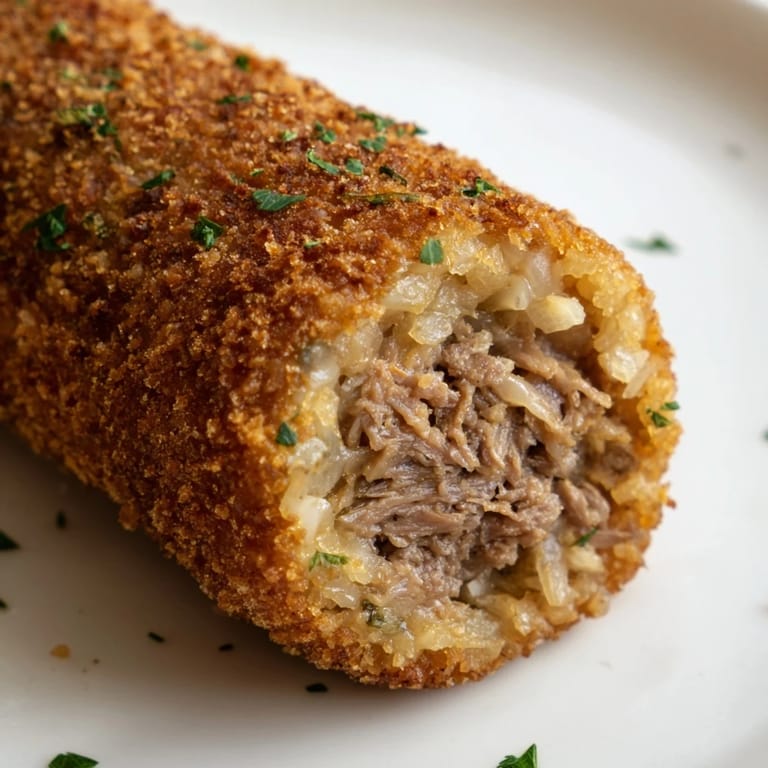
Save The first time I bit into a proper Dutch croquette, I was sitting at a small counter in Amsterdam, and the contrast between that shattering golden crust and the impossibly creamy beef filling inside made me understand why these humble things are treated like treasure in the Netherlands. Years later, I finally learned to make them myself, and that moment of getting the ragout consistency just right—thick enough to hold its shape but still silky—became the detail I obsessed over every single time.
I made these for a dinner party last winter, and watching my friends' faces when they bit through that golden shell and hit the beef inside reminded me that the most satisfying food doesn't have to be complicated—it just has to be made with care and a little bit of technique.
Ingredients
- Stewing beef (250 g): Chuck or any cut meant for slow cooking will break down into tender, flavorful strands; I've learned that size matters here, so keep your cubes small and uniform so they cook evenly.
- Beef broth (500 ml): Use good broth if you can find it, because this is where the filling gets its soul; the cooking liquid becomes both sauce and binding agent.
- Bay leaf: Just one, because it perfumes the beef without overpowering it, and don't forget to fish it out before proceeding.
- Onion (1 small, finely chopped): The tiny pieces will disappear into the ragout, adding sweetness and depth without any recognizable chunks.
- Unsalted butter (1 tbsp + 40 g): I use unsalted so I can control the salt level, and the larger amount for the roux is non-negotiable for that smooth, velvety texture.
- All-purpose flour (40 g for roux + 100 g for coating): The roux flour must be cooked out first to avoid a grainy filling; measure carefully because too much makes it gluey.
- Whole milk (150 ml): This mellows the beef broth and creates the creamy binding agent that holds everything together.
- Fresh parsley (1 tbsp, chopped): Optional but worth it for a whisper of freshness that cuts through the richness.
- Ground nutmeg (1/2 tsp): This is the secret ingredient that makes people ask what you put in there; it's traditional and transforms the filling from good to memorable.
- Eggs (2 large): For the egg wash that makes the breadcrumbs stick like glue and turn golden.
- Fine dry breadcrumbs (150 g): Dutch paneermeel or panko will give you the crispiest crust; regular breadcrumbs tend to brown too fast and taste burnt.
- Neutral oil: You'll need enough to submerge the croquettes, so don't skimp; sunflower or canola works perfectly.
Tired of Takeout? 🥡
Get 10 meals you can make faster than delivery arrives. Seriously.
One email. No spam. Unsubscribe anytime.
Instructions
- Braise the beef until it falls apart:
- Combine beef, broth, bay leaf, and salt in a saucepan and bring to a gentle boil, then turn it down to a slow simmer where it barely bubbles. After about an hour, the beef should be so tender you can break it apart with a wooden spoon; this is the foundation of everything that comes after.
- Build the aromatics:
- In a separate skillet, melt butter and let the finely chopped onion soften until it's completely translucent and sweet smelling, which takes about 3 minutes. Stir in the shredded beef and season with pepper, tasting as you go.
- Create the roux and sauce:
- Melt 40 g fresh butter in a clean saucepan over low heat, then add flour and stir constantly for 2 minutes—you want to cook out the raw flour taste without browning it. Whisking the whole time, slowly pour in the reserved beef broth first, then the milk, keeping it smooth and lump-free as it thickens.
- Combine everything into ragout:
- Fold the beef-onion mixture into the creamy sauce, add the nutmeg and parsley, and taste to adjust seasoning. This mixture should be thick enough that it doesn't spread on a plate but still creamy; spread it into a shallow dish, cover it, and refrigerate for at least an hour until it's completely firm and holdable.
- Shape the croquettes:
- Using your hands or two spoons, form the chilled filling into 10 cylinders about 8 cm long; the filling should be cold enough that it doesn't stick to your hands or fall apart.
- Set up your breading station:
- Arrange three shallow bowls with flour, beaten eggs, and breadcrumbs in a line so you can work efficiently. Roll each croquette in flour until lightly coated, dip it in egg wash until fully covered, then press it into breadcrumbs, turning to coat all sides evenly; for extra crispiness, repeat the egg and breadcrumb step once more.
- Fry until golden and crispy:
- Heat your oil to 180°C (350°F)—use a thermometer because this temperature is critical for getting the crust golden and crispy without burning it. Fry croquettes in small batches for 3 to 4 minutes until they're a deep golden brown, then lift them out with a slotted spoon and drain on paper towels.
- Finish and serve:
- Serve the croquettes while they're still hot, ideally with mustard for dipping and maybe some fries on the side, because that's the Dutch way.
 Save
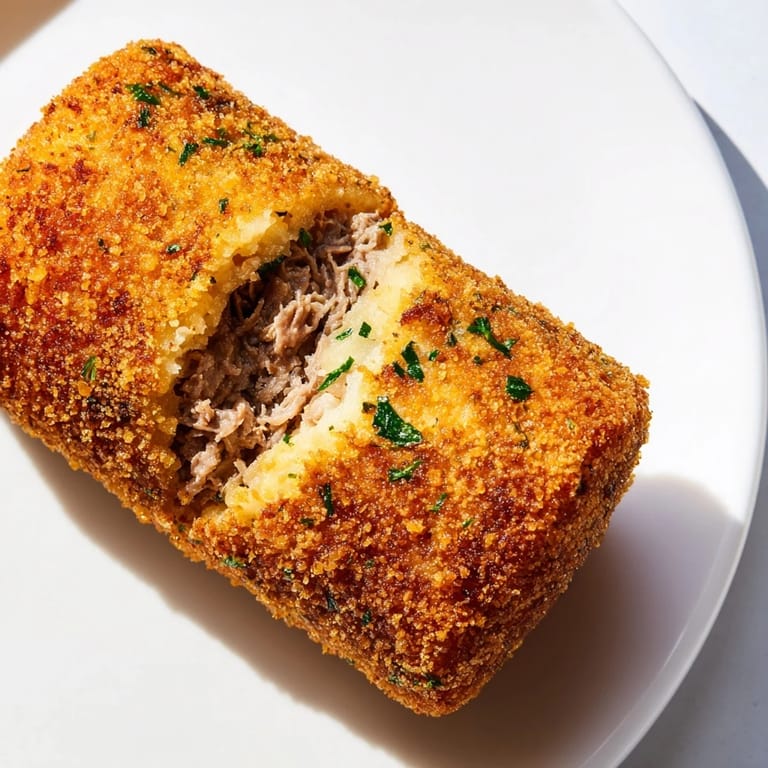
Save There's something almost meditative about watching golden croquettes emerge from hot oil, the sound of them crisping up in the pan, knowing that inside is this creamy, beefy treasure waiting to be discovered. It's the kind of dish that turns an ordinary dinner into something people remember.
Making Ahead and Freezing
One of the best discoveries I've made is that croquettes can be breaded and frozen before frying, which means you can make them on a quiet Sunday afternoon and pull them out for a dinner party whenever you want. Just add 1 to 2 extra minutes to the frying time if cooking from frozen, and make sure they're completely thawed on the outside before they go into the oil so they don't carry ice water into the pan.
Flavor Variations Worth Exploring
The classic beef ragout is perfect as is, but I've experimented with variations that each brought something different to the table. Substituting half the beef with veal creates a more delicate, refined filling that feels less heavy; using chicken instead makes them lighter and more subtle, perfect for summer entertaining; and once I added a small amount of ground mushroom to the ragout, which deepened the umami and made the whole dish feel more sophisticated.
Serving and Pairing Ideas
Croquettes are endlessly flexible depending on the moment and the company, which is part of why I keep coming back to them. Serve them as an impressive appetizer before a fancier meal, pair them with fries and cold beer for a casual bite, or set out a platter of them at a cocktail party and watch them disappear in minutes.
- A crisp pilsner or pale lager cuts through the richness and feels authentically Dutch.
- Mustard is the traditional dipping sauce, but try them with a sharp mayo or even a spicy sambal for a different angle.
- They're best eaten warm right after frying, so if you're making them ahead, you can reheat them briefly in a 180°C oven to crisp them back up.
 Save
Save These croquettes remind me that some of the most delicious things in cooking aren't complicated, they're just honest and made with intention. Once you understand how they come together, you'll find yourself making them again and again.
Recipe FAQs
- → How is the beef prepared for the filling?
The beef is simmered gently in broth with bay leaf until tender, then shredded finely to form the base of the filling.
- → What creates the creamy texture inside the croquettes?
A roux made from butter, flour, and milk is combined with the beef-onion mixture, nuts of nutmeg, and parsley to create a thick, smooth filling.
- → What is the best coating method for crispiness?
Rolling the croquettes in flour, then beaten eggs, followed by fine breadcrumbs ensures a crunchy golden crust when fried.
- → Can the croquettes be prepared ahead of time?
Yes, after breading, they can be frozen and fried directly from frozen with a slightly longer frying time.
- → What oil temperature is ideal for frying?
Maintaining the oil at about 180°C (350°F) ensures even cooking and a crisp, golden exterior.