 Save
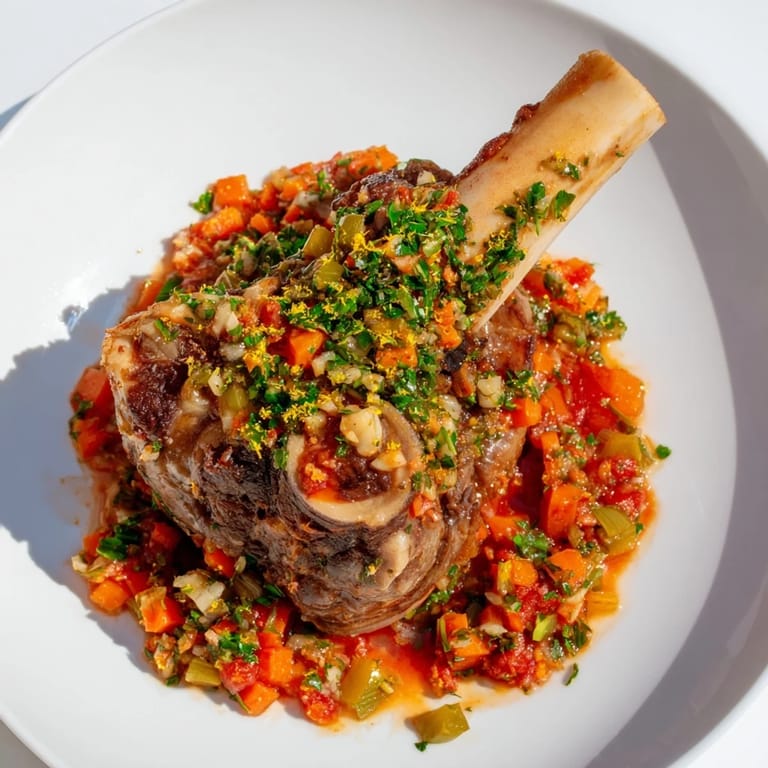
Save My grandmother's kitchen in Milan always smelled like osso buco on Sunday afternoons—that particular perfume of wine, tomatoes, and slow-cooked veal that somehow made time stop. I watched her hands move with a rhythm I couldn't quite match back then, each movement deliberate and unhurried. Years later, I finally understood that the magic wasn't in speed but in patience, in letting the meat fall apart on its own terms. Now when I make this dish, I'm cooking alongside her ghost, and somehow it always tastes like home.
I made osso buco for the first time with a friend who was terrified of cooking anything that took longer than thirty minutes. I promised her the oven did most of the work, and when we pulled it out two hours later, she actually gasped. Watching her face when she tasted it—how surprised she was that something so simple could taste so restaurant-worthy—I realized this dish has a quiet kind of power.
Ingredients
- Veal shanks (4, about 350g each, cross-cut, bone-in): The marrow adds incredible depth and richness; make sure your butcher cuts them properly so they sit flat in the pot.
- Salt and freshly ground black pepper: Never underestimate seasoning at the start—it's the foundation everything else builds on.
- All-purpose flour (1/3 cup): This light dredge helps develop a subtle crust and thickens the braising liquid as it cooks.
- Olive oil and unsalted butter (2 tbsp each): Together they create a better sear than either one alone.
- Onion, carrots, celery (1 large onion, 2 carrots, 2 stalks): This classic soffritto is your flavor base—don't skip the detail of dicing small so everything melds into the sauce.
- Garlic (4 cloves, minced): Add it to the soffritto, not the flour, to keep it from burning.
- Dry white wine (1 cup): A wine you'd actually drink; cheap wine makes cheap-tasting food.
- Diced tomatoes with juice (1 can, 400g): The juice matters as much as the tomatoes themselves.
- Beef or veal stock (1 1/2 cups): Use real stock, not bouillon—you'll taste the difference in every spoonful.
- Tomato paste (2 tbsp): This concentrates the umami and gives the sauce a subtle sweetness when cooked properly.
- Bay leaves and dried thyme (2 bay, 1 tsp): They fade into the background but carry the dish forward.
- Lemon zest (from 1 lemon, divided): Half goes in the braising liquid, half in the gremolata for that crucial brightness.
- Fresh flat-leaf parsley (2 tbsp, finely chopped): This is where the dish comes alive at the end—don't use dried.
Tired of Takeout? 🥡
Get 10 meals you can make faster than delivery arrives. Seriously.
One email. No spam. Unsubscribe anytime.
Instructions
- Prepare and season the veal:
- Pat each shank dry with paper towels so they'll brown properly, then season boldly with salt and pepper. The dredging in flour should be light—tap off excess so you're not adding a thick coating.
- Sear for golden color:
- Heat oil and butter together in your Dutch oven until it shimmers. Sear each shank for about three to four minutes per side until you see a deep brown crust that releases easily from the pan—this means the fond will be flavorful for deglazing.
- Build your flavor base:
- In the same pot, soften your diced vegetables and garlic until the onion turns translucent and everything smells incredible. Stir in the tomato paste and let it toast for a minute to deepen its color.
- Deglaze and combine:
- Pour in the white wine and scrape the bottom of the pot with a wooden spoon, getting all those browned bits that carry so much flavor. Add tomatoes with their juice, stock, bay leaves, thyme, and half your lemon zest.
- Return and nestle the veal:
- Place the shanks back in the pot in a single layer and spoon sauce over each one. The liquid should come about two-thirds of the way up their sides.
- Braise low and slow:
- Cover the pot, transfer to a preheated 160°C (325°F) oven, and let it do the work for two hours. The meat is ready when a fork slides through the meat with no resistance, and the liquid has become a rich, glossy sauce.
- Make your finishing touch:
- While the veal braises, mince your parsley, garlic, and remaining lemon zest together. Don't do this more than a few minutes before serving so the parsley stays bright.
- Finish and serve:
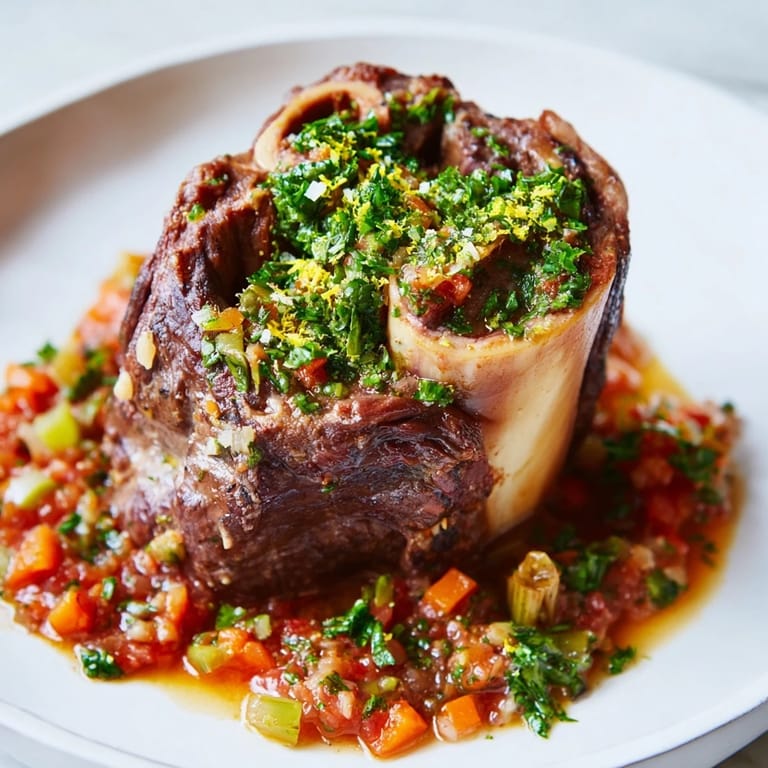
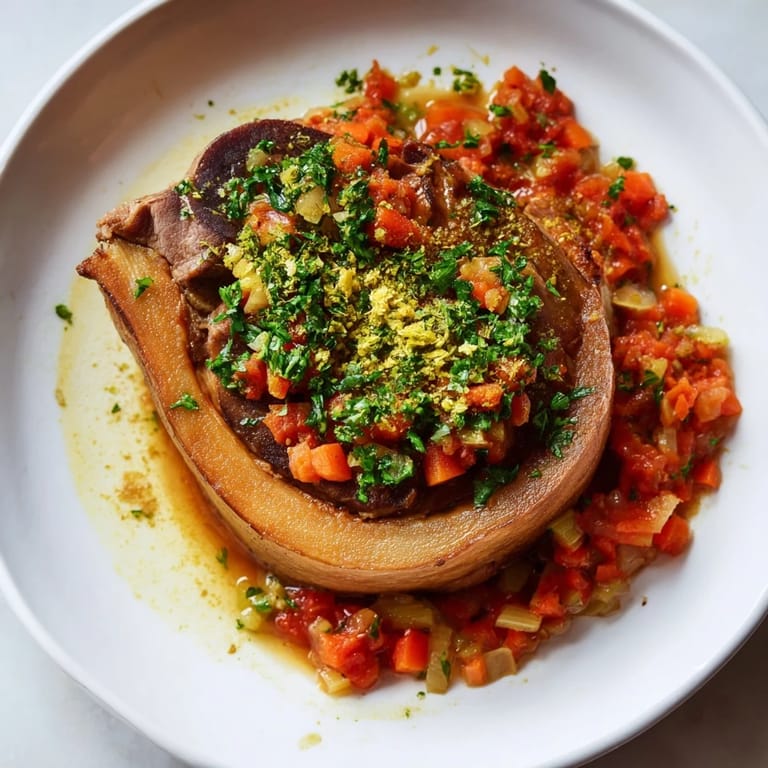
- Remove the shanks to a serving platter. If the sauce looks fatty, skim it gently. You can also let it simmer uncovered for five to ten minutes to thicken if you prefer a more concentrated sauce. Spoon sauce over each shank and crown it with gremolata.
 Save
Save The first time someone asked me to make osso buco for a dinner party, I was terrified—it sounded too fancy, too European, too risky. But the moment their faces lit up when they tasted it, I understood that some dishes transcend their complexity. Now I make it whenever I want to say something beyond words.
Why This Dish Works
Osso buco succeeds because it respects the ingredient. Veal shank is not inherently tender, but hours of gentle heat and moisture transform it into something almost decadent. The long braise also gives the sauce time to marry and deepen, becoming silky and rich in a way quick cooking never achieves. This is why the dish feels luxurious despite being made from a humble cut of meat.
Serving and Pairing
In Milan, osso buco is always served with Risotto alla Milanese—the saffron-tinged rice soaks up the sauce like a dream. But creamy mashed potatoes or polenta work beautifully too if you want something simpler. The key is choosing a side that can bathe in the braising liquid without falling apart. A simple green salad afterward cuts through the richness and refreshes your palate for dessert.
Storage and Make-Ahead
This is one of those dishes that actually tastes better the next day, after flavors have rested and deepened overnight. Store the shanks and sauce together in the refrigerator for up to three days, or freeze for up to two months. Reheat gently on the stovetop with a splash of water if the sauce seems too thick. Make the gremolata fresh just before serving, even if you're reheating everything else.
- Cool the dish to room temperature before refrigerating to prevent condensation from making everything soggy.
- Freeze in a shallow container so it thaws more evenly when you're ready to reheat.
- The flavors only improve with time, so don't hesitate to make this a day or two in advance for entertaining.
 Save
Save Osso buco teaches patience in a way most dishes don't. It's a reminder that the best things in life—and in cooking—require time and presence. Serve it to people you care about, and watch it work its quiet magic.
Recipe FAQs
- → What cut of meat is ideal for this dish?
Veal shanks cross-cut with bone are preferred for their tenderness and flavor after slow braising.
- → Can I substitute veal with another meat?
Beef shanks can be used as a substitute, though cooking times may need adjustment for tenderness.
- → How long should the veal shanks be braised?
A slow braise in the oven at 160°C (325°F) for about 2 hours produces tender results.
- → What is gremolata and how is it used?
Gremolata is a fresh mixture of lemon zest, garlic, and parsley added just before serving to brighten the dish.
- → Is there a gluten-free option available?
Yes, using gluten-free flour for dredging maintains the dish’s texture and flavor while accommodating gluten sensitivities.
- → What side dishes complement this main course?
Saffron risotto, creamy mashed potatoes, or polenta provide perfect balance and enhance the meal’s rich flavors.