 Save
Save The first time I made paella, I was standing in a Barcelona kitchen with a friend's grandmother, watching her hands move through the rice with such certainty that I felt like I was witnessing something sacred. She never consulted a recipe, never tasted as she went—she just knew, from the smell of the saffron hitting the stock and the way the rice began to whisper in the pan, exactly when everything would be perfect. Years later, I recreated that dish in my own kitchen, and suddenly I understood what she'd been teaching me without words: paella isn't about following steps, it's about listening to the pan and trusting what you smell.
I remember serving this to my family on a Sunday when we were all stressed about different things, and watching everyone go quiet the moment they took their first bite. The kitchen filled with the smell of saffron and the sea, and suddenly nobody wanted to talk about work or problems—they just wanted more paella. It was one of those rare meals where the food genuinely shifted the mood in the room, and I realized that cooking something this beautiful and thoughtful says things words sometimes can't.
Ingredients
- Short-grain paella rice (Bomba or Arborio): This rice absorbs liquid without turning mushy, which is the whole secret—it stays distinct and tender, not gluey. Don't use regular long-grain rice or you'll end up with mush.
- Saffron threads: Steep them in warm stock before adding to release their golden color and subtle floral warmth. Real saffron matters here because it's not hidden; it's the soul of the dish.
- Seafood stock: Use the best quality you can find or make your own—the broth becomes the rice, so bland stock means a bland paella. If you can only find bottled, taste it first and season accordingly.
- Large shrimp, mussels, and clams: Buy them the same day you're cooking if possible. Live shellfish are best, and the fishmonger should keep them on ice; ask them to clean the mussels if you're short on time.
- Smoked paprika: This adds depth and color without overpowering—it's what makes paella taste Spanish, not just seafoody.
- Olive oil: Use a good one, not your fanciest, but not the cheapest either. Medium quality olive oil handles the heat better.
- Bell peppers (red and green): The contrast of colors matters visually, but more importantly, the sweetness balances the salty seafood and saffron.
- Fresh parsley: Don't skip the garnish—it brightens everything and adds a fresh note that cuts through the richness.
Tired of Takeout? 🥡
Get 10 meals you can make faster than delivery arrives. Seriously.
One email. No spam. Unsubscribe anytime.
Instructions
- Infuse your stock with saffron:
- Pour 4 cups of seafood stock into a saucepan and drop in the saffron threads—you'll watch them bloom and turn the broth golden. Keep it warm on low heat while you prep everything else; the gentle heat coaxes the saffron's flavor into every drop.
- Build your soffritto:
- Heat olive oil in your paella pan over medium heat until it shimmers slightly, then sauté the chopped onion for about 2 minutes until it becomes translucent and soft. Add the minced garlic and stir constantly for 30 seconds—you want fragrant, not burnt.
- Cook the vegetables:
- Add your red and green bell pepper strips and let them soften for 3 to 4 minutes, stirring occasionally so they color slightly. Then stir in the grated tomato and cook until most of the liquid has evaporated, leaving behind a concentrated, silky base.
- Toast and coat the rice:
- Pour the rice into the pan with the vegetables and stir constantly for about 2 minutes—you're toasting it, coating each grain with oil, and infusing it with the flavors already building. This step sounds small but changes everything about the texture and taste.
- Add the saffron stock:
- Pour in your warm, saffron-infused stock in one go, stirring briefly to distribute the rice evenly. Once you pour the liquid, you stop stirring completely—this is non-negotiable if you want that prized golden crust on the bottom.
- Arrange the seafood and simmer:
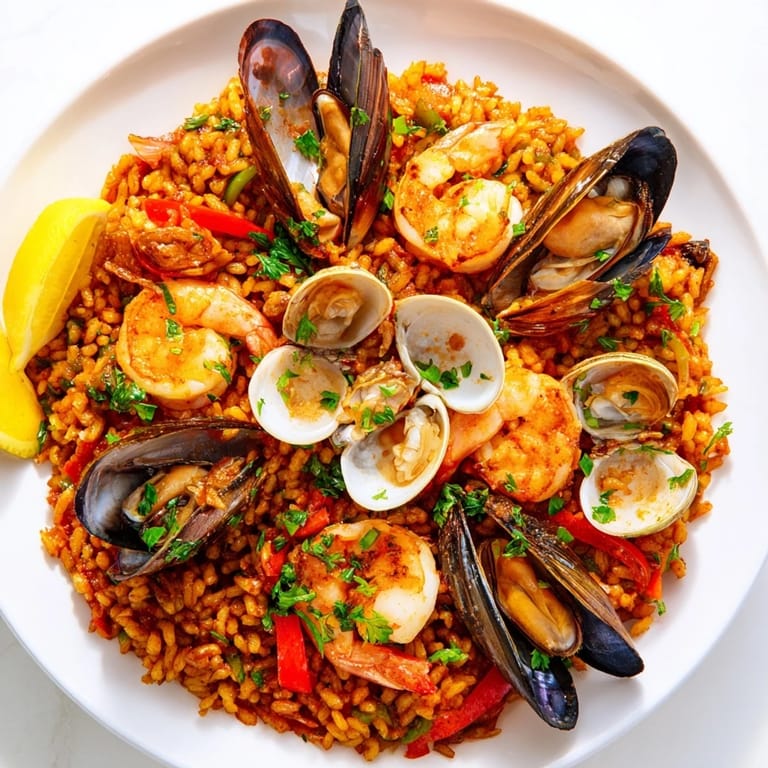
- Scatter your shrimp, mussels, and clams over the rice, pressing them gently into the surface. Cover loosely with foil or a lid and reduce the heat to medium-low; cook for 20 to 25 minutes until the rice is tender and the shellfish have opened (discard any that stubbornly stay closed).
- Rest and set the crust:
- Remove from heat, keep the lid on, and let it rest for exactly 5 minutes. This gives the rice time to absorb any last bit of liquid and lets that bottom crust firm up into something crackly and golden.
- Finish and serve:
- Scatter fresh parsley over the top and serve straight from the pan if you can—it's more dramatic that way. Squeeze lemon over each plate; the brightness cuts through the richness beautifully.
 Save
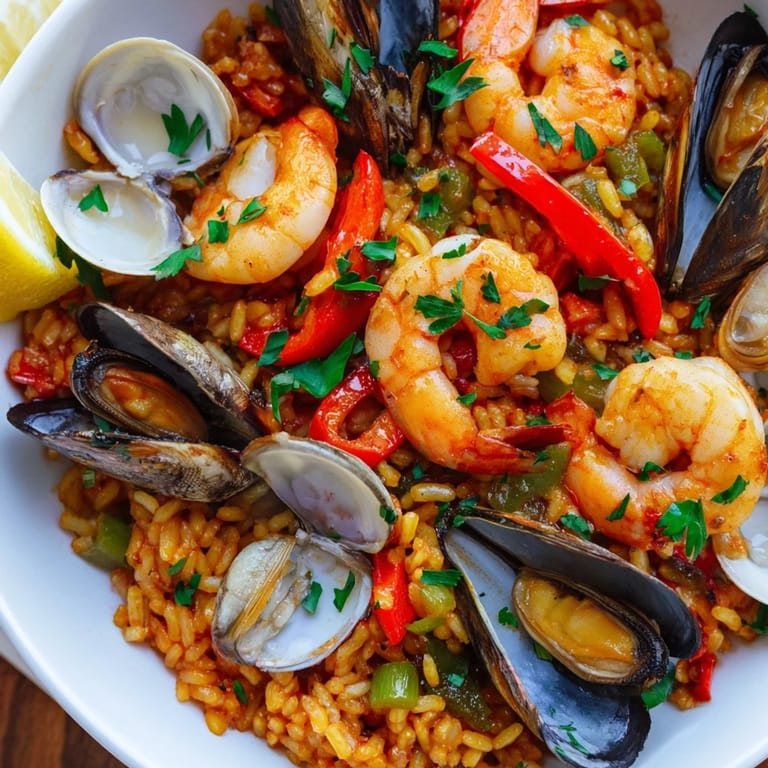
Save There's a moment near the end of cooking when you uncover the pan and see the seafood has opened, the rice is glistening with stock, and the whole thing smells like the Mediterranean coast. That's when you know you've done it right, and you realize why paella has been cooked in cast-iron pans for centuries—it's not just food, it's a ritual that brings people together.
Mastering the Socarrat
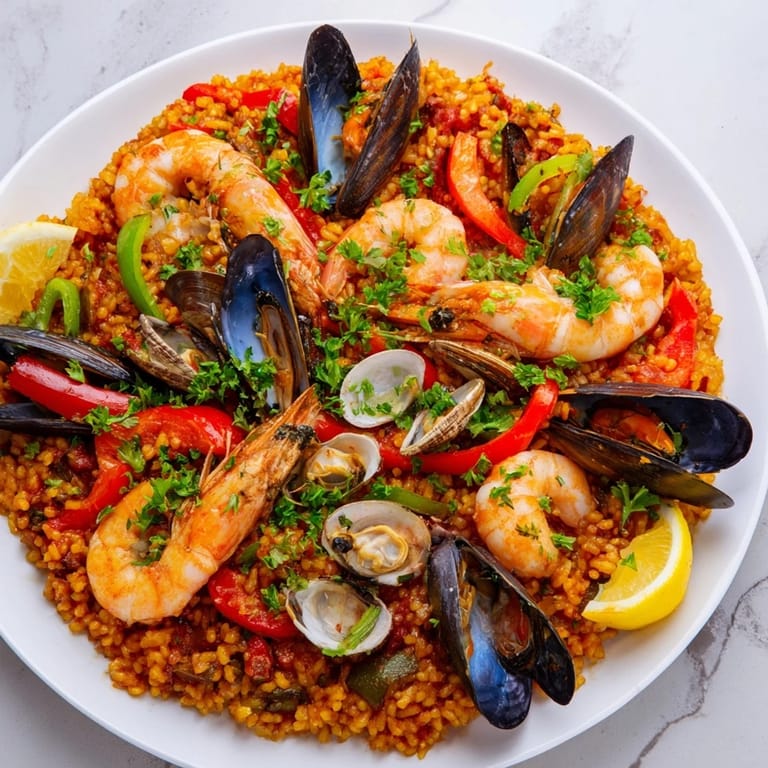
The golden, crispy layer at the bottom of the pan is called socarrat, and it's the difference between a good paella and one that gets people leaning in for seconds. In the last 2 minutes of cooking, increase the heat slightly and listen—you'll hear a gentle crackling sound, almost like Rice Krispies. This tells you the bottom is forming without burning. It should smell nutty and complex, not acrid or charred. Once you've made it a few times, you'll be able to judge this by sound and smell alone, and it becomes one of your favorite kitchen moments.
Wine and Seafood Pairings
Paella demands a crisp white wine that won't compete with the delicate seafood and saffron. Spanish wines like Albariño from Galicia or Verdejo from Rueda are traditional, but what matters is acidity and crispness—something that cleanses the palate between bites. I've also paired it with a dry Sauvignon Blanc or even a light Pinot Grigio when I was out of Spanish wine, and both work beautifully. The key is avoiding anything oak-heavy or sweet, which would muffle the subtle flavors you've worked to build.
Variations and Substitutions
While this recipe is built around traditional seafood, paella is forgiving if you need to adapt it. I've made versions with calamari instead of some of the shrimp, added a handful of frozen peas in the last 5 minutes for color and sweetness, and even substituted firm white fish for part of the seafood when shrimp were expensive. The structure stays the same, but the dish becomes yours. Always taste the broth before you cook because seafood stocks vary wildly—some are salty, some are mild, and you might need to adjust your seasoning accordingly.
- Try stirring in a small pinch of fresh thyme or a bay leaf when infusing the saffron for deeper herbal notes.
- Add artichoke hearts or green beans in the vegetable step if you want more vegetables without changing the cooking time.
- Toast a handful of sliced almonds separately and scatter them on top as garnish for unexpected texture and nuttiness.
 Save
Save This paella has become my answer to the question of what to cook when I want to feel confident and generous at the same time. It's a dish that makes you look like you know what you're doing, but the real gift is in the simplicity once you understand what's happening in the pan.
Recipe FAQs
- → What type of rice is best for this dish?
Short-grain paella rice varieties like Bomba or Arborio work best as they absorb broth well while remaining firm.
- → Can I substitute the seafood with other proteins?
Yes, calamari or firm white fish can replace some seafood to suit different tastes or availability.
- → How do I know when the shellfish is properly cooked?
Cook until mussels and clams open their shells; discard any that remain closed to ensure safety.
- → What is the purpose of saffron in the dish?
Saffron adds a distinct aroma, a subtle earthy flavor, and a golden color to the rice for authenticity.
- → How can I enhance the flavor further?
Adding frozen peas during cooking adds sweetness and texture, complementing the seafood components.