 Save
Save I once hosted a dinner party on a freezing February night, and instead of fussing over individual plates, I set a bubbling pot of fondue in the center of the table. The room filled with the smell of melted cheese and wine, and within minutes, everyone was laughing, reaching across each other with long forks, competing for the crispiest bread cube. That night taught me that fondue isn't just a dish—it's an excuse to slow down and share something warm. I've made it dozens of times since, and it never fails to turn a quiet evening into something memorable.
I remember making this for my parents one winter weekend, and my dad, who usually rushes through meals, sat there for over an hour, methodically working through every vegetable and bread cube. He told me later it reminded him of a trip to Zurich decades ago, before I was born. I hadn't expected fondue to unlock that kind of memory, but that's the magic of it—it's cozy enough to make people linger and talk about things they haven't thought of in years.
Ingredients
- Gruyere cheese: This is the backbone of the fondue, bringing a nutty, slightly sweet depth that melts beautifully without turning grainy.
- Emmental cheese: Its mild, buttery flavor balances the Gruyere and adds that classic Swiss stretch when you pull your fork away.
- Dry white wine: I use a crisp, unoaked wine like Sauvignon Blanc or a Swiss Fendant; the acidity keeps the cheese smooth and prevents clumping.
- Kirsch: This cherry brandy adds a subtle warmth and complexity, though I've skipped it when I didn't have any and the fondue still turned out rich and delicious.
- Cornstarch: Tossing the cheese with cornstarch before adding it to the wine is the trick that keeps everything silky and prevents separation.
- Garlic clove: Rubbing the pot with garlic gives a gentle background note without overpowering the cheese.
- Nutmeg and white pepper: Just a pinch of each brightens the whole pot and adds a whisper of spice that makes you want another bite.
- Bread cubes: I prefer day-old baguette because it holds up better on the fork and doesn't turn mushy in the cheese.
- Blanched vegetables: Broccoli, cauliflower, cherry tomatoes, and baby carrots add color, texture, and a lighter option for when the bread feels too rich.
Tired of Takeout? 🥡
Get 10 meals you can make faster than delivery arrives. Seriously.
One email. No spam. Unsubscribe anytime.
Instructions
- Prepare the pot:
- Rub the inside of your fondue pot with the cut sides of the garlic clove, then discard it. This leaves behind just enough flavor without any harsh bite.
- Heat the wine:
- Pour the white wine into the pot and warm it gently over medium-low heat until you see tiny bubbles forming at the edges. Don't let it boil or the alcohol will cook off too quickly.
- Coat the cheese:
- In a bowl, toss the grated Gruyere and Emmental with the cornstarch until every shred is lightly dusted. This step is essential for a smooth, lump-free fondue.
- Melt the cheese:
- Add the cheese to the simmering wine a handful at a time, stirring constantly in a figure-eight motion with a wooden spoon. Wait until each addition is fully melted before adding more.
- Finish and season:
- Stir in the kirsch, nutmeg, and white pepper, then taste and adjust if needed. Keep the fondue warm over low heat, stirring occasionally to prevent sticking.
- Serve:
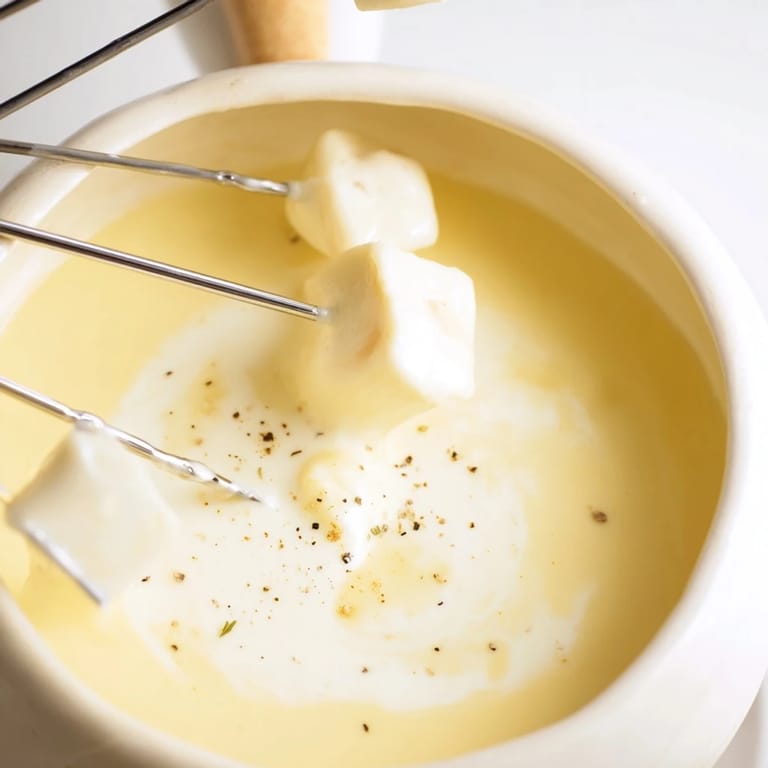
- Transfer the pot to a tabletop burner set to low, and arrange the bread cubes and blanched vegetables on platters. Hand out fondue forks and let everyone dig in.
 Save
Save One New Year's Eve, I made a double batch of this and set it out with a mountain of bread and vegetables, expecting it to last the whole night. It was gone in forty minutes. My friend Sarah, who claimed she didn't like cheese, stood by the pot the entire time, dipping cherry tomatoes and declaring it the best thing she'd eaten all year. I learned that fondue has a way of converting even the skeptics.
Choosing Your Cheeses
Gruyere and Emmental are the traditional pairing, but I've swapped in a bit of Appenzeller when I wanted a sharper, more robust flavor. The key is to use cheeses that melt well and have enough character to stand up to the wine. Avoid pre-shredded bags if you can—they're coated with anti-caking agents that can make the fondue grainy. Grating your own takes five extra minutes and makes all the difference in texture.
What to Serve Alongside
Beyond bread and vegetables, I've served fondue with boiled baby potatoes, sliced apples, and even cured meats like prosciutto. The acidity of the apples cuts through the richness beautifully, and the potatoes soak up the cheese in a way that feels almost indulgent. I also like to put out a few cornichons and pickled onions for anyone who needs a sharp, briny bite between dips.
Making It Ahead and Storing Leftovers
You can grate the cheese and toss it with cornstarch a few hours ahead, then store it covered in the fridge until you're ready to cook. Leftover fondue can be refrigerated in an airtight container for up to three days—I reheat it gently in a small pot with a splash of wine, stirring constantly until smooth again. Sometimes I toss it with cooked pasta or spread it on toast for a quick, decadent snack.
- Prep your dippers in advance and store them in the fridge so you can focus on the cheese when it's time to cook.
- Keep a small pitcher of warm wine nearby in case you need to thin the fondue as it sits.
- If you're hosting a crowd, consider setting up two smaller pots instead of one large one so everyone can reach comfortably.
 Save
Save This fondue has become my go-to whenever I want to gather people without the pressure of a formal meal. It's forgiving, it's fun, and it always brings everyone to the same table with their sleeves rolled up and their guards down.